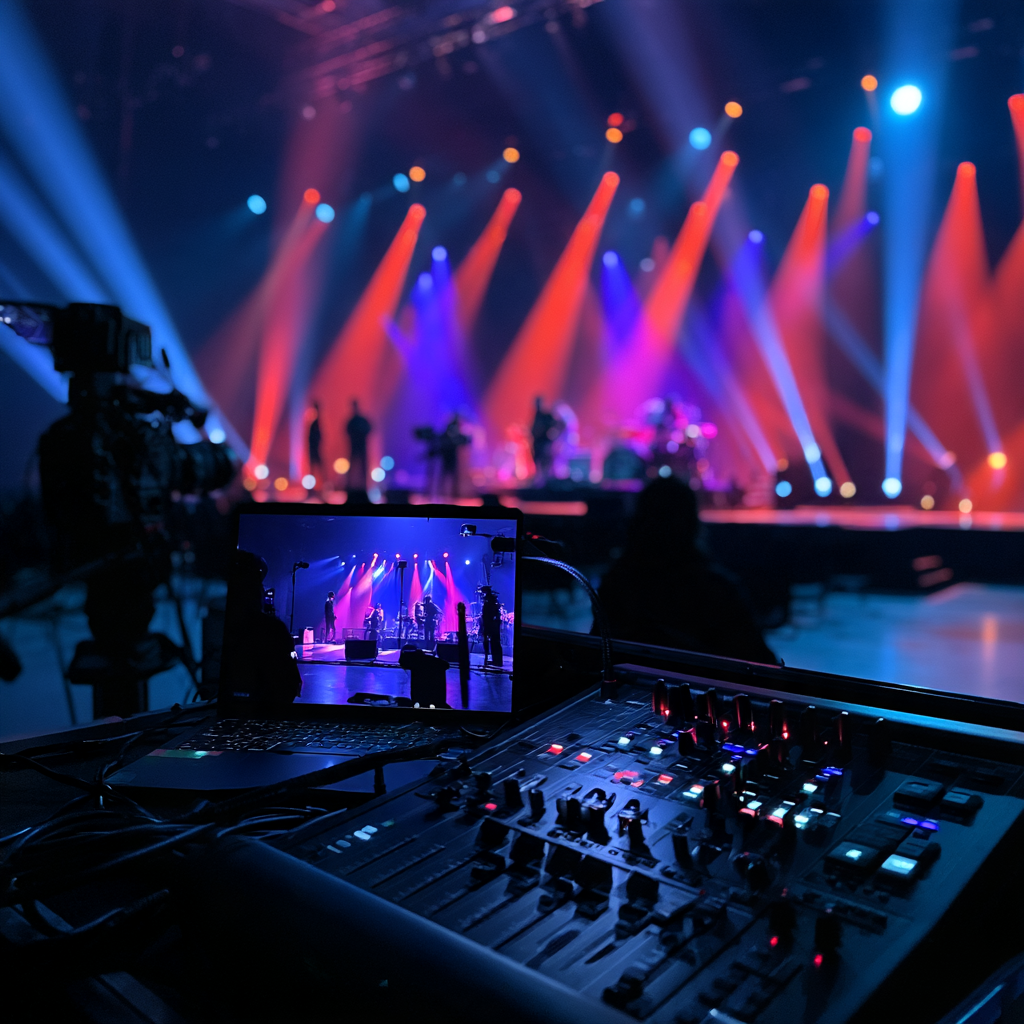
How to Record a Live Show for a Streaming Release
A great concert disappears quickly.
The crowd goes home.
The room empties.
But if the show is captured properly, the performance can become:
- a live single;
- EP;
- album;
- full concert video;
- short-form clips;
- livestream archive.
Apple Music Hall makes this workflow very visible: its new London venue combines live performance with multitrack recording, spatial mixing, multicamera production and global livestream capability. Too Lost
Independent artists do not need Apple’s production budget to apply the same principle.
Decide what you are making before the show
“Record everything and work it out later” sounds flexible.
It usually creates chaos.
Choose the intended outputs.
For example:
Live EP.
Three live videos.
Ten short clips.
One full concert.
That determines how much equipment and preparation you need.
Get the audio out of the mixing desk
Do not rely only on a phone recording the room.
Ideally, record individual channels or stems from the live desk.
You might capture:
- lead vocal;
- backing vocals;
- guitars;
- bass;
- keys;
- drums;
- playback;
- audience microphones.
This gives the mix engineer far more control afterwards.
Record the audience separately
A technically perfect board mix can sound strangely lifeless.
The audience gives the recording scale.
Place dedicated room or crowd microphones where possible.
They capture:
- applause;
- singalongs;
- atmosphere;
- room sound.
Blend them with the direct channels later.
Use redundant recording
Live performances cannot be repeated because the laptop crashed.
Where possible, create a second recording path.
That might mean:
- backup recorder;
- second computer;
- separate stereo board feed.
Test everything during soundcheck.
Plan video at the same time
If the audio is good enough to release, capture useful video too.
A basic setup could include:
- wide locked camera;
- front-of-house angle;
- side-stage camera;
- handheld close-ups.
Even several modern phones can create usable multicamera footage when planned properly.
Make sure every device has enough:
- storage;
- battery;
- power;
- recording time.
Synchronise everything
Record a clear sync point.
A clap can work for simple productions.
Professional timecode is better when many cameras and recorders are involved.
Organisation during capture saves enormous editing time later.
Check the setlist for rights
Your original songs are the simplest.
If the set includes:
- covers;
- samples;
- guest material;
check what permissions may be required before commercially releasing the resulting recording.
A live performance licence at the venue is not automatically the same thing as permission to commercially distribute a new recording of every song.
Get performer agreements
If you hired:
- session musicians;
- backing singers;
- guest vocalists;
- support performers;
make sure the recording and commercial release are covered.
Do not discover six months later that nobody agreed whether the guitarist was being recorded for an album.
Record clean introductions where useful
Long stage banter is great in the room.
It may not work between every track on Spotify.
During the show, think about:
- clean song starts;
- clean endings;
- excessive dead air;
- unusable audience interruptions.
Do not sterilise the performance.
Just give yourself editing options.
Mix like a record, not a documentary
A live mix should feel like the room.
It should also sound good on headphones.
The mix engineer may need to:
- rebalance instruments;
- automate vocals;
- manage crowd noise;
- remove technical problems;
- control feedback;
- edit silence.
Do not eliminate every imperfection.
Live recordings work because they feel alive.
Master the project together
If several performances will form one EP or album, master them as one project.
Aim for consistent:
- loudness;
- tonal balance;
- spacing;
- crowd level.
The listener should feel like they are experiencing one show.
Back up everything
After the gig, immediately copy:
- multitracks;
- stereo mix;
- camera cards;
- photographs;
- session documents.
Use at least two locations.
Do not let the only copy of your live album live on one SD card in somebody’s backpack.
Final thoughts
A live recording succeeds before the first note.
Plan the deliverables.
Capture multitrack audio.
Record the room.
Get the rights sorted.
Create redundancy.
One good show can then become an entirely new catalogue asset rather than a memory that disappears the moment the venue lights come on.