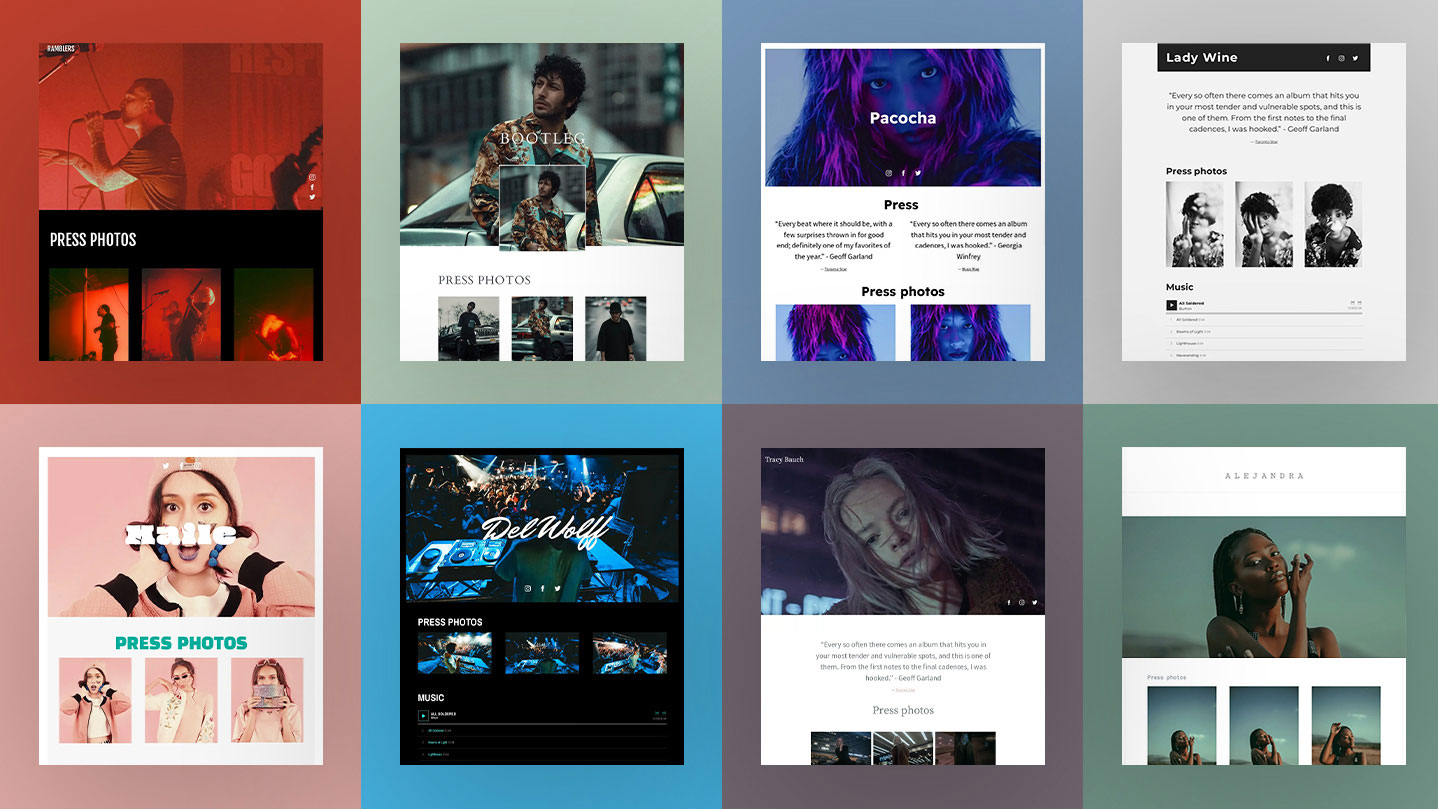
How To Create a Successful Electronic Press Kit (EPK)
If you’re serious about growing as an artist, your Electronic Press Kit (EPK) isn’t optional anymore.
It’s your first impression, your sales pitch, and your credibility — all in one place.
And in 2026, expectations are higher than ever.
Bloggers, playlist curators, labels, and even fans expect a clean, professional, and instantly accessible EPK. If yours isn’t sharp, you get ignored.
Here’s how to build one that actually works.
What Is an Electronic Press Kit (EPK)?
An Electronic Press Kit is a digital portfolio for your music career.
It’s designed to give industry professionals everything they need to:
- Understand who you are
- Hear your music
- Promote you quickly
- Decide if you’re worth working with
Think of it like this:
If someone had 60 seconds to decide whether to feature you… your EPK should do the job.
Why an EPK Matters More Than Ever in 2026
The music industry has become insanely crowded.
Millions of tracks are uploaded every week.
That means:
- Attention is limited
- Decisions are faster
- First impressions matter more
Your EPK solves this by:
- Reducing friction
- Presenting you professionally
- Making it easy to say “yes”
If you don’t have one — or it’s weak — you’re instantly at a disadvantage.
What to Include in a High-Converting EPK
1. Artist Bio (Short + Long Versions)
You need two versions:
- Short bio (50–100 words) → for quick reads
- Full bio (200–300 words) → for press features
Make it:
- Clear
- Interesting
- Focused on your story and sound
Avoid generic lines like:
“Passionate artist creating music for the world”
Instead:
- Highlight what makes you different
- Mention notable achievements
- Define your sound clearly
2. Your Best Music (Not Everything)
This is where most artists mess up.
Do NOT include 20 tracks.
Pick:
- 1–3 of your strongest songs
- Your most recent or most successful releases
Embed them via:
- Spotify
- SoundCloud
- YouTube
Make it effortless to press play.
3. High-Quality Press Photos
You need professional visuals.
Include:
- Portrait shots
- Landscape shots
- Live performance images (if available)
Requirements:
- High resolution
- Downloadable
- Consistent branding
Bad photos = instant drop-off.
4. Key Achievements & Social Proof
This builds trust quickly.
Include:
- Streaming numbers
- Playlist placements
- Press coverage
- Awards or milestones
Even small wins matter.
Example:
- “500,000+ streams across platforms”
- “Featured on major editorial playlists”
It shows momentum.
5. Video Content
Video is massively underrated in EPKs.
Include:
- Official music videos
- Live performances
- Short-form clips
This helps people:
- Connect emotionally
- Understand your vibe instantly
6. Press Quotes or Testimonials
If anyone credible has mentioned you — use it.
Examples:
- Blog features
- Playlist curator quotes
- Industry feedback
Even one strong quote adds authority.
7. Contact Information (Make This Obvious)
Do not hide this.
Include:
- Management contact (if applicable)
- Links to socials
If someone wants to reach you, it should take 2 seconds.
8. Clear Branding & Design
Your EPK should feel like you.
That means:
- Consistent colours
- Clean layout
- Easy navigation
Avoid:
- Clutter
- Too much text
- Slow-loading pages
Simple wins.
Where Should You Host Your EPK?
You’ve got a few options:
Dedicated Website (Best Option)
- Full control
- Best for SEO
- Looks professional
Smart Links / Landing Pages
- Quick to build
- Easy to share
- Good for campaigns
PDF EPK
- Still useful for email outreach
- But less dynamic
Best strategy: Have a live page + downloadable version
SEO Tips to Make Your EPK Discoverable
Most artists miss this completely.
Your EPK can actually rank on Google.
Use:
- Your artist name + “EPK”
- Your genre keywords
- “Press kit”, “media kit”, “artist profile”
Example:
- “Electronic Press Kit DJ [Your Name]”
- “Indie artist press kit UK”
This turns your EPK into a discovery channel.
Common Mistakes That Kill Your EPK
Avoid these at all costs:
- Too much information
- Outdated content
- Broken links
- Low-quality images
- No clear call-to-action
Big one:
👉 Making people work to understand you
If it’s not obvious — it doesn’t work.
How to Use Your EPK to Get Opportunities
Once your EPK is ready, use it everywhere:
- Blog submissions
- Playlist pitching
- Label outreach
- Booking requests
- Social media bios
Instead of sending:
“Here’s my track”
You send:
👉 “Here’s my EPK”
Much stronger.
Final Thought
A great EPK doesn’t just showcase your music.
It positions you as an artist worth taking seriously.
And in a world where attention is scarce…
That’s everything.