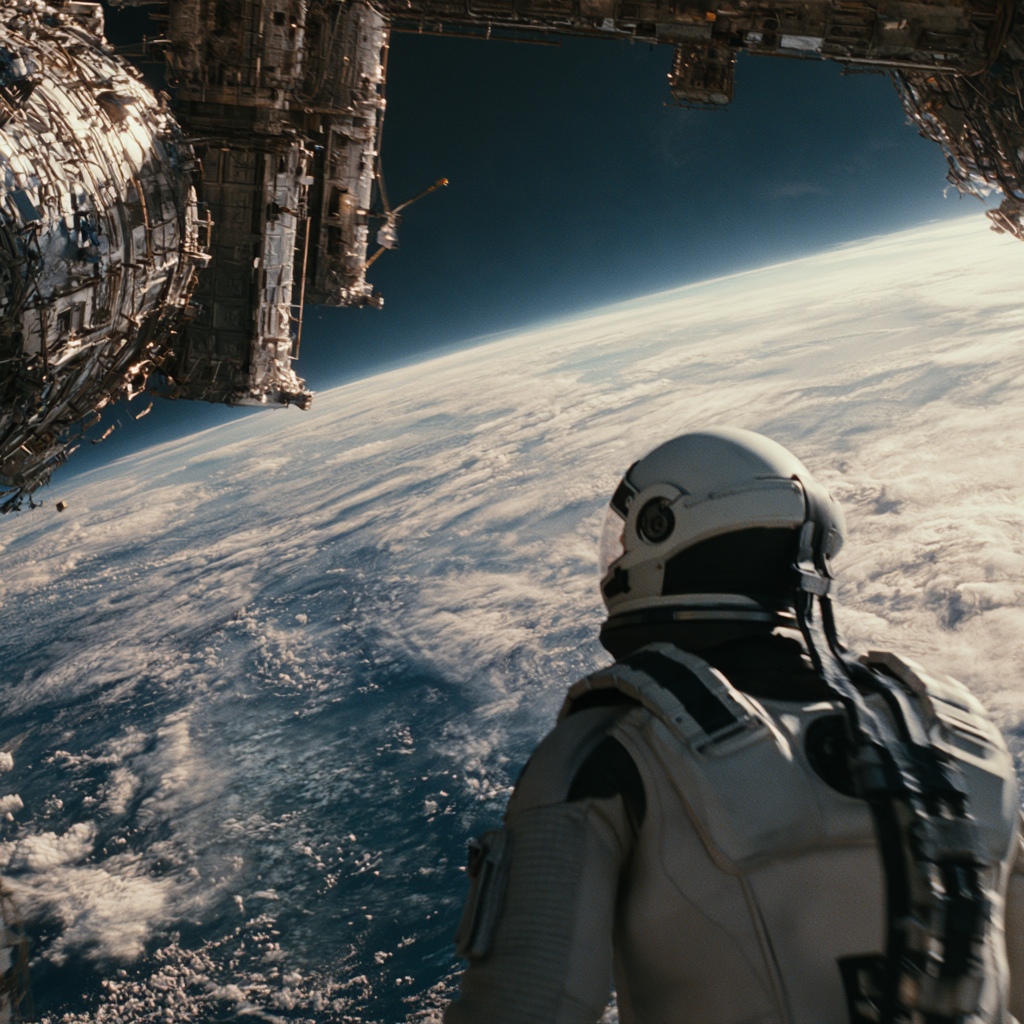
What Is the Interstellar Docking Song? No Time for Caution Explained
The music most closely associated with the dramatic docking sequence in Christopher Nolan’s Interstellar is “No Time for Caution”, composed by Hans Zimmer. It is one of the most memorable cues from the 2014 science-fiction film and a favourite among listeners searching for intense cinematic music.
The track builds urgency through repetition, powerful organ sounds and a sense that the action is moving faster than the characters can safely control.
Which scene uses No Time for Caution?
The cue is associated with the sequence in which Cooper attempts a dangerous docking manoeuvre with the rapidly spinning Endurance spacecraft.
The stakes are clear even without a detailed explanation of the story. The spacecraft is out of control, the manoeuvre appears extremely risky, and the characters have very little room for error.
The music does not simply tell viewers that the scene is exciting. Its repeating patterns make the entire sequence feel like a desperate attempt to impose order on chaos.
There are story spoilers in that description, so listeners who have not seen the film may prefer to experience the scene before searching for the complete clip.
Who composed the Interstellar docking music?
Hans Zimmer wrote the score for Interstellar. His film credits include collaborations with Christopher Nolan on The Dark Knight trilogy, Inception and Dunkirk, but Interstellar has a distinctive sound even within that body of work.
The film makes unusually strong use of organ, alongside orchestral and electronic textures. Organist Roger Sayer is credited as the soloist on the score.
That instrument is an important reason the soundtrack feels different from a conventional action-film score. The organ can sound immense and architectural, filling the space with sustained notes while the rhythmic figures suggest movement.
In a story about space, distance and time, that huge sound creates an unexpected combination of human warmth and overwhelming scale.
Why does the docking theme feel so intense?
A large part of the tension comes from repetition. The music locks onto patterns and keeps pressing forward rather than offering a relaxed melody that resolves quickly.
Repetition can make a scene feel inevitable. The viewer hears the same urgency returning while the visual action becomes more extreme. Each new musical layer increases the sense that the moment matters.
Zimmer also uses contrasting musical textures. Sustained organ tones establish scale, while fast rhythmic movement creates pressure. The result is both enormous and precise: a fitting combination for a scene that involves very large objects and a manoeuvre with almost no margin for error.
Many listeners return to the track outside the film because its musical structure creates a similar emotional journey without the visuals. It begins with tension, builds determination and pushes towards a release.
What instrument creates the Interstellar sound?
The organ is the score’s most distinctive feature, but it is not the only sound involved. The soundtrack combines organ, orchestral instruments and production techniques to create its broader atmosphere.
A pipe organ can produce sustained notes with a tremendous physical presence. Unlike a piano, whose notes naturally decay, an organ can hold sound while the player keeps a key depressed. That makes it suitable for long harmonic passages and accumulating tension.
Roger Sayer performed the organ parts for the score. His contribution is one reason the soundtrack has a musical identity beyond the synthesizer-heavy science-fiction scores audiences might expect.
It is worth listening on headphones and then on a good speaker system. Different details become apparent depending on how the music is reproduced.
Is No Time for Caution the main Interstellar theme?
It is one of the best-known tracks, but calling it the film’s single main theme is an oversimplification. Interstellar contains several recurring musical ideas, and listeners often identify different cues as the central theme.
“Cornfield Chase” is often associated with the film’s more exploratory and hopeful sound. “Mountains” creates tension in a different scene. “S.T.A.Y.” has a more reflective quality, while “No Time for Caution” is the cue many people mean when they remember the famous docking sequence.
If you are searching a music service, use those exact track names. Searching only for “Interstellar theme” can produce countless covers, edits and arrangements without making clear which moment they refer to.
Why is the soundtrack so closely connected to the film?
Interstellar is a story about enormous distances but also intimate human relationships. The score works because it can communicate both ideas at the same time.
Zimmer’s music is capable of sounding cosmic in scale, yet some of its most moving moments are built from relatively simple melodic patterns. The organ gives the sound weight, while the repeated figures can suggest longing, urgency or determination depending on the scene.
The docking sequence is the most dramatic example of that approach. The soundtrack makes a technical operation feel like an emotional event.
For a very different example of how one song can define a memorable screen moment, Radar explains the use of “Baby Blue” at the end of Breaking Bad.
What should you listen to after No Time for Caution?
Start with “Cornfield Chase” for the film’s sense of wonder. Then try “Mountains” for urgency, “S.T.A.Y.” for emotional weight and “Where We’re Going” for a more expansive conclusion.
Outside Interstellar, you may enjoy Max Richter’s “On the Nature of Daylight” or Clint Mansell’s “Death Is the Road to Awe” if you are attracted to repeating patterns and gradually intensifying arrangements. Those pieces are not part of the Interstellar soundtrack; they simply offer related listening experiences.
What is the music from the spinning spaceship scene?
The answer is “No Time for Caution” by Hans Zimmer. It accompanies one of Interstellar’s defining action sequences and shows how repetitive rhythms and the powerful sound of the organ can transform a scene into something unforgettable.