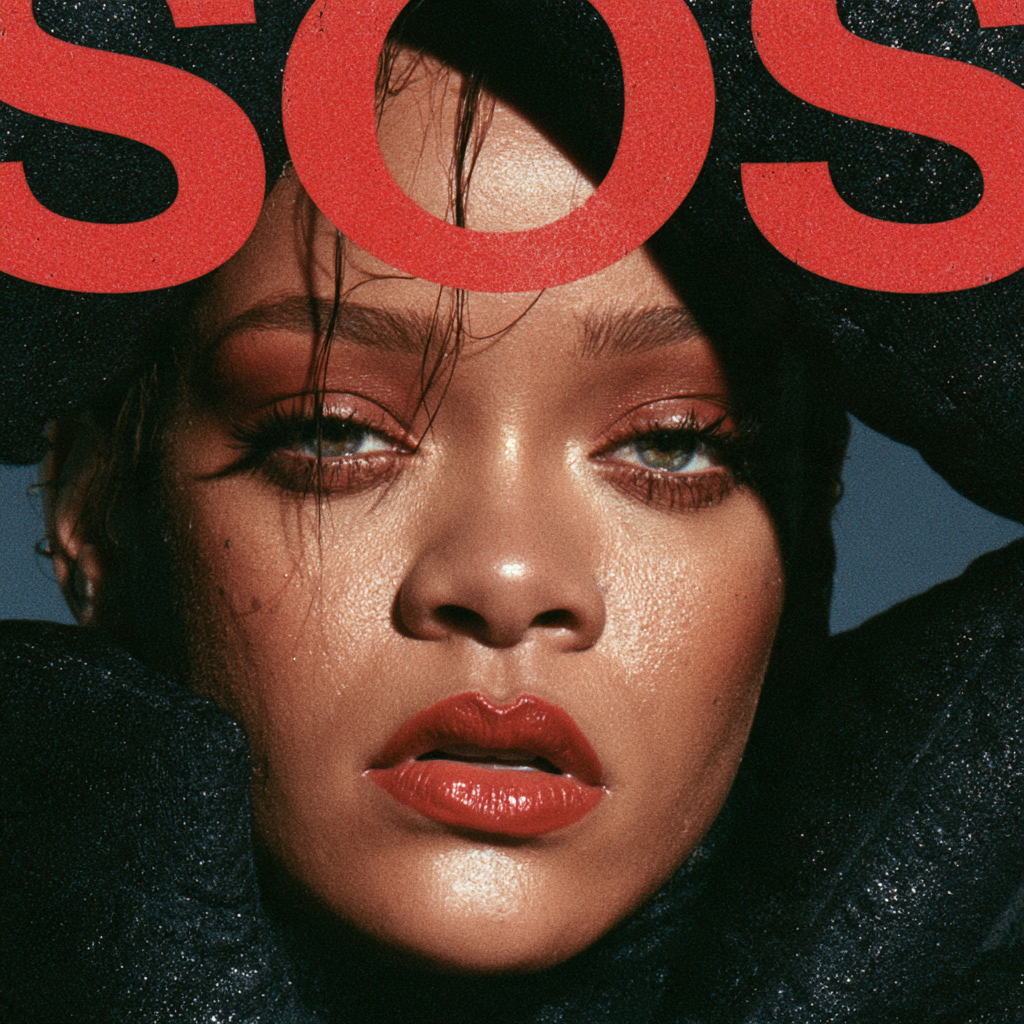
What Song Does Rihanna’s “SOS” Sample? “Tainted Love” Explained
Rihanna’s “SOS” samples Soft Cell’s famous recording of “Tainted Love”.
But that’s only part of the musical history.
Soft Cell didn’t originally write “Tainted Love” either.
The song was first recorded by American soul singer Gloria Jones in 1964, before Soft Cell transformed it into a synth-pop hit in 1981.
Rihanna’s “SOS” then brought the familiar musical material into mainstream 2000s pop.
There’s another unexpected detail.
The song’s second verse includes multiple references to famous 1980s song titles.
That makes “SOS” a particularly enjoyable musical rabbit hole.
What part of Tainted Love does SOS use?
The recognisable electronic bassline and rhythmic musical idea associated with Soft Cell’s recording.
Producer J. R. Rotem developed a new arrangement around the sample.
He was attracted to the original synth-pop character and wanted to create something suitable for contemporary R&B and dance-pop.
That gave the finished recording a familiar musical foundation.
Listeners who know Soft Cell may recognise the connection immediately.
Who originally wrote Tainted Love?
Ed Cobb.
He wrote the composition recorded by Gloria Jones in 1964.
The original is an American soul recording.
It sounds quite different from Soft Cell’s later interpretation.
The electronic arrangement made famous in 1981 became central to Rihanna’s new song.
That creates a musical chain spanning several decades.
Who are Soft Cell?
An English synth-pop duo consisting of Marc Almond and David Ball.
Their interpretation of “Tainted Love” became an international hit in 1981.
The recording stripped much of the warmth from the original soul arrangement.
Instead, it relied heavily on electronic rhythm and synthesizers.
That made the composition sound colder and more mechanical.
The transformation was particularly effective because the lyrics describe an emotionally damaging relationship.
When did Rihanna release SOS?
2006.
The song appeared on her second studio album A Girl Like Me.
It became Rihanna’s first No. 1 single on the Billboard Hot 100.
That was an important moment in her developing international career.
Her earlier recordings had already attracted attention.
But “SOS” helped establish her as a major mainstream pop performer.
Who produced SOS?
J. R. Rotem.
The recording was written by Rotem and Evan “Kidd” Bogart, with Ed Cobb credited because of the sampled composition.
Rotem’s production combines electronic pop with contemporary R&B influences.
The arrangement retains an obvious connection with the 1980s.
But Rihanna’s vocal gives the music a different personality.
Was SOS originally written for Rihanna?
Not exclusively.
The song was initially intended for Christina Milian.
Milian didn’t record the finished hit.
The material subsequently reached Rihanna.
That’s another interesting detail.
One of Rihanna’s defining early successes might have belonged to another singer.
The eventual performance helped shape the direction of her career.
What does SOS actually mean?
Overwhelming romantic attraction.
The narrator feels as though somebody has taken control of her emotions.
The title refers to an emergency signal.
That creates the image of a person needing help because their feelings have become so intense.
The lyrics are exaggerated and playful.
They’re not describing a literal emergency.
The song uses the familiar idea of romantic obsession inside an energetic pop arrangement.
What hidden 1980s songs appear in the lyrics?
Songwriter Evan Bogart revealed that he deliberately incorporated references to several famous recordings from the decade.
These include songs associated with a-ha, Cutting Crew, Tears for Fears, Kim Wilde and Michael Jackson.
The result creates another layer for listeners familiar with 1980s pop.
The references aren’t necessarily obvious during casual listening.
But once you recognise the titles, the verse becomes a miniature collection of musical connections.
Was the 1980s connection deliberate?
Yes.
Bogart explained that he developed the idea while writing the song.
The production already had a strong connection with 1980s synth-pop through “Tainted Love”.
He then introduced additional references into the lyrics.
That makes the composition unusually self-aware about its musical influences.
It’s almost a celebration of the decade disguised as a contemporary pop hit.
Is SOS a cover of Tainted Love?
No.
It’s a separate composition incorporating sampled material.
Rihanna isn’t simply performing the original Ed Cobb song.
“SOS” has different lyrics and a new musical structure.
The sample provides a recognisable element within that newer composition.
Radar’s history of the original “Tainted Love” by Gloria Jones explains the earlier recording in detail.
Why do samples work so well in pop?
Because listeners recognise musical patterns even when they don’t remember the title.
A familiar bassline creates immediate interest.
The artist can then introduce a different vocal and lyrical subject.
The resulting recording feels both new and familiar.
That was particularly effective in “SOS”.
The production connected Rihanna with an established pop melody while giving her an entirely different musical identity.
What genre is SOS?
Dance-pop and contemporary R&B.
The recording also incorporates synth-pop influences through its sample.
That mixture helped make the song successful across different audiences.
It retained enough rhythmic energy for clubs while remaining accessible to mainstream pop listeners.
Songs like SOS
Try Rihanna’s “Don’t Stop the Music”, Soft Cell’s “Tainted Love”, Nelly Furtado’s “Maneater”, Britney Spears’ “Toxic”, Madonna’s “Hung Up”, Gwen Stefani’s “What You Waiting For?” and Kylie Minogue’s “Can’t Get You Out of My Head”.
For more musical discoveries of this kind, Radar’s guide to famous songs built on older samples offers additional examples.
What does Rihanna’s SOS sample?
Soft Cell’s “Tainted Love” from 1981.
That recording was itself a cover of Gloria Jones’ 1964 soul original.
Rihanna’s 2006 hit also contains lyrical references to several other 1980s songs.
It’s a pop recording built on musical memory, and one of Rihanna’s earliest major international successes.