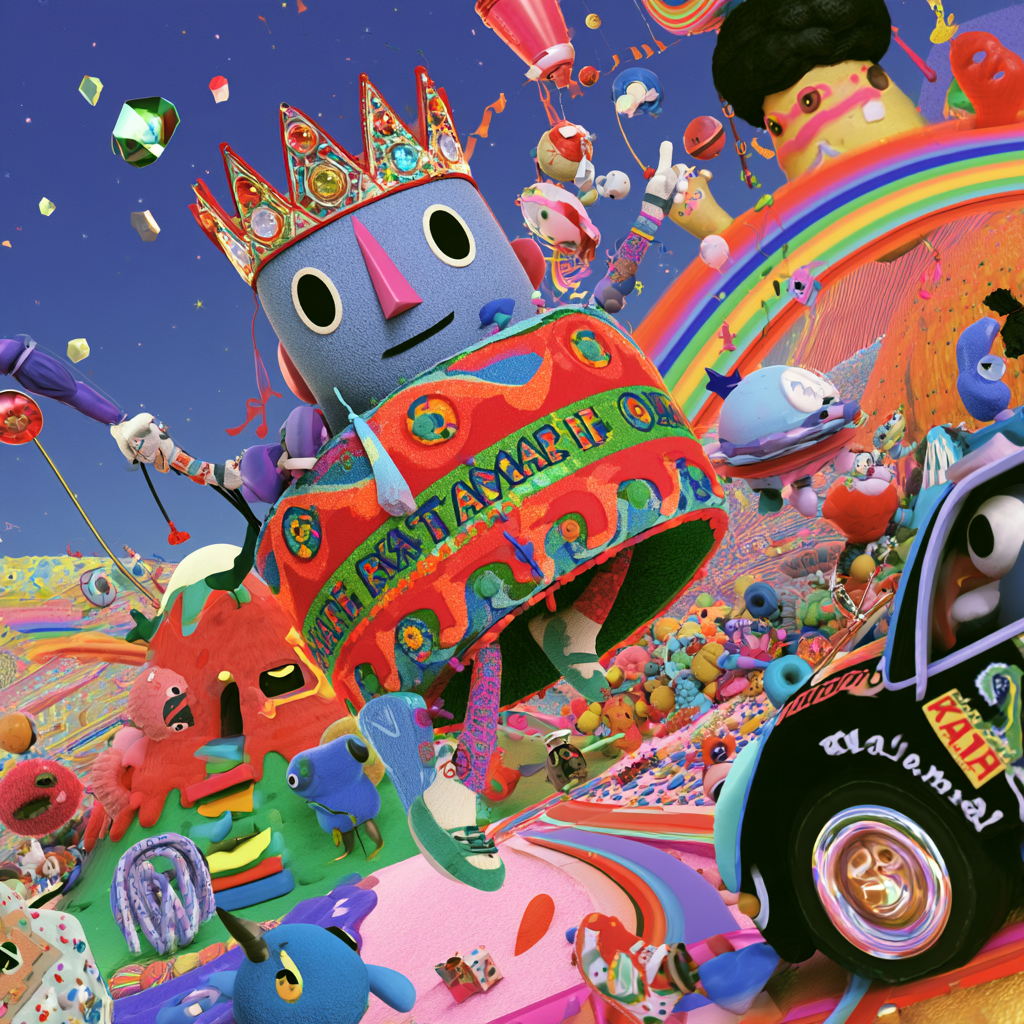
What Is the Katamari Damacy Theme Song? “Katamari on the Rocks” Explained
The famous opening theme from Katamari Damacy is “Katamari on the Rocks”, sometimes listed as “Katamari on the Rocks – Main Theme”.
It’s the recording with the instantly recognisable repeated vocal sounds that many players remember long after finishing the game.
The music was composed by Yuu Miyake and performed by Japanese singer Masayuki Tanaka.
It originally appeared in Namco’s 2004 game Katamari Damacy.
But its musical identity is much more unusual than conventional video-game background music.
The soundtrack combines Japanese pop, funk, jazz, electronic music and styles associated with Shibuya-kei.
More than twenty years later, the music continues attracting attention, including a new retrospective review of the original soundtrack published in November 2026.
What is Katamari Damacy?
A Japanese video game built around a wonderfully strange idea.
The player controls a tiny character called the Prince.
His task is to roll a sticky ball, known as a katamari, around different environments.
Objects attach themselves to the ball.
As it grows, larger objects become available.
Eventually, the player can collect enormous parts of the surrounding world.
The items are then used to create stars and other celestial objects.
The premise is absurd.
But the gameplay is unusually satisfying.
Its musical soundtrack matches that playful personality perfectly.
Who composed “Katamari on the Rocks”?
Yuu Miyake.
He was one of the principal composers involved in creating the game’s musical identity.
Miyake helped establish an approach very different from conventional video-game soundtracks of the period.
Rather than relying exclusively on electronic instrumentals, the team worked with singers and a broad range of musical influences.
“Katamari on the Rocks” became the most recognisable result.
Its repeated melody also appears in different forms across the series.
That gives it the role of a recurring musical theme.
Who sings the original theme?
Masayuki Tanaka.
The Japanese vocalist is also associated with the rock band Crystal King.
His powerful delivery gives the recording a distinctive character.
Rather than using a restrained pop vocal, the performance sounds almost exaggerated.
That makes it particularly suitable for the game’s absurd visual world.
The soundtrack also features other singers and musicians.
That variety is central to its appeal.
The recordings feel like individual songs rather than simply variations on one background-music style.
Why is the music so catchy?
Because of repetition.
The central vocal melody is simple and easy to remember.
The rhythm is energetic.
And the instrumental arrangement is full of unusual details.
There’s a strong sense of playfulness.
The music frequently introduces unexpected sounds, rhythms and vocal techniques.
That creates something unusual.
The soundtrack is sophisticated enough to reward careful listening, but immediately accessible.
You don’t need to understand Japanese to enjoy it.
What does the song mean?
The title and lyrics belong to the playful world of the game.
The vocals celebrate the katamari and the experience of rolling objects together.
The recording also communicates a broader feeling of optimism.
It isn’t a serious dramatic song about defeating an enemy.
It’s a celebration of movement and absurd possibility.
That makes it an excellent soundtrack for a game where ordinary household objects become ingredients in creating stars.
What album is the song on?
Katamari Fortissimo Damacy.
The original soundtrack album was released in Japan in May 2004.
It includes “Katamari on the Rocks”, “Lonely Rolling Star” and numerous other recordings.
The album is notable for its musical diversity.
Some tracks resemble playful Japanese pop.
Others draw from jazz, dance music and lounge arrangements.
It’s worth hearing as a complete album rather than only searching for the famous theme.
What is “Lonely Rolling Star”?
Another beloved recording from the soundtrack.
The song features vocals by Saki Kabata.
Its musical personality is different from “Katamari on the Rocks”.
The arrangement is more melodic and emotionally gentle.
That makes it particularly popular with players who enjoy the soundtrack’s softer side.
The two recordings demonstrate how much emotional range exists within a game built around such a simple idea.
One feels energetic and ridiculous.
The other can sound genuinely nostalgic.
What is Shibuya-kei?
A Japanese musical movement strongly associated with Tokyo during the 1990s.
Artists combined international pop influences with sampling, electronic music and retro production.
The music frequently drew from jazz, funk, bossa nova, French pop and other styles.
That mixture is particularly relevant to Katamari Damacy.
The soundtrack’s willingness to combine apparently unrelated influences resembles the broader musical philosophy associated with Shibuya-kei.
If you’re interested in the Japanese music surrounding the game, Radar’s guide to city pop and its global revival is another useful place to explore.
City pop and Shibuya-kei are different movements, but both help explain the international influences present in Japanese popular music.
Why does Katamari music sound different from other games?
Because the soundtrack rarely behaves like ordinary background music.
Many game scores are designed to support the action without demanding attention.
Katamari frequently does the opposite.
The songs have personalities.
They contain distinctive melodies and unusual vocals.
You may remember a song as clearly as the level itself.
That has helped the soundtrack develop a lasting audience beyond people actively playing the game.
What other Katamari songs should you hear?
Start with “Lonely Rolling Star”.
Then explore “The Moon & the Prince”, “Katamari Mambo” and other selections from the original album.
Each recording brings a different musical influence.
For listeners who enjoy the game’s more electronic moments, there are connections with Japanese dance music and experimental pop.
For those who prefer the vocal tracks, the soundtrack offers plenty of melodic material.
Why is Katamari’s soundtrack still popular?
Because its musical identity remains unusual.
The original game arrived in 2004, when many large commercial releases favoured orchestral or cinematic music.
Katamari embraced something stranger.
Its soundtrack is playful, international and frequently unpredictable.
That gives it a distinctive identity even decades later.
The recent retrospective attention suggests that listeners are increasingly treating older game soundtracks as albums worth exploring independently.
What is the Katamari Damacy theme song?
“Katamari on the Rocks” by Masayuki Tanaka, composed by Yuu Miyake.
It appeared in the original 2004 game and on Katamari Fortissimo Damacy.
The recording combines an infectious melody with an eclectic Japanese pop arrangement.
And it’s one of gaming’s clearest examples of music being just as memorable as the game itself.