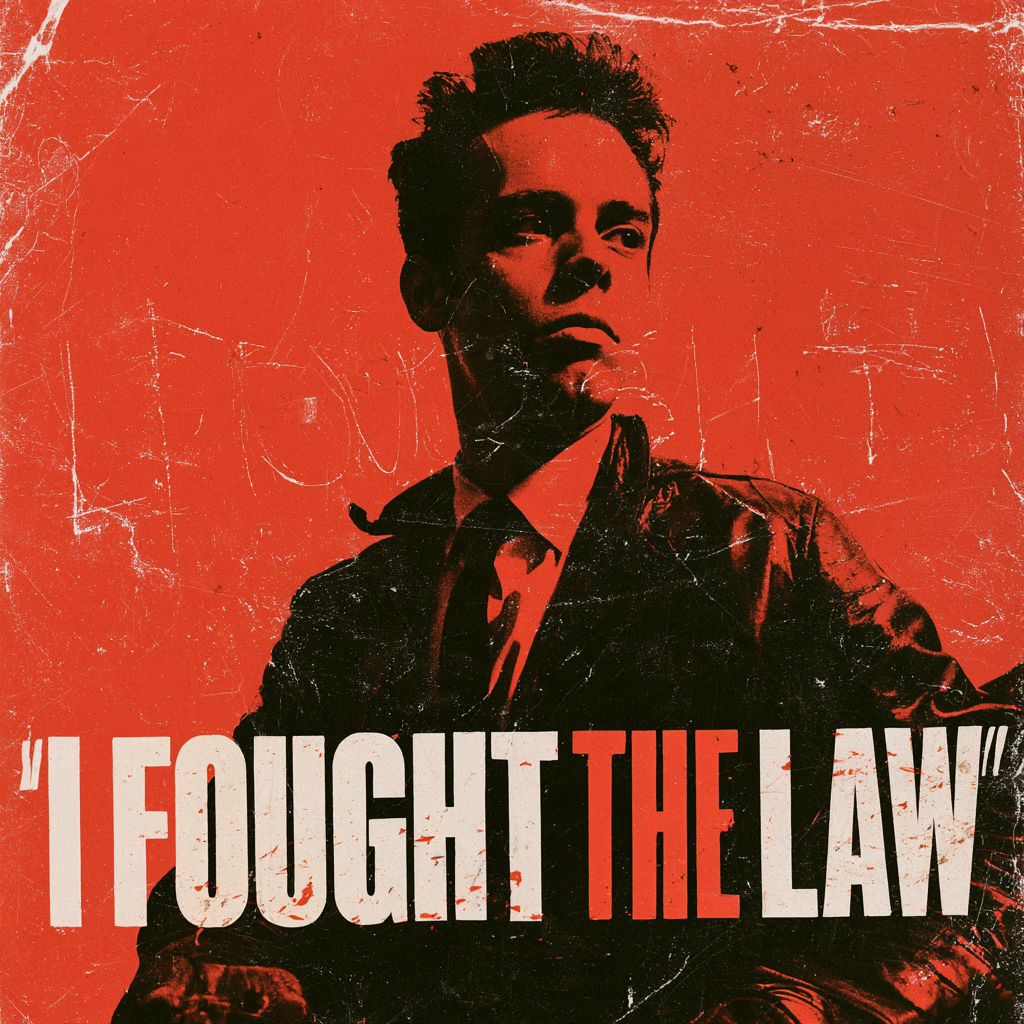
Who Originally Sang “I Fought the Law”? Before The Clash
“I Fought the Law” was originally recorded by The Crickets.
The band released it in 1960.
But many listeners associate the composition with The Clash.
Others know the famous 1960s interpretation by the Bobby Fuller Four.
That creates an unusual musical history.
The original recording came from a group previously associated with Buddy Holly.
Then Bobby Fuller transformed it into a major American hit.
More than a decade later, The Clash brought the composition into the British punk era.
Who wrote “I Fought the Law”?
Sonny Curtis.
He was an American guitarist and songwriter associated with The Crickets.
Curtis became part of the group after Buddy Holly’s death in 1959.
He had already known Holly and worked within the same musical environment.
Curtis wrote “I Fought the Law” during the late 1950s.
The composition became one of his most enduring achievements.
Did Buddy Holly record it?
No.
This is a common misunderstanding.
The Crickets had been Buddy Holly’s backing group.
But their recording of “I Fought the Law” came after his death.
Curtis joined the band and helped establish its new musical identity.
That means the composition belongs to The Crickets’ later career rather than Holly’s own recordings.
The distinction is important because the band’s name remained closely associated with the earlier rock-and-roll star.
When was the original released?
1960.
The recording appeared on In Style with the Crickets.
It was also issued as a single.
The original received relatively limited commercial attention.
But its melody and lyrics were strong enough to attract later performers.
That became the foundation of the song’s wider success.
What does “I Fought the Law” actually mean?
The consequences of challenging authority.
The narrator describes criminal behaviour and punishment.
The central message is fatalistic.
The character attempts to resist the established system.
But ultimately loses.
It’s a simple story.
That simplicity helped the song survive different musical styles.
The words can sound playful, rebellious or tragic depending on the performer.
Who were the Bobby Fuller Four?
An American rock band led by Bobby Fuller.
Fuller became associated with energetic garage rock and rock-and-roll recordings.
The group recorded “I Fought the Law” during the mid-1960s.
Their version became an enormous hit in 1966.
It reached No. 9 on the Billboard Hot 100.
For American listeners during that period, their interpretation became the defining recording.
Why did Bobby Fuller’s version become famous?
Because of its energy.
The guitar is direct and rhythmic.
The vocal has a rebellious personality.
And the arrangement is immediately accessible.
Fuller’s performance retains the original rock-and-roll foundation while making the recording sound more aggressive.
That helped establish the song as something suitable for later punk bands.
Why did The Clash cover it?
Because the composition’s rebellious message suited their musical identity.
The Clash were interested in combining punk energy with a much wider range of musical influences.
Their catalogue included reggae, rockabilly, soul and other styles.
They heard Bobby Fuller’s version and recognised its potential.
The band recorded the composition in 1979.
Their performance became one of the best-known interpretations.
Did The Clash change the lyrics?
Their version largely retains the central composition.
The main difference is the performance.
The guitars sound more aggressive.
The rhythm has a punk-rock character.
And Joe Strummer’s vocal gives the recording a different attitude.
That’s one of the strengths of the song.
It doesn’t require a completely rewritten narrative to work in another era.
Was The Clash version originally a single?
The recording appeared on the 1979 EP The Cost of Living.
It subsequently developed a wider commercial life.
For many British listeners, it became one of the most familiar recordings associated with The Clash.
Its strong chorus and rebellious energy made it particularly suitable for live performance.
Who else covered the song?
Numerous artists.
The Dead Kennedys created a deliberately provocative version.
Other rock, punk and country performers have also recorded interpretations.
That variety demonstrates the composition’s flexibility.
The central narrative can work across several styles.
But the rebellious personality remains recognisable.
Why has the song become so associated with punk?
Because the message is immediate.
The narrator challenges authority.
The consequences are severe.
And the chorus is easy to remember.
Those qualities suit punk’s direct musical approach.
But the song wasn’t originally a punk composition.
It emerged from the earlier rock-and-roll tradition.
That makes its history particularly interesting.
What genre is “I Fought the Law”?
The Crickets’ original is rock and roll.
The Bobby Fuller Four’s version is garage rock and rock and roll.
The Clash transformed it into punk rock.
The composition remained recognisable throughout.
This is similar to the way Nirvana reinterpreted David Bowie, explored in Radar’s history of the original “The Man Who Sold the World”.
A later artist can create a completely new cultural identity for an existing composition.
Songs like “I Fought the Law”
Try:
- The Clash – London Calling
- The Bobby Fuller Four – Let Her Dance
- The Crickets – More Than I Can Say
- The Ramones – Blitzkrieg Bop
- The Buzzcocks – Ever Fallen in Love
- The Undertones – Teenage Kicks
- The Jam – In the City
- The Stooges – Search and Destroy
- The Sex Pistols – Pretty Vacant
- Green Day – Basket Case
Which version should you hear first?
Start with The Crickets.
Then the Bobby Fuller Four.
Finally The Clash.
That sequence demonstrates how rock music evolved across two decades.
The original sounds closely connected with early rock and roll.
Fuller’s interpretation introduces garage-rock energy.
The Clash make it sound like a punk anthem.
Who originally sang “I Fought the Law”?
The Crickets in 1960.
Sonny Curtis wrote the song.
The Bobby Fuller Four made it a major American hit in 1966.
The Clash recorded their famous punk version in 1979.
The recording has survived because its message is simple, memorable and unusually flexible.
Sometimes the best punk song was written nearly twenty years before punk became a movement.