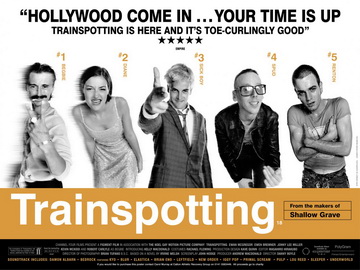
What Is the Opening Song in Trainspotting? Iggy Pop’s “Lust for Life”
The song playing during the famous opening sequence of Trainspotting is “Lust for Life” by Iggy Pop.
Originally released in 1977, the recording became internationally recognisable after appearing in Danny Boyle’s 1996 film.
The scene follows Mark Renton and his friends running through Edinburgh.
The music is explosive.
The editing is energetic.
And the familiar opening monologue introduces the film’s central conflict.
But the song existed almost twenty years before the movie.
It was written by Iggy Pop and David Bowie during their creative partnership in the 1970s.
What happens at the beginning of Trainspotting?
The film opens with Renton running through the streets of Edinburgh alongside his friend Spud.
The camera follows them through a busy urban environment.
Renton’s narration presents a sarcastic rejection of conventional adult life.
Jobs.
Consumer possessions.
Family expectations.
Ordinary ambitions.
The music immediately establishes enormous energy.
That combination creates one of the defining opening sequences of British cinema during the 1990s.
Who is Iggy Pop?
An American rock singer associated with punk and alternative music.
He became famous as the frontman of The Stooges.
The band’s raw recordings influenced generations of musicians.
Iggy later developed a solo career.
His albums The Idiot and Lust for Life, both released in 1977, became particularly important.
David Bowie played a major role in that period.
The two artists collaborated while spending time in Europe.
Did David Bowie write “Lust for Life”?
He co-wrote it with Iggy Pop.
The partnership combined Bowie’s melodic ideas with Iggy’s distinctive vocal and performance style.
The recording was created during their Berlin-era collaboration.
Its rhythm and energy made it unusually effective.
The song’s famous instrumental introduction became one of its defining characteristics.
That also explains why it works so well in Trainspotting.
The music creates excitement before the vocal begins.
What inspired the famous rhythm?
The musical idea has been linked to the signal used by the American Forces Network radio service.
Bowie and Iggy were familiar with the broadcast while living in Berlin.
The rhythmic pattern helped inspire the recording’s musical foundation.
Drummer Hunt Sales then created an extraordinary performance around the idea.
The result became one of rock music’s most recognisable introductions.
It sounds immediate and almost relentless.
What does “Lust for Life” actually mean?
The title suggests an intense desire to live.
But the recording’s lyrics are more complicated.
Iggy Pop draws from imagery associated with addiction, excess and underground culture.
The song reflects a world in which pleasure and self-destruction can become difficult to separate.
That makes it particularly suitable for Trainspotting.
The film’s characters frequently pursue intense experiences while damaging their own lives.
The music sounds triumphant.
The circumstances are often tragic.
Why did Danny Boyle choose it?
Because its energy matched the opening scene.
The film needed to establish its personality immediately.
“Lust for Life” accomplishes that within seconds.
The rhythm suggests movement.
The vocal is confrontational.
And the recording’s history creates a natural connection with underground culture.
The film’s soundtrack team recognised that an older Iggy Pop recording could sound unexpectedly contemporary when placed alongside the visuals.
Was the song a hit in 1977?
It attracted attention, but it wasn’t the enormous international pop hit it later became.
The recording developed a strong reputation through Iggy Pop’s wider catalogue.
Its placement in Trainspotting introduced it to another audience.
That helped create a major commercial and cultural revival.
It’s an excellent example of a film transforming an older recording into something resembling a signature theme.
Is the song about heroin?
The lyrics contain references connected with drug culture.
But the recording isn’t simply a straightforward documentary about heroin addiction.
Iggy Pop uses characters, images and references to create a particular atmosphere.
That ambiguity is part of its identity.
The film’s subject makes listeners more likely to interpret the song through addiction.
But the recording existed independently before Trainspotting.
What album is “Lust for Life” on?
The album Lust for Life, released in 1977.
It also includes “The Passenger”, another of Iggy Pop’s defining recordings.
The album was developed during his creative partnership with Bowie.
It’s an essential introduction to Iggy’s solo work.
Listeners who only know “Lust for Life” from the film may be surprised by the range of musical styles on the complete album.
Why is the soundtrack so famous?
Because it captures a distinctive period in British culture.
The film combines older rock with contemporary dance music.
Its selections include Underworld, Pulp, Blur, Leftfield and other important artists.
The music connects the film’s characters with the nightlife and alternative culture of the 1990s.
That gives the soundtrack value beyond individual scenes.
It’s also an excellent historical document of the musical environment surrounding the film’s release.
What is the other famous Trainspotting song?
“Born Slippy .NUXX” by Underworld.
The recording became strongly associated with the film’s ending.
Its enormous electronic arrangement provides a very different musical experience from Iggy Pop.
Together, the two recordings help frame the story.
One represents explosive rock energy.
The other represents the euphoric atmosphere of British electronic dance music.
What genre is “Lust for Life”?
Rock and roll.
Garage rock.
Proto-punk-influenced rock.
The recording combines classic rock-and-roll rhythm with Iggy Pop’s confrontational performance style.
It’s energetic without relying on elaborate production.
That makes it particularly effective for cinema.
The rhythm is already doing much of the storytelling.
Songs like “Lust for Life”
Try Iggy Pop’s “The Passenger”, The Stooges’ “Search and Destroy”, David Bowie’s “Sound and Vision”, The Clash’s “London Calling”, Primal Scream’s “Rocks” and The Rolling Stones’ “Street Fighting Man”.
For another famous older recording transformed by cinema, read Radar’s history of the “Misirlou” opening from Pulp Fiction.
Both films use recognisable music to establish personality almost immediately.
What is the opening song in Trainspotting?
“Lust for Life” by Iggy Pop.
Co-written with David Bowie and released in 1977.
Danny Boyle used it in the opening of Trainspotting in 1996.
The combination became one of the defining musical moments of British cinema.
Thirty years after the film’s release, the recording remains inseparable from the image of Renton running through Edinburgh.