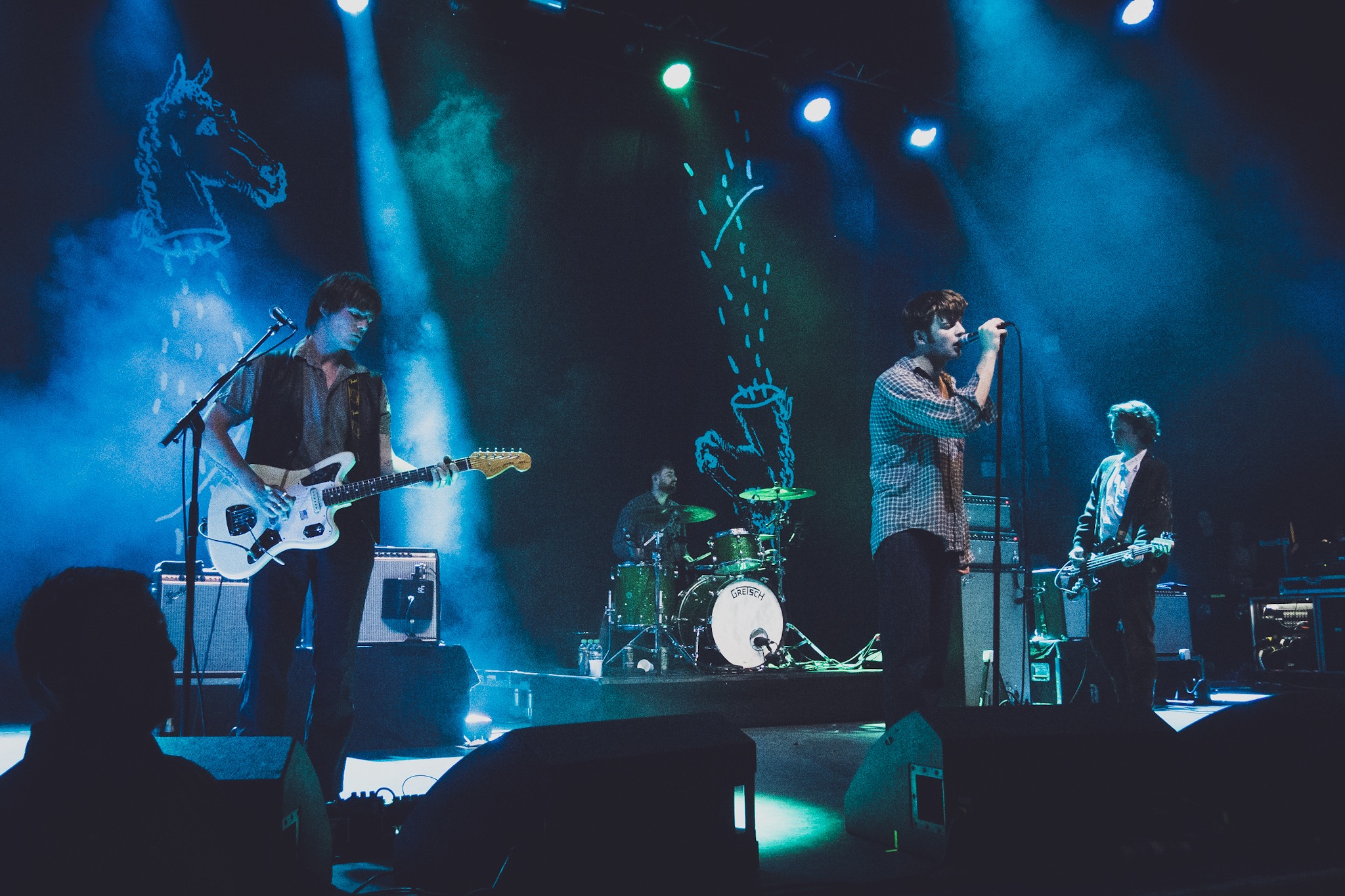
Fontaines D.C. “Marianne” Meaning: The Ripley Connection Explained
Fontaines D.C.’s “Marianne” is about escape.
More specifically, the desire to disappear from a world that feels increasingly overwhelming.
The song explores attraction, danger and the fantasy of leaving ordinary life behind.
And its inspiration is surprisingly cinematic.
“Marianne” was influenced partly by Ripley, the 2024 television adaptation of Patricia Highsmith’s famous psychological thriller.
That connection helps explain the recording’s unusual atmosphere.
The music feels glamorous.
Mysterious.
And slightly threatening.
Released in August 2026, “Marianne” introduced the band’s fifth studio album, Dopamine Chamber, which arrived on 16 October.
What does “Marianne” actually mean?
Escaping reality when reality becomes uncomfortable.
The song presents the idea of following somebody into another world.
That invitation can sound romantic.
But there’s something unsettling underneath.
The narrator appears capable of offering freedom.
Yet that freedom may involve surrendering control.
That’s what makes the recording interesting.
It isn’t simply a love song about wanting to run away together.
It asks whether escape is always a good thing.
Why was the song inspired by Ripley?
The television series explores identity, deception and the desire to inhabit somebody else’s life.
Tom Ripley becomes fascinated by a world of wealth and beauty.
But his attempts to enter that world become increasingly destructive.
The series uses striking black-and-white cinematography.
Its European settings feel luxurious and strangely empty.
That atmosphere connects naturally with “Marianne”.
Both explore the seductive appeal of disappearing into another life.
The fantasy looks beautiful.
Its consequences may be considerably darker.
Is Marianne a real person?
The song presents Marianne as a central figure.
But there isn’t sufficient public evidence to identify one specific real-life person as its inspiration.
It’s safer to interpret the character through the atmosphere and story of the recording.
Marianne can represent somebody offering escape.
Or somebody the narrator wants to rescue.
The precise relationship remains open.
That ambiguity is useful.
The listener is invited into the emotional situation without receiving a complete explanation.
Why does the song sound so cinematic?
Because Fontaines D.C. deliberately expanded their sound.
Their earliest recordings were built around:
guitars,
bass,
drums,
and Grian Chatten’s distinctive vocal delivery.
By Romance in 2024, the band were already exploring darker and more experimental production.
“Marianne” takes that development further.
Synthesizers and atmospheric textures become increasingly important.
The recording feels closer to a mysterious film soundtrack than conventional guitar-driven post-punk.
What genre is “Marianne”?
Alternative rock.
Synth-influenced post-punk.
Gothic alternative music.
There are also elements of cinematic electronic pop.
The recording is difficult to classify precisely because the band are deliberately expanding beyond their earlier identity.
That is part of its appeal.
Listeners discovering Fontaines D.C. through “Marianne” may be surprised when they explore the more aggressive guitar sound of Dogrel.
What is Dopamine Chamber about?
The album explores the relationship between pleasure and danger.
Grian Chatten has described imagining the record as a kind of chamber capable of changing the listener’s mood.
Each song offers a different emotional experience.
But the wider context is unsettling.
The band have discussed feelings of helplessness in a world affected by political conflict, environmental anxiety and accelerating technology.
The album explores the temptation to escape those problems through entertainment and distraction.
“Marianne” provides an ideal introduction.
The music offers beauty.
The subject suggests danger.
Why is the album called Dopamine Chamber?
Dopamine is associated with motivation, reward and aspects of pleasure-seeking behaviour.
The title imagines music as something capable of changing how a person feels.
One song might create excitement.
Another anxiety.
Another melancholy.
The band use that idea as a metaphor for the album’s emotional structure.
It’s also connected with modern society.
People frequently turn towards entertainment when ordinary life becomes uncomfortable.
That can provide genuine relief.
It can also become avoidance.
What makes “Marianne” different from “Starburster”?
“Starburster”, from Romance, was aggressive and restless.
Its rhythm and vocal delivery created an immediate feeling of pressure.
“Marianne” is more restrained.
The music moves slowly.
The atmosphere becomes central.
Rather than shocking the listener through sudden intensity, it creates discomfort gradually.
Both recordings explore unusual emotional states.
They simply use different musical approaches.
Why does Grian Chatten sound so detached?
His vocal delivery supports the atmosphere.
Rather than performing with constant aggression, he allows the music to create much of the tension.
The performance sounds intimate.
But not necessarily reassuring.
That gives the narrator an ambiguous personality.
Is he offering safety?
Or inviting somebody towards danger?
The recording never fully resolves the question.
Did Fontaines D.C. change producers?
Dopamine Chamber was produced by James Ford.
Ford also worked on Romance.
His wider credits include projects with Arctic Monkeys and other major alternative artists.
The continuity matters.
The band’s changing sound isn’t simply the result of introducing a completely different producer.
It’s part of their creative development.
They appear increasingly interested in electronic texture and cinematic atmosphere.
What does the music video add?
The visuals reinforce the song’s unsettling quality.
Rather than presenting a straightforward live performance, the video creates a mysterious cinematic environment.
That fits the influence of Ripley.
The recording works almost like the opening sequence to a psychological thriller.
The viewer senses that something important has happened.
But doesn’t yet understand the complete story.
Why is the song relevant in October 2026?
The release of Dopamine Chamber has renewed attention around the single.
The album arrived on 16 October.
The band also performed material from the project on a special edition of Later… with Jools Holland in October.
“Marianne” provides one of the clearest routes into understanding their new musical direction.
Songs like Fontaines D.C.’s “Marianne”
Try:
Depeche Mode – In Your Room
The Cure – Plainsong
DIIV – Under the Sun
Massive Attack – Angel
The Horrors – Still Life
Interpol – Untitled
The Murder Capital – More Is Less
Radiohead – Everything in Its Right Place
These recordings explore different combinations of dark atmosphere, electronic production and alternative rock.
Should new listeners start with “Marianne”?
It’s a good introduction to the band’s current sound.
But it doesn’t represent every stage of their career.
To understand their evolution, try listening to:
Boys in the Better Land
Jackie Down the Line
I Love You
Starburster
Marianne.
The progression becomes obvious.
A confrontational guitar band gradually develops a much broader musical identity.
What does “Marianne” really mean?
The song explores the temptation to disappear into another life.
Its connection with Ripley helps explain the atmosphere of luxury, danger and uncertain identity.
Fontaines D.C. have created music that sounds beautiful while suggesting something deeply uncomfortable.
That contradiction is central to Dopamine Chamber.
Sometimes the promise of escape is exactly what makes something dangerous.