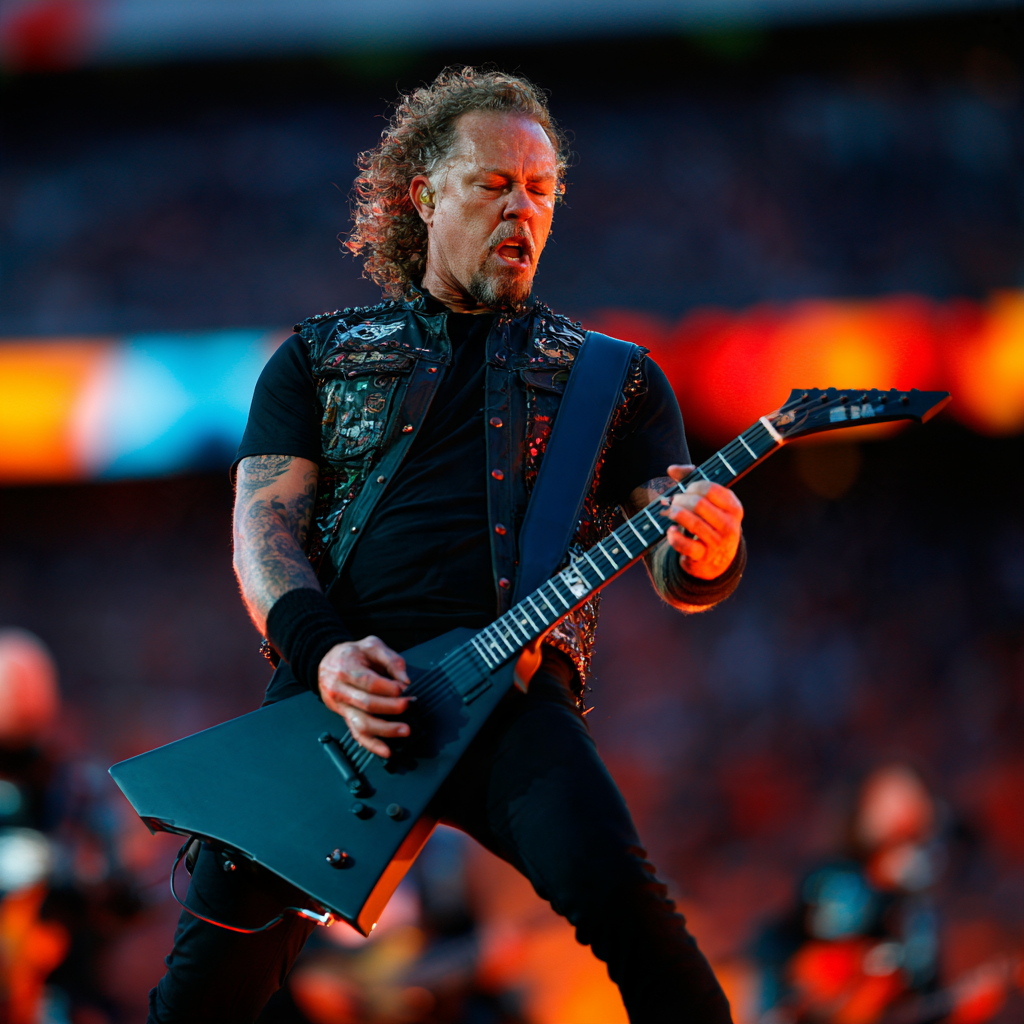
What Is Metallica’s Intro Song? “The Ecstasy of Gold” Explained
The dramatic orchestral music played before Metallica concerts is “The Ecstasy of Gold” by Ennio Morricone.
And it wasn’t originally written for the band.
The composition appeared in the 1966 Western The Good, the Bad and the Ugly.
Morricone created it for one of the film’s most memorable scenes.
Decades later, Metallica began using the recording as their walk-on music.
That tradition started during the early 1980s.
The combination became so effective that the piece is now strongly associated with Metallica’s live shows.
For many heavy-metal fans, hearing Morricone’s music means only one thing.
Metallica are about to appear.
Who composed “The Ecstasy of Gold”?
Ennio Morricone.
The Italian composer became one of cinema’s most important musical figures.
He worked extensively with director Sergio Leone.
His music for Westerns helped establish a completely new soundtrack identity.
Rather than relying exclusively on conventional orchestral arrangements, Morricone frequently combined:
unusual instruments
dramatic percussion
human voices
and experimental sound.
“The Ecstasy of Gold” is one of his most recognisable compositions.
What film is it from?
The Good, the Bad and the Ugly.
Released in 1966.
The film stars Clint Eastwood, Lee Van Cleef and Eli Wallach.
It’s one of the defining Spaghetti Westerns.
The story follows three men searching for buried treasure during the American Civil War.
Morricone’s soundtrack became central to the film’s atmosphere.
“The Ecstasy of Gold” appears during a particularly important sequence involving the search for the hidden money.
What happens during the scene?
Eli Wallach’s character, Tuco, arrives at a cemetery.
He knows that an enormous amount of money is buried somewhere among the graves.
Then he begins searching.
The cemetery seems endless.
There are rows and rows of graves.
Tuco becomes increasingly frantic.
Morricone’s music grows with the action.
The arrangement becomes more intense.
The character runs faster.
The scene becomes almost overwhelming.
It’s one of the clearest examples of music transforming ordinary physical movement into extraordinary cinema.
Why is the music so dramatic?
Because the arrangement builds gradually.
It doesn’t begin at maximum intensity.
The melody appears.
Additional instruments enter.
The rhythm becomes more urgent.
The orchestration expands.
Eventually, the music feels almost unstoppable.
That structure makes the composition perfect for an important moment.
Something enormous is about to happen.
The listener can feel it approaching.
Who is the woman singing?
The original recording features soprano Edda Dell’Orso.
Her voice became closely associated with Morricone’s soundtrack style.
Rather than using conventional lyrics, Morricone frequently treated the human voice as another musical instrument.
That creates a distinctive atmosphere.
The vocal sounds emotional without telling the listener exactly what to feel.
It’s a particularly important part of “The Ecstasy of Gold”.
What does the title mean?
The overwhelming excitement of discovering something valuable.
In the film, the valuable object is gold.
But the phrase also suggests obsession.
The character becomes almost intoxicated by the possibility of wealth.
That fits the scene perfectly.
Tuco isn’t calmly conducting a practical search.
He’s experiencing a kind of emotional frenzy.
The music expresses that intensity.
Why did Metallica choose it?
Because they wanted dramatic entrance music.
During their early touring years, Metallica experimented with different sounds before appearing on stage.
Their manager Jon Zazula suggested replacing an earlier intro tape with Morricone’s composition.
Zazula admired the soundtrack.
He recognised that the music’s gradual buildup would work perfectly before a heavy-metal performance.
The band adopted it.
And the tradition continued.
When did Metallica start using it?
The recording became associated with their concerts around the Kill ‘Em All touring period.
That means the tradition began extremely early in the band’s career.
Metallica were not yet the enormous stadium act they would eventually become.
But the entrance music already suggested something monumental.
That contrast is particularly amusing in retrospect.
A relatively young heavy-metal band chose orchestral music that sounded suitable for the arrival of an empire.
Why does orchestral music work before heavy metal?
Because both can create enormous physical intensity.
Heavy metal frequently relies on:
powerful rhythm
repetition
dramatic changes
and large-scale sound.
Orchestral music can use similar techniques.
“The Ecstasy of Gold” builds tension through accumulating instruments and increasing energy.
Then Metallica arrive with distorted guitars and drums.
The transition feels natural.
The audience is already emotionally prepared.
Does Metallica play the song live?
The band generally uses the recording as its entrance music rather than performing the complete composition themselves every night.
That distinction matters.
The audience hears Morricone’s music.
Then Metallica begin their performance.
The music functions as a signal.
The show is about to start.
Fans have become so familiar with the sequence that the opening notes can generate enormous excitement before the band even appears.
Did Metallica ever record their own version?
Yes.
The band recorded an interpretation for the 2007 tribute album We All Love Ennio Morricone.
That project brought together artists from different musical backgrounds to celebrate the composer’s work.
Metallica’s involvement recognised the importance of Morricone’s music to their own live identity.
It’s an unusual relationship.
A heavy-metal group had spent decades beginning its concerts with a piece of orchestral film music.
Eventually, they recorded their own interpretation.
Is “The Ecstasy of Gold” heavy metal?
No.
The original is orchestral film music.
More specifically, it’s part of Morricone’s score for a Western.
But its dramatic structure shares characteristics with heavy metal.
That helps explain why the piece became associated with Metallica.
Genre boundaries become less important when the emotional effect is similar.
What other famous music did Ennio Morricone compose?
His catalogue includes:
The Good, the Bad and the Ugly Theme
A Fistful of Dollars Theme
The Mission – Gabriel’s Oboe
Once Upon a Time in the West
Cinema Paradiso
The Hateful Eight.
Those recordings demonstrate his extraordinary range.
Some are aggressive and experimental.
Others are gentle and emotional.
All are recognisably cinematic.
Why has Metallica kept using the song?
Because it works.
The audience recognises it.
The buildup creates anticipation.
And the composition has become part of the band’s live identity.
Changing it would remove something familiar from the concert experience.
That’s particularly important for a group whose audience spans several generations.
Fans attending their first Metallica show can experience the same musical introduction that earlier audiences heard decades ago.
Songs like “The Ecstasy of Gold”
Try:
Ennio Morricone – The Good, the Bad and the Ugly Theme
Ennio Morricone – The Trio
Hans Zimmer – Time
John Williams – Duel of the Fates
Carl Orff – O Fortuna
John Murphy – In the House – In a Heartbeat
Clint Mansell – Lux Aeterna
These recordings use different approaches to orchestral drama and gradual musical development.
Why is the composition so recognisable?
Because it creates a complete emotional journey.
The music begins with anticipation.
Then becomes increasingly intense.
By the climax, it feels almost overwhelming.
That structure works beautifully in cinema.
It also works in an arena filled with thousands of metal fans.
The setting changes.
The emotional effect remains.
What is Metallica’s intro song?
“The Ecstasy of Gold” by Ennio Morricone.
Originally composed for The Good, the Bad and the Ugly in 1966.
Adopted by Metallica during the early 1980s.
And used to introduce their concerts for decades.
It’s one of music’s most unexpected partnerships.
An Italian composer writing for a Western.
An American heavy-metal band.
And millions of fans who now hear that orchestral melody and immediately expect enormous guitars.