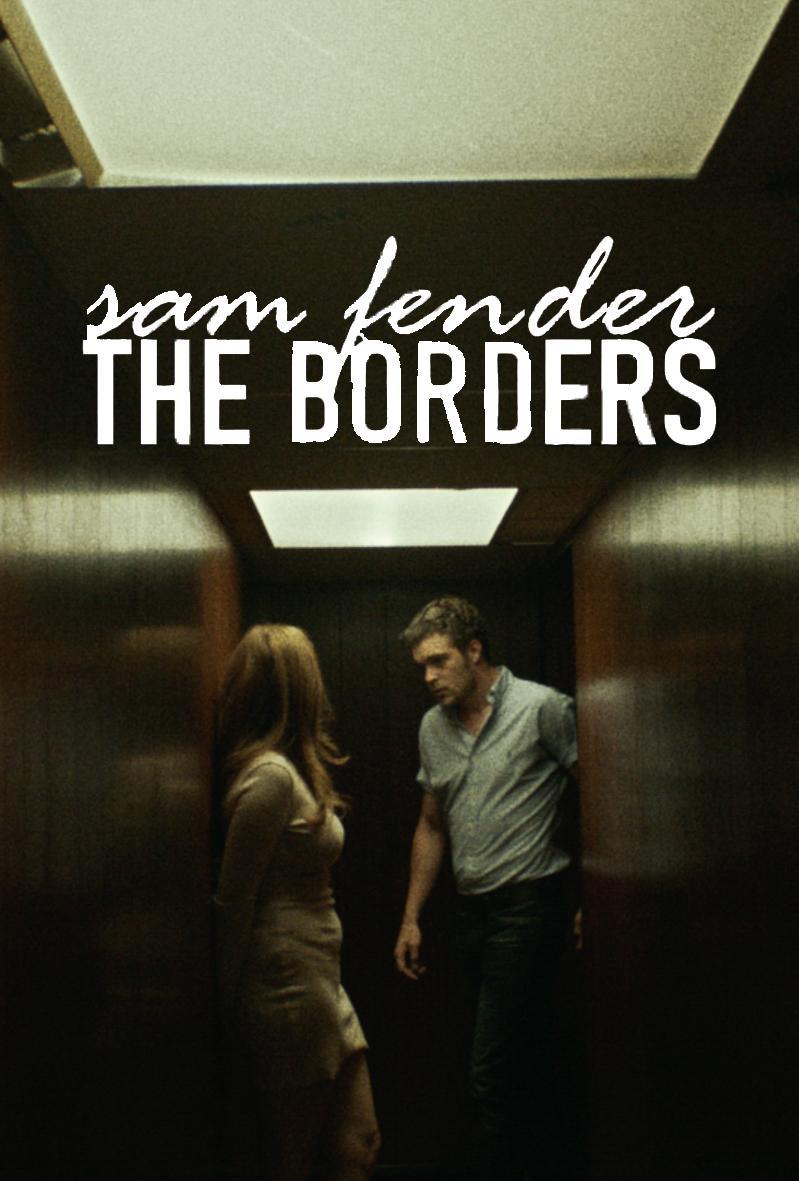
The Story Behind Sam Fender’s “The Borders” – What Is the Song Really About?
Sam Fender has built much of his reputation on turning real lives, difficult childhoods and working-class experiences into huge rock songs.
“The Borders” is perhaps one of the clearest early examples.
Released in 2019 as part of Fender’s debut album Hypersonic Missiles, the song tells the story of two boys who grow up together before their lives eventually move in very different directions.
But unlike some of Fender’s more outward-looking early songs, “The Borders” came remarkably close to his own life.
Fender has described it as one of the first songs in which he wrote directly about his own experiences rather than commenting on politics or events happening around him.
So what is “The Borders” actually about?
What is Sam Fender’s “The Borders” about?
At its heart, “The Borders” is a story about childhood friendship, trauma, resentment and what happens when two people who grow up together eventually take completely different paths.
When the song was originally released, Fender’s team described it as the story of “two boys growing up together and then going their separate ways”.
They also made clear that the song was deeply personal and connected to traumatic memories, although many of the specific events are deliberately left unexplained.
That ambiguity is important.
“The Borders” doesn’t give the listener a neat beginning, middle and end.
Instead, Fender presents fragments of childhood and adolescence.
You get the impression of two boys growing up in difficult circumstances, spending an enormous amount of time together and developing a complicated friendship that contains affection, anger, jealousy and violence.
Eventually, their lives separate.
One appears to escape.
The other is left behind.
Is “The Borders” based on Sam Fender’s real life?
At least partly, yes.
Fender has been unusually careful about revealing exactly which parts are real.
Before Hypersonic Missiles was released, he said “The Borders” represented the first time he had written a song based substantially on his own experiences.
He explained that many of his previous singles had been social commentary. Writing about himself felt far more exposing because he was effectively turning the attention back on his own life.
There is an even more revealing clue in a 2019 Guardian interview.
Fender refused to give the full background to “The Borders”, partly because the people and experiences behind it were real. But he explained that the song was broadly connected to the guilt he felt about his own life working out while some people he grew up alongside had been left behind.
That gives the song another layer.
It isn’t simply about losing a childhood friend.
It’s also about survivor’s guilt.
Sam Fender and the people who were “left behind”
This idea appears repeatedly throughout Fender’s songwriting.
Fender grew up in North Shields in North East England, and his music regularly returns to the people, streets and relationships he knew growing up.
Success inevitably changed his life.
Suddenly the kid writing songs in North Shields was touring internationally, winning major awards and building one of Britain’s biggest rock careers.
But not everyone he grew up with experienced the same escape.
“The Borders” captures some of the discomfort that comes with that.
What happens when two people start in roughly the same place but end up somewhere completely different?
Does the person who leaves feel guilty?
Does the person who stays behind feel abandoned?
And can a friendship survive when the two lives no longer resemble each other?
Fender doesn’t offer a comfortable answer.
The friendship in “The Borders” isn’t necessarily a healthy one
One of the interesting things about the song is that Fender doesn’t romanticise childhood friendship.
The relationship at the centre of “The Borders” appears complicated from the beginning.
When the official music video was released, the description went even further.
It portrayed the two boys as essentially becoming friends because of circumstance. They spend their childhood together, but there is an underlying question about whether they actually understand what friendship means or genuinely care for one another.
That’s very different from the usual nostalgic song about childhood friends.
These aren’t simply two best mates who eventually drift apart.
There is aggression.
There is competition.
There is emotional damage.
And there is a sense that both boys are products of the environments in which they grew up.
The official video makes the story even darker
The official video for “The Borders” was released in October 2019 and was directed by Thomas James.
Rather than showing Fender performing the track, the video builds a narrative around the two boys at the centre of the song.
It moves between childhood and later life, showing how their relationship develops and ultimately deteriorates.

The video was filmed on the Isle of Sheppey and deliberately places the boys away from a glamorous city environment.
Their world feels small.
They live around one another.
Their friendship grows partly because they have little choice.
Violence eventually becomes part of that relationship, reinforcing the idea that the trauma surrounding the two boys is being passed into the way they treat each other.
The video doesn’t necessarily provide a literal reconstruction of Fender’s own childhood.
Instead, it takes the emotional story contained within the song and turns it into something visual.
Why is the song called “The Borders”?
Fender has never given a simple public explanation that establishes one definitive meaning behind the title.
And that actually fits the song.
“The Borders” can be heard as being about boundaries.
The boundary between childhood and adulthood.
Between friendship and hostility.
Between the person who escapes and the person who stays behind.
Between remembering someone and actually still knowing them.
It would be easy to assume the title refers to a particular geographical border, but Fender’s explanation of the song has consistently concentrated on the relationship between the two boys rather than identifying a specific place.
So it is probably better to treat the title as part of the song’s ambiguity rather than inventing a literal explanation Fender himself hasn’t confirmed.
Why “The Borders” was different from Fender’s other early songs
Hypersonic Missiles contained plenty of songs looking outward at society.
Fender wrote about politicians, masculinity, mental health, social media and the world he saw around him.
“The Borders” forced him to do something different.
He had to look inward.
In his interview with Coup de Main, Fender explained that he found writing about himself much harder than criticising something happening elsewhere.
Talking about another person or a political problem creates distance.
Writing honestly about your own childhood doesn’t.
That shift would eventually become enormously important to Fender’s career.
His second album, Seventeen Going Under, went considerably further in that direction, examining his childhood, family, insecurity and experiences growing up in North Shields.
Fender later described the second album as much more personal than Hypersonic Missiles.
In that sense, “The Borders” almost feels like a bridge between the two records.
It showed Fender what could happen when he stopped writing exclusively about the world around him and started writing about himself.
“The Borders” was Sam Fender’s favourite song on Hypersonic Missiles
Fender wasn’t shy about how much the song meant to him.
When he released “The Borders” shortly before Hypersonic Missiles arrived, he publicly called it his favourite track on the album.
He continued talking about the song after the album became successful.
When discussing music for his second record in 2020, Fender said he loved the sound of “The Borders” and wanted to explore some of that direction further.
It also developed into a major fan favourite at his live shows.
That makes sense.
Musically, “The Borders” has everything people increasingly associate with Sam Fender.
A huge driving arrangement.
A sense of urgency.
Big guitars.
A soaring chorus.
And underneath all of it, a fairly painful story.
The Springsteen influence on “The Borders”
Bruce Springsteen’s influence on early Sam Fender is difficult to miss.
Fender has openly described himself as a huge Springsteen fan and has said that what he particularly admired was Springsteen’s ability to tell accessible stories about ordinary people’s lives without unnecessarily complicating them.
“The Borders” fits that tradition perfectly.
The production is enormous.
But the story isn’t about celebrities or extraordinary events.
It’s about two kids growing up.
Their homes.
Their friendship.
Their anger.
And what happened to them as they became adults.
When the single arrived, NME described its sound as sitting somewhere around Springsteen and The Killers.
But the North East setting and Fender’s personal experiences make the story completely his own.
Why does “The Borders” connect with so many people?
You don’t need to have grown up in North Shields to recognise the feeling behind the song.
Most people eventually discover that childhood friendships aren’t frozen in time.
Someone who was once one of the most important people in your life can eventually become almost a stranger.
Sometimes nothing dramatic happens.
People simply take different paths.
But when those different paths involve money, opportunity, addiction, family problems or success, the separation can become considerably more complicated.
“The Borders” captures that feeling without completely explaining it.
And perhaps that’s why it works.
Fender leaves enough missing that listeners can put their own memories into the gaps.
“The Borders” helped reveal the songwriter Sam Fender would become
Looking back, “The Borders” feels particularly important in Sam Fender’s catalogue.
Hypersonic Missiles established that Fender could write massive indie-rock songs about social issues.
But “The Borders” suggested that his most powerful subject might actually be his own past.
Two years later, Seventeen Going Under would prove exactly that.
Songs about childhood, family relationships, insecurity and growing up in North East England transformed Fender from one of Britain’s promising new rock musicians into one of the country’s biggest artists.
“The Borders” arrived before all of that.
It was Fender beginning to turn the camera around.
A song about two boys.
A damaged friendship.
Two lives heading in different directions.
And the uncomfortable feeling of being the one who got away.