What Does Oasis’ “Don’t Look Back in Anger” Mean – and Who Is Sally?
The most surprising answer is that Noel Gallagher has repeatedly suggested that “Don’t Look Back in Anger” doesn’t have one precise meaning.
The lyrics were assembled instinctively rather than written around a detailed story.
Yet over the past 30 years, listeners have given the song a meaning anyway.
It has become an anthem about acceptance.
Moving forward.
Forgiveness.
And refusing to allow the past to control you.
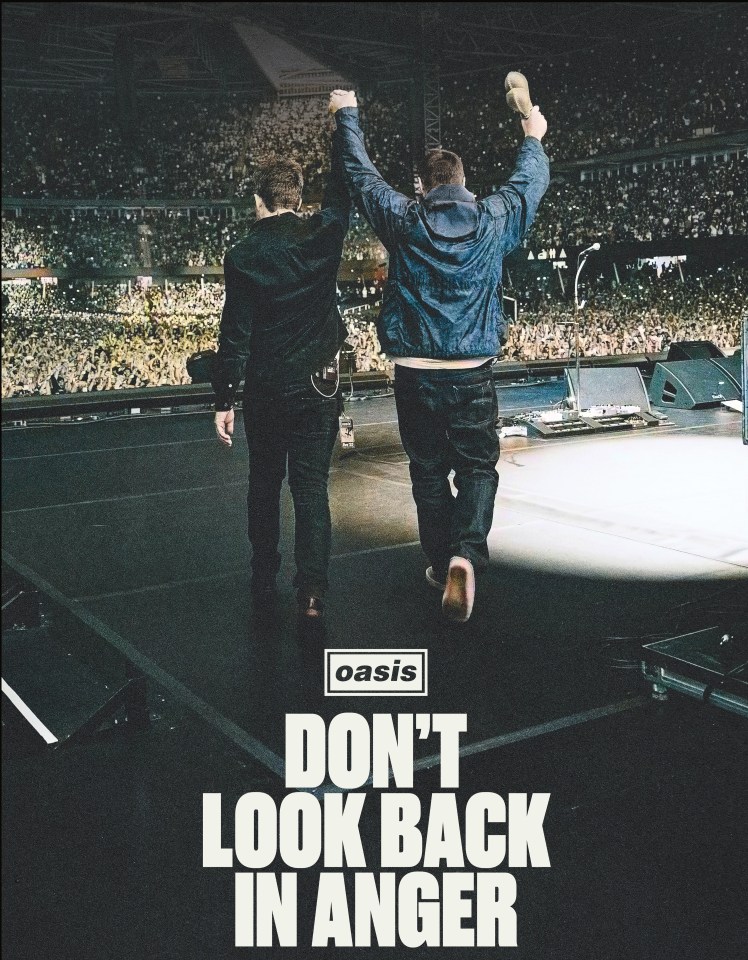
The timing is particularly good for rediscovering it. Oasis’ reunion documentary Don’t Look Back in Anger is due in cinemas and IMAX this September following their enormous 2025 reunion tour.
Who is Sally?
Probably nobody.
Fans have spent decades wondering who Sally is.
Noel Gallagher has explained that the name simply worked in the song.
There isn’t a secret former girlfriend called Sally hidden somewhere in Oasis history.
That is actually quite typical of Noel’s 1990s songwriting.
Words often arrived because:
they sounded good
they rhymed
they created an image
rather than because they belonged to an elaborate narrative.
Rolling Stone’s history of the song similarly notes that its emotional power comes more from its themes of moving forward than from a literal plot.
Why does the song start like John Lennon’s “Imagine”?
The piano introduction is an obvious musical nod to John Lennon.
Oasis never attempted to hide their admiration for The Beatles.
Noel Gallagher has openly borrowed musical language from them throughout his career.
But the song quickly becomes unmistakably Oasis.
Huge guitars.
A massive chorus.
And lyrics designed to be shouted by thousands of people simultaneously.
Why does Noel Gallagher sing it instead of Liam?
“Don’t Look Back in Anger” was one of the relatively rare early Oasis singles sung by Noel rather than Liam.
During the creation of (What’s the Story) Morning Glory?, Noel essentially gave Liam a choice between two major songs.
Liam chose “Wonderwall”.
Noel took “Don’t Look Back in Anger”.
The decision gave Oasis two completely different vocal identities on the same album.
What does “don’t look back in anger” mean?
Even if the verses are deliberately abstract, the title is remarkably clear.
Don’t spend your life obsessing bitterly about what happened.
You cannot change it.
Accept it.
Move forward.
That interpretation has become more important than Noel’s original intentions.
Songs eventually stop belonging entirely to the person who wrote them.
Millions of listeners bring their own experiences.
Why did the song become associated with Manchester?
Following the 2017 Manchester Arena bombing, crowds began singing “Don’t Look Back in Anger” at memorial events.
That transformed the song.
It became associated not merely with Oasis or Manchester music culture, but with communal resilience.
A song written decades earlier acquired a meaning nobody could have planned.
Why do football fans sing it?
Because it’s almost perfectly engineered for large groups.
The melody is easy to follow.
The chorus is enormous.
The words feel communal.
Oasis songs have long been connected with football culture, and “Don’t Look Back in Anger” has repeatedly appeared in stadiums and fan gatherings.
England supporters famously sang it after their 2018 World Cup semi-final defeat.
Oasis also experienced another football-driven catalogue resurgence during the 2026 World Cup.
What album is it on?
The song appears on Oasis’ 1995 album (What’s the Story) Morning Glory?
The same record includes:
Wonderwall
Champagne Supernova
Some Might Say
Morning Glory
Cast No Shadow
It became one of the defining British albums of the 1990s.
What songs sound similar?
If you love “Don’t Look Back in Anger”, try:
Oasis – Live Forever
Oasis – The Masterplan
The Verve – The Drugs Don’t Work
The Stone Roses – I Am the Resurrection
Pulp – Common People
Blur – The Universal
Stereophonics – Maybe Tomorrow
Manic Street Preachers – A Design for Life
Embrace – Gravity
Noel Gallagher’s High Flying Birds – If I Had a Gun
Why has the song lasted?
Because its emotional meaning is vague enough to belong to everyone.
A very specific story can become trapped in its own circumstances.
“Don’t Look Back in Anger” doesn’t have that problem.
It can be sung after:
a breakup
a football defeat
a national tragedy
a reunion
a drunken night with friends.
The words mean whatever the crowd needs them to mean.
And perhaps that’s exactly why Sally is better off remaining imaginary.