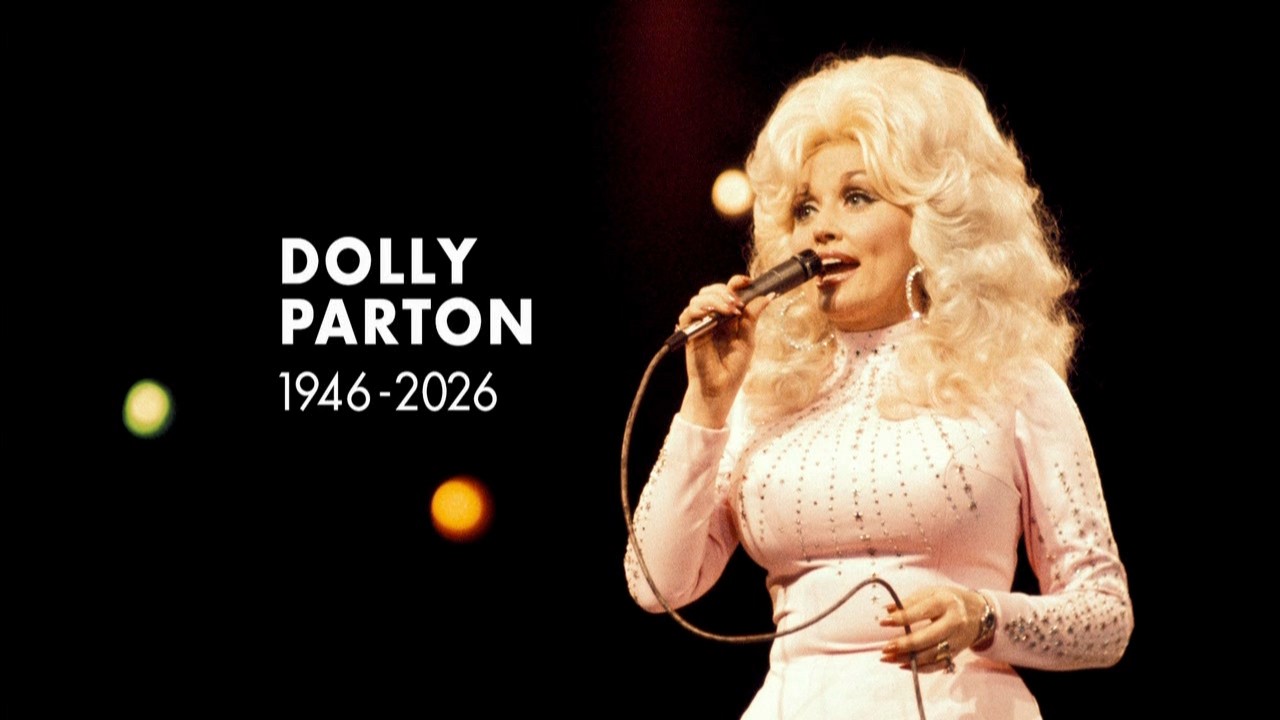
10 Best Dolly Parton Songs: Her Greatest Songs and Biggest Hits
Dolly Parton leaves behind one of the greatest song catalogues in country music history.
Following her death at the age of 80, listeners around the world are returning to the songs that made Parton a global star.
Over a career spanning more than six decades, Parton moved effortlessly between traditional country, pop, bluegrass, rock and film soundtracks.
She sold more than 100 million records and wrote thousands of songs, while several of her compositions became standards recorded by generations of other artists.
So where should you start?
Here are 10 of the best Dolly Parton songs.
1. Jolene
It is difficult to put anything else at number one.
Released in 1973, Jolene became Dolly Parton’s signature song and one of the most recognisable country recordings ever made.
The track tells the story of a woman pleading with another woman not to take away the man she loves.
Parton later explained that the idea was inspired by an attractive red-haired bank teller who paid a little too much attention to her husband, Carl Dean.
The name itself came from a young fan Parton met after a performance.
Simple, instantly recognisable and emotionally direct, Jolene continued finding new listeners decades after its release.
2. I Will Always Love You
Many listeners associate I Will Always Love You with Whitney Houston, but Dolly Parton wrote and originally recorded the song.
And it wasn’t originally written as a romantic breakup song.
Parton wrote it as a farewell to Porter Wagoner when she decided to leave their successful professional partnership and establish her own career.
Her original recording reached number one on the country chart, and Parton later returned to number one with a new recording of the song.
Then came Whitney Houston.
Houston recorded I Will Always Love You for The Bodyguard in 1992, turning Parton’s composition into one of the most successful pop recordings ever released. Houston’s version spent 14 weeks at number one on the Billboard Hot 100.
3. 9 to 5
Few songs capture the frustration of working life quite like 9 to 5.
Parton wrote the song for the 1980 film in which she starred alongside Jane Fonda and Lily Tomlin.
She famously created part of the song’s distinctive rhythm by clicking her fingernails together to imitate the sound of a typewriter.
The track reached number one on both the US country and pop charts and won two Grammy Awards.
More than four decades later, 9 to 5 remains an anthem for workers everywhere.
4. Coat of Many Colors
Coat of Many Colors is one of Dolly Parton’s most personal songs.
The track draws on Parton’s childhood growing up in poverty in rural Tennessee.
It tells the story of her mother sewing together pieces of fabric to create a coat for her daughter and the young Dolly proudly wearing it to school, only to be mocked by other children.
Rather than being embarrassed by poverty, the song turns the coat into a symbol of family and love.
It became one of the recordings that established Parton as an exceptional storyteller rather than simply another country singer.
5. Islands in the Stream
Dolly Parton and Kenny Rogers created one of the most recognisable duets of the 1980s with Islands in the Stream.
The song was written by the Bee Gees and became a huge crossover success when Rogers and Parton recorded it together.
It showed just how comfortably Parton could move beyond traditional country music and into mainstream pop.
Decades later it remains one of the defining duets of both artists’ careers.
6. Here You Come Again
Here You Come Again helped turn Dolly Parton into a mainstream pop star.
Released in 1977, it reached number three on the Billboard Hot 100 while topping the country chart.
The album of the same name also helped Parton become the first female country artist to have an album sell one million copies, according to the Library of Congress.
It marked the beginning of a period when Parton increasingly crossed the traditional boundary between Nashville and mainstream pop.
7. Joshua
Joshua gave Parton one of her early number-one country hits.
Released at the beginning of the 1970s, the track helped establish her as a major solo artist before the international fame that followed Jolene.
It also demonstrated a characteristic that would define much of her songwriting: the ability to construct an entire story within a few minutes.
8. Two Doors Down
Two Doors Down showed another side of Dolly Parton.
Rather than heartbreak or rural storytelling, the track has the energy of a pop record.
Its crossover success helped demonstrate that Parton’s songwriting and voice could reach audiences far beyond country radio.
9. Why’d You Come in Here Lookin’ Like That
Released in 1989, Why’d You Come in Here Lookin’ Like That became another country number-one for Parton.
By this point she had already been a recording star for more than two decades.
Yet the song demonstrated that Parton could continue producing major country hits while an entirely new generation of artists emerged around her.
10. The Grass Is Blue
The Grass Is Blue represents a different stage of Parton’s career.
After decades of crossover success, Parton returned more strongly to acoustic and bluegrass music in the late 1990s.
The album of the same name helped introduce her to another generation of listeners and demonstrated the depth of her roots in Appalachian and traditional American music.
What was Dolly Parton’s biggest song?
There isn’t one simple answer.
Jolene may be Dolly Parton’s most recognisable performance.
9 to 5 was one of her biggest crossover hits.
And I Will Always Love You became her most commercially significant composition after Whitney Houston’s version turned it into a global phenomenon.
All three songs were written by Parton herself.
That perhaps explains her legacy better than any sales statistic.
Dolly Parton wasn’t simply a great singer.
She was one of popular music’s great songwriters.
Her catalogue includes more than 3,000 compositions, while her achievements included 25 number-one hits on Billboard’s Hot Country Songs chart and 11 Grammy Awards.
Following her death aged 80, those songs are likely to introduce Dolly Parton to yet another generation of listeners.