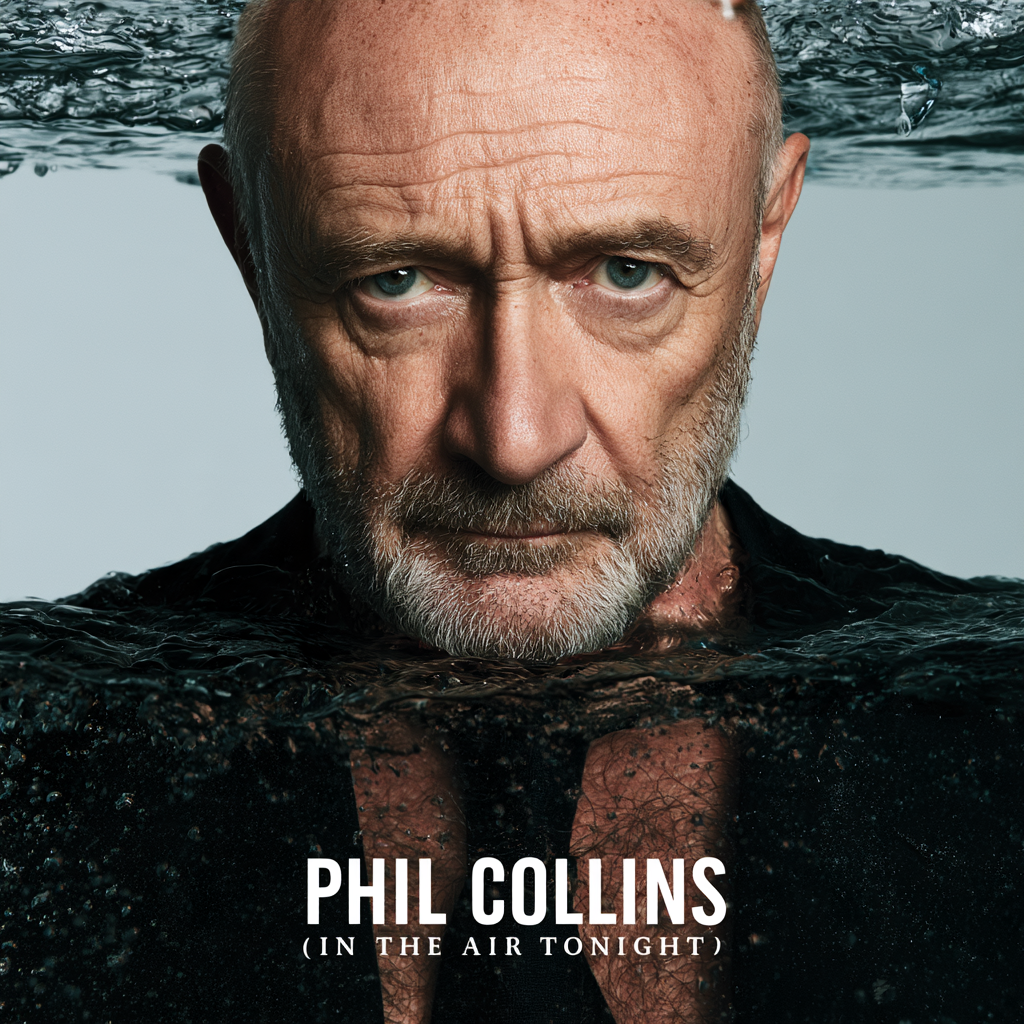
What Does Phil Collins’ “In the Air Tonight” Really Mean? The Drowning Myth
Phil Collins’ “In the Air Tonight” is about anger, bitterness and emotional pain connected with the breakdown of his marriage.
It isn’t based on Collins watching somebody drown.
That famous story is an urban legend.
Collins has repeatedly denied it.
The recording appeared on his 1981 solo album Face Value.
It became one of the most recognisable songs of the decade, partly because of its extraordinary drum break.
But the mystery surrounding the lyrics helped it develop another cultural identity.
For years, listeners have attempted to interpret the song as a detailed account of a terrible event.
The real inspiration was more personal and less literal.
What is the drowning story?
The legend claims Collins witnessed somebody drowning while another person refused to help.
Different versions of the story add increasingly dramatic details.
Some claim Collins later identified the supposed bystander.
Others imagine him arranging for that person to attend a concert before confronting them publicly.
There isn’t credible evidence supporting those accounts.
Collins has explicitly denied the story.
The details have changed as people repeated it.
That’s typical of an urban legend.
A mysterious song encourages listeners to invent an explanation.
Then the explanation becomes more dramatic over time.
What actually inspired the song?
Collins’ marital breakdown.
During the period leading towards Face Value, his relationship with Andrea Bertorelli deteriorated.
Collins has described feeling angry, hurt and emotionally confused.
Those feelings became central to the recording.
But he didn’t approach the songwriting process by developing one detailed story.
Much of the lyrical material emerged spontaneously.
That helps explain why the words can sound mysterious.
They express a feeling rather than describing one literal event.
Why does the song sound threatening?
Because the arrangement is unusually restrained.
The synthesizers create a dark atmosphere.
The rhythm develops slowly.
Collins’ vocal sounds controlled but angry.
That gives the impression that something important is about to happen.
For much of the recording, the musical tension remains unresolved.
The listener waits.
Then the drums arrive.
The release is enormous.
Why is the drum break so famous?
Because of its timing and production.
The song spends several minutes developing tension.
Then Collins performs one of rock music’s most recognisable drum fills.
The sound is powerful and dramatic.
Its impact comes partly from the recording’s earlier restraint.
If the drums had been enormous throughout the entire song, the famous moment wouldn’t feel as significant.
The arrangement makes the listener anticipate the release.
What is gated reverb?
A production technique associated with the recording’s enormous drum sound.
Reverb creates the impression of sound continuing in a physical space.
A gate can cut off that reverberation abruptly.
The result is a powerful, unnatural drum character.
The technique became strongly associated with 1980s production.
Its development involved Collins, producer Hugh Padgham and recording experiments connected with Peter Gabriel’s music.
“In the Air Tonight” helped make the sound internationally famous.
Was the song Phil Collins’ first solo hit?
Yes.
It became the defining opening statement of his solo career.
Collins was already internationally recognised as a member of Genesis.
But Face Value allowed him to explore a more personal musical direction.
“In the Air Tonight” was particularly effective because it sounded different from conventional rock and pop.
Its atmosphere was unusually dark.
The production was innovative.
And the emotional performance was immediately recognisable.
Is the song really about revenge?
It can sound that way.
The narrator communicates anger and emotional distance.
But Collins hasn’t established one specific revenge narrative.
The song works because the words remain ambiguous.
Listeners can interpret the performance through betrayal, grief or resentment.
The emotional tone is clear.
The fictional details aren’t.
That’s an important distinction.
A recording doesn’t need a literal storyline to communicate something powerful.
Why did the drowning myth become so popular?
Because the song almost invites interpretation.
The lyrics suggest confrontation.
The music sounds threatening.
And the title creates a feeling of anticipation.
Listeners naturally want to understand the circumstances.
Without a detailed explanation, rumours developed.
The internet subsequently helped spread them.
Eminem also referenced the legend in “Stan”, giving it another cultural life.
That doesn’t make the story true.
It demonstrates how widely the myth had circulated.
Where else have I heard “In the Air Tonight”?
The song has appeared in films, television, advertising and sporting broadcasts.
Its famous drum break is especially useful for dramatic scenes.
One recognisable placement was in The Hangover.
The recording has also inspired remixes.
Radar previously featured a deep-house reinterpretation of “In the Air Tonight”, showing how well its atmosphere works in electronic music.
What genre is the song?
Atmospheric pop rock with electronic and experimental production influences.
Its sound is difficult to reduce to conventional soft rock.
The synthesizers are central.
The rhythm is unusually restrained.
And the dramatic structure is almost cinematic.
That helped distinguish it from many other major pop releases of 1981.
Songs like “In the Air Tonight”
Try Peter Gabriel’s “Intruder”, Genesis’ “Mama”, Phil Collins’ “I Don’t Care Anymore”, Kate Bush’s “Running Up That Hill”, Tears for Fears’ “Mad World” and Depeche Mode’s “Enjoy the Silence”.
These recordings explore different combinations of electronic production, emotional tension and atmospheric songwriting.
What does “In the Air Tonight” really mean?
Anger and emotional pain during the breakdown of a relationship.
Collins didn’t witness the fictional drowning incident described in the urban legend.
The song’s mysterious language emerged from intense personal emotions rather than one documented event.
And its extraordinary musical arrangement transformed those feelings into one of the most recognisable recordings of the 1980s.