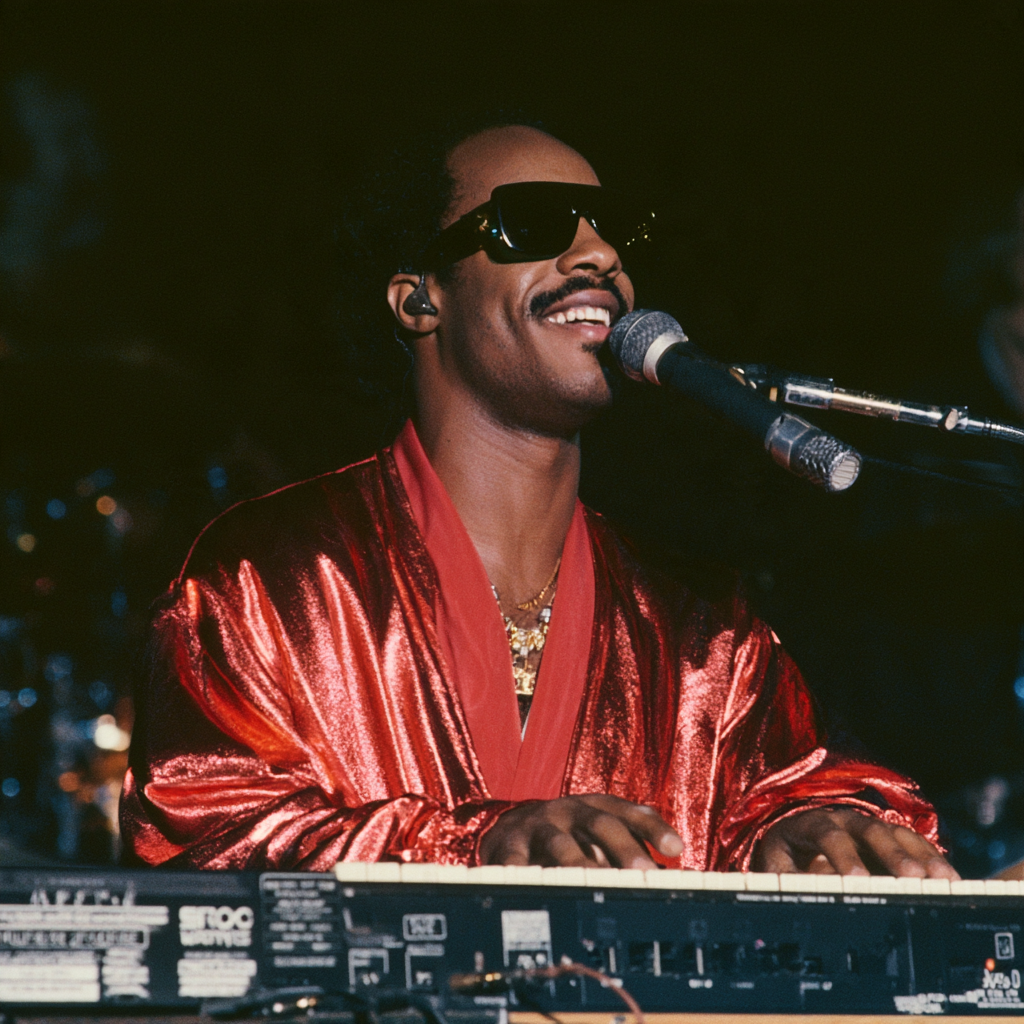
What Song Does “Gangsta’s Paradise” Sample? Stevie Wonder Explained
Coolio’s “Gangsta’s Paradise” is built around “Pastime Paradise” by Stevie Wonder.
The original song appeared on Wonder’s 1976 album Songs in the Key of Life.
Almost twenty years later, producer Doug Rasheed used its musical foundation to create one of the biggest hip-hop hits of the 1990s.
But the connection isn’t simply a familiar melody.
The original recording and Coolio’s version explore related ideas about society, personal choices and difficult circumstances.
There’s also an unexpected story behind the permission process.
Stevie Wonder initially refused to approve the use because of the lyrics.
Who originally recorded “Pastime Paradise”?
Stevie Wonder.
The American singer-songwriter created the composition during one of the most celebrated periods of his career.
Songs in the Key of Life also includes “Sir Duke”, “I Wish” and “As”.
The album combines soul, funk, jazz and sophisticated pop songwriting.
“Pastime Paradise” is particularly unusual because of its dark musical atmosphere.
The rhythm and arrangement feel almost ceremonial.
That made it an especially effective foundation for a later hip-hop recording.
When was the original released?
1976.
The song appeared on Songs in the Key of Life.
It wasn’t originally created as a hip-hop instrumental.
The genre hadn’t yet developed into the international commercial form it would take during the 1990s.
But Wonder’s music contained rhythmic and electronic ideas that later hip-hop producers found particularly attractive.
“Pastime Paradise” became one of the most famous examples.
What does “Pastime Paradise” mean?
The danger of becoming trapped in memories, illusions and unhealthy ideas about the past.
Wonder explores how people can focus on what has already happened rather than confronting present circumstances.
The song also addresses social inequality and the importance of changing the future.
It’s more philosophical than a conventional romantic pop recording.
That gives it a surprisingly strong connection with Coolio’s later version.
Who produced “Gangsta’s Paradise”?
Doug Rasheed.
He developed the recording with Coolio and singer L.V.
The production incorporates the recognisable musical material from Stevie Wonder’s composition.
Rasheed understood that the existing melody could create an unusually dark atmosphere.
That became central to the finished song.
The recording doesn’t depend on aggressive drums or an enormous number of instrumental elements.
The melody and vocal delivery provide much of the intensity.
Who sings the chorus?
L.V., whose real name is Larry Sanders.
His gospel-influenced vocal performance became one of the recording’s defining features.
It contrasts with Coolio’s rapping.
That gives the composition two distinct musical personalities.
Coolio communicates the fictional narrator’s circumstances.
L.V. provides a melodic foundation that sounds both dramatic and reflective.
Why did Stevie Wonder initially refuse permission?
Because of the lyrics in the early version.
Producer Doug Rasheed recalled in a 2025 interview that Wonder’s representatives objected to profanity and violent material.
The group made changes.
Wonder subsequently approved the use.
That created an important creative consequence.
The resulting recording became less dependent on shock value.
Its emotional message became clearer.
Did Coolio remove the profanity?
Yes.
The final commercially successful recording is notable for avoiding the kind of profanity associated with some gangsta rap of the period.
That helped the song reach a particularly wide audience.
But it didn’t make the subject harmless or simplistic.
The composition still explores difficult circumstances.
The contrast between serious subject matter and accessible production became central to its appeal.
What does “Gangsta’s Paradise” actually mean?
The consequences of living inside an environment shaped by violence, fear and limited opportunities.
Coolio presents a narrator reflecting on his choices and circumstances.
The song isn’t simply celebrating criminal behaviour.
Its emotional perspective is considerably darker.
The narrator recognises that his life has become trapped inside a dangerous cycle.
That makes the connection with Stevie Wonder’s original particularly effective.
Both recordings explore the difference between circumstances people accept and the possibility of something better.
Is “Gangsta’s Paradise” a sample or an interpolation?
It incorporates material from “Pastime Paradise”, with the musical structure and melody clearly derived from Wonder’s recording.
The finished track uses the original composition as the foundation for a new song.
Stevie Wonder receives a songwriting credit.
It’s worth distinguishing the underlying composition from individual recorded performances when exploring different versions.
Why is the music so dramatic?
Because of the repeated melodic figure and choral-style vocals.
The arrangement creates a sense of constant tension.
The rhythm is restrained.
Coolio’s vocal performance is serious.
And the chorus sounds almost like a warning.
That makes the recording suitable for a film about difficult social circumstances.
The music communicates emotional weight before the listener has fully understood the lyrics.
What movie featured “Gangsta’s Paradise”?
Dangerous Minds, released in 1995.
The film stars Michelle Pfeiffer as a teacher working with students facing challenging circumstances.
The song became strongly associated with the movie.
Its music video also featured Pfeiffer.
That created a connection between the recording and the film’s fictional environment.
The soundtrack placement helped bring the song to a much larger audience.
Was “Gangsta’s Paradise” a No. 1 hit?
Yes.
It became one of 1995’s biggest recordings.
The song topped the Billboard Hot 100 and reached No. 1 in numerous international markets.
It also won a Grammy Award.
The success was particularly impressive because the recording had a serious subject and a relatively dark musical character.
It demonstrated that commercially successful hip-hop didn’t need to be lighthearted.
What genre is “Gangsta’s Paradise”?
Hip-hop with strong soul and gospel influences.
The original Stevie Wonder composition contributes much of the harmonic atmosphere.
L.V.’s vocal creates a connection with gospel-influenced singing.
Coolio’s performance belongs to the narrative hip-hop tradition.
The finished recording combines those elements into a distinctive musical identity.
Why is Stevie Wonder’s original worth hearing?
Because it reveals how much the later recording inherited from its source.
The melody is recognisable.
But Wonder’s arrangement and lyrical message belong to a different musical environment.
Listening to the original makes the creative transformation clearer.
It’s also an excellent introduction to Songs in the Key of Life, one of Wonder’s most important albums.
Other famous hip-hop songs with older musical sources
Try A Tribe Called Quest’s “Can I Kick It?”, Eminem’s “Stan”, M.I.A.’s “Paper Planes” and Will Smith’s “Men in Black”.
Radar’s guide to the Lou Reed sample behind “Can I Kick It?” provides another example of a famous hip-hop recording developing from a much older musical idea.
What song does “Gangsta’s Paradise” sample?
“Pastime Paradise” by Stevie Wonder, released in 1976.
Coolio, L.V. and producer Doug Rasheed transformed its musical ideas into the 1995 hit.
The result became one of hip-hop’s most recognisable recordings.
And it created an unexpected musical connection between Stevie Wonder’s sophisticated 1970s soul and the darker storytelling of 1990s rap.