TuneArt AI Music Video Maker Lets Artists Create Music Videos Without a Subscription
Creating a music video has traditionally required a considerable amount of time, money and production work. However, AI-powered tools are making video creation increasingly accessible to independent musicians.
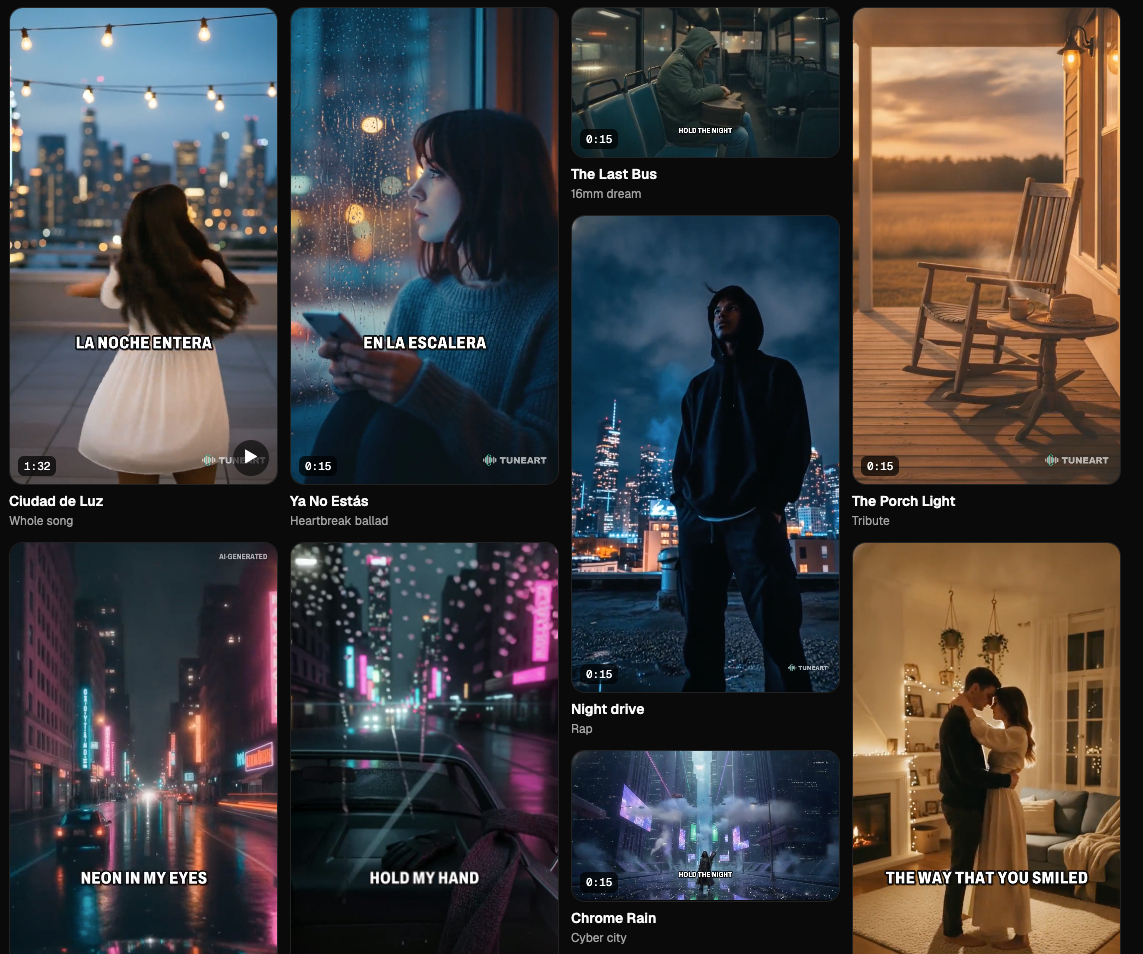
TuneArt is an AI music video maker that allows artists to turn their existing songs into music videos, lyric videos and social media content without needing professional video editing experience.
The platform combines generative AI with automatic beat detection, allowing creators to produce visuals that follow the rhythm of their music. Rather than charging a recurring monthly subscription, TuneArt offers pay-as-you-go pricing, with the first short video available for free.
For independent artists looking to promote their music on TikTok, Instagram Reels and YouTube Shorts, it could provide another affordable way to create engaging visual content.
What is TuneArt?
TuneArt is an AI-powered music video creation platform designed to turn audio tracks into accompanying visuals.
Users can upload an existing song, select a visual style and generate an AI music video featuring scenes synchronised with the track.
The platform automatically analyses the audio to identify important musical moments, including the chorus, tempo and beat. It then creates visual sequences and edits them together to match the music.
Unlike traditional AI video generators, which generally require users to generate individual clips and edit them together manually, TuneArt is designed specifically around music.
The platform supports several different types of content, including:
- AI-generated music videos with scenes synchronised to the beat
- Short promotional videos for TikTok, Instagram Reels and YouTube Shorts
- Full-length music videos lasting up to four minutes
- Lyric videos displaying words alongside the music
- Animated singing and dancing photos
- Beat-reactive music visualisers
- Promotional teasers and Spotify Canvas loops
This gives musicians several ways to create promotional content from a single recording.
How does TuneArt’s AI music video generator work?
One of TuneArt’s main selling points is its straightforward creation process.
Rather than requiring artists to understand video editing software, the platform handles much of the work automatically.
1. Upload your song
Users begin by uploading an audio file in a supported format, such as MP3, WAV or M4A.
TuneArt analyses the track to identify its tempo, rhythm and musical structure.
For shorter videos, it can automatically select a section of the song, such as the chorus, that may work particularly well for social media.
Artists can also choose a different section themselves.
2. Choose a visual style
Once the audio has been selected, creators can describe the scenes they want to generate or choose from the platform’s existing visual styles.
For example, an electronic music producer might choose futuristic city scenes, while an acoustic singer-songwriter might prefer cinematic landscapes.
The AI uses these instructions to create visuals designed to complement the music.
3. Generate the music video
TuneArt generates the video footage and edits it to the track’s rhythm.
The platform is designed to position cuts on musical beats and preserve the structure of the song, helping the finished video feel more naturally connected to the audio.
Short videos generally take several minutes to generate, while full-length music videos can take around 15 to 30 minutes.
4. Download and share
Once generated, the finished video can be downloaded and shared across social media platforms.
TuneArt supports different aspect ratios, including vertical videos for TikTok, Instagram Reels and YouTube Shorts, as well as landscape videos for YouTube.
This makes it possible to adapt music content for different audiences without starting the entire creative process again.
How much does TuneArt cost?
An interesting feature of TuneArt is its pay-as-you-go pricing model.
While many AI video creation tools operate through monthly subscriptions, TuneArt allows users to purchase credits and spend them when they need to generate content.
The platform offers an initial free 15-second AI music video, although this includes a small watermark.
After that, users purchase credits to create additional videos.
As of November 2026, advertised pricing includes:
- 50 credits for $4.99
- 120 credits for $9.90
- 360 credits for $27
- 700 credits for $49
- 1,250 credits for $85
A standard 15-second AI music video costs approximately 40 credits, although prices vary according to the video settings, quality and duration.
Credits are valid for 12 months, and TuneArt says credits are returned automatically when generation fails.
The service also offers free lyric-video tools and beat-reactive music visuals, with additional charges for optional AI-generated backgrounds.
Artists should check the latest TuneArt pricing before creating a video.
For musicians who only release a few singles each year, purchasing credits when needed may be more attractive than maintaining another monthly subscription.
Can TuneArt create a full-length AI music video?
Yes. TuneArt supports AI-generated music videos lasting up to four minutes.
Rather than simply creating a short repeating visual, the platform can generate a sequence of scenes covering the song’s verses, choruses and bridge.
It attempts to maintain a coherent visual story throughout the track, with new scenes appearing at intervals.
Lyrics can also be displayed throughout the video.
This feature could be particularly useful for independent artists who want to upload a complete music video to YouTube without organising a traditional shoot.
However, generative AI video technology still has limitations.
Artists may encounter visual inconsistencies, unexpected changes in characters or scenes that do not accurately reflect their original creative vision.
For more complex productions, traditional filming and video editing may still provide greater creative control.
Create music promotion content for TikTok, Instagram and YouTube
One of the most practical applications of TuneArt is creating short-form promotional content.
Independent artists increasingly use videos to introduce their music to new listeners, particularly through platforms such as TikTok, Instagram Reels and YouTube Shorts.
A single track can provide material for multiple promotional posts.
For example, an artist could generate a 15-second video highlighting the chorus, another featuring the opening verse and a third using a different visual style.
Rather than repeatedly posting the same artwork, musicians can experiment with different concepts and discover which types of content attract the most engagement.
TuneArt also offers a release kit feature that can generate promotional teasers and Spotify Canvas content from an existing music video.
This could help artists maintain a consistent visual identity across their release campaign.
For more ideas, read our guide on how to promote your music as an independent artist.
Is AI music video creation worth using?
AI music video generators could be particularly useful for musicians working with limited marketing budgets.
An independent artist might have access to professional recording software and affordable music distribution but lack the resources to produce a traditional music video.
AI tools offer an alternative.
They can also be useful for older catalogue releases.
Artists who have previously distributed music without accompanying videos could use tools such as TuneArt to create new promotional content for those tracks.
However, generating more videos does not automatically mean attracting more listeners.
The visual content still needs to be interesting, relevant to the artist and appropriate for the audience.
Musicians should also ensure they have permission to use any audio, photographs or other creative materials uploaded to AI platforms. Before publishing generated videos commercially, it is important to review the service’s licensing terms and any applicable platform disclosure requirements.
How does TuneArt compare with traditional music video creation?
Traditional music videos often involve filming, locations, performers, equipment and editing.
These elements can produce distinctive results, but they also introduce costs and logistical challenges.
TuneArt takes a different approach by using generative AI to create much of the visual material.
This can make the production process faster and more accessible, particularly for artists who want to create content regularly.
However, the two approaches are not necessarily competing.
Artists could use AI-generated visuals alongside live performances, behind-the-scenes footage or professionally produced music videos.
The most effective approach will depend on the artist’s genre, audience, branding and marketing budget.
The growing role of AI in music promotion
TuneArt is another example of how artificial intelligence is changing the tools available to independent musicians.
AI is increasingly being used for artwork creation, music production, lyric videos, social media editing and marketing campaigns.
For artists, the biggest opportunity may be reducing the time and cost of creating promotional material.
A musician who previously struggled to afford even one music video might now be able to experiment with multiple visual ideas.
The challenge will be making those videos distinctive enough to stand out as more artists gain access to similar technology.
Ultimately, the music and the artist’s identity remain important. AI can help create promotional material, but it cannot guarantee an audience.
Distribute your music worldwide with RouteNote
Creating a music video is just one part of releasing and promoting your music.
Before launching a promotional campaign, make sure your tracks are available on the streaming and social platforms where listeners can discover them.
RouteNote allows independent artists and labels to distribute their music to major services, including Spotify, Apple Music, YouTube Music and other supported platforms.
With free music distribution available, artists can focus more of their budget on creating music and promoting their releases.
Combining global music distribution with affordable promotional tools such as TuneArt could help independent musicians reach new audiences without relying on large production budgets.
For artists interested in experimenting with AI-generated visuals, TuneArt offers a relatively accessible starting point.