Why Did Michael Jackson’s Thriller Hit No. 2 in November 2026?
Michael Jackson’s “Thriller” reached No. 2 on the Billboard Hot 100 chart dated November 14, 2026. That was a new all-time peak for the song, more than four decades after its original release. The reason was Halloween: the familiar horror-pop classic surged in streaming and sales as listeners returned to their seasonal favourites.
Even more remarkably, the song had only reached No. 4 on the Hot 100 during its original chart run in 1984. In other words, a recording that had been part of popular culture for decades finally achieved its highest US singles-chart position in 2026.
How high did Thriller climb in November 2026?
On the November 14-dated Hot 100, “Thriller” jumped from No. 20 to No. 2. Ella Langley’s “Choosin’ Texas” remained at No. 1, keeping Jackson from topping the chart, while Tame Impala and JENNIE’s “Dracula” reached No. 3.
The chart covers listening activity from October 30 to November 5, a period that includes Halloween itself. That detail is important. A November chart date does not mean listeners suddenly discovered “Thriller” in the middle of November. It reflects what people played during the end of October and immediately afterwards.
Billboard also reported that “Thriller” topped its Streaming Songs and Digital Song Sales rankings for the first time. The parent album, also called Thriller, climbed to No. 2 on the Billboard 200, its highest position there since 1984.
Wasn’t Thriller already a number-one hit?
The album was an enormous No. 1 success. The title song, however, never reached No. 1 on the US Hot 100.
That distinction is easy to miss because “Thriller” may be the most recognisable track on an album that also produced “Billie Jean” and “Beat It”. The song’s cultural reputation is so large that many people assume it must have topped every chart when it first appeared.
Its original Hot 100 peak was No. 4 in 1984. The No. 2 ranking in November 2026 therefore represents a genuine new peak, not simply a return to an old one.
Why does Thriller return to the charts every Halloween?
“Thriller” has effectively become a seasonal tradition. As Halloween approaches, listeners put together party playlists, rehearse the familiar dance routine, revisit the short film and search for music that sounds unmistakably spooky.
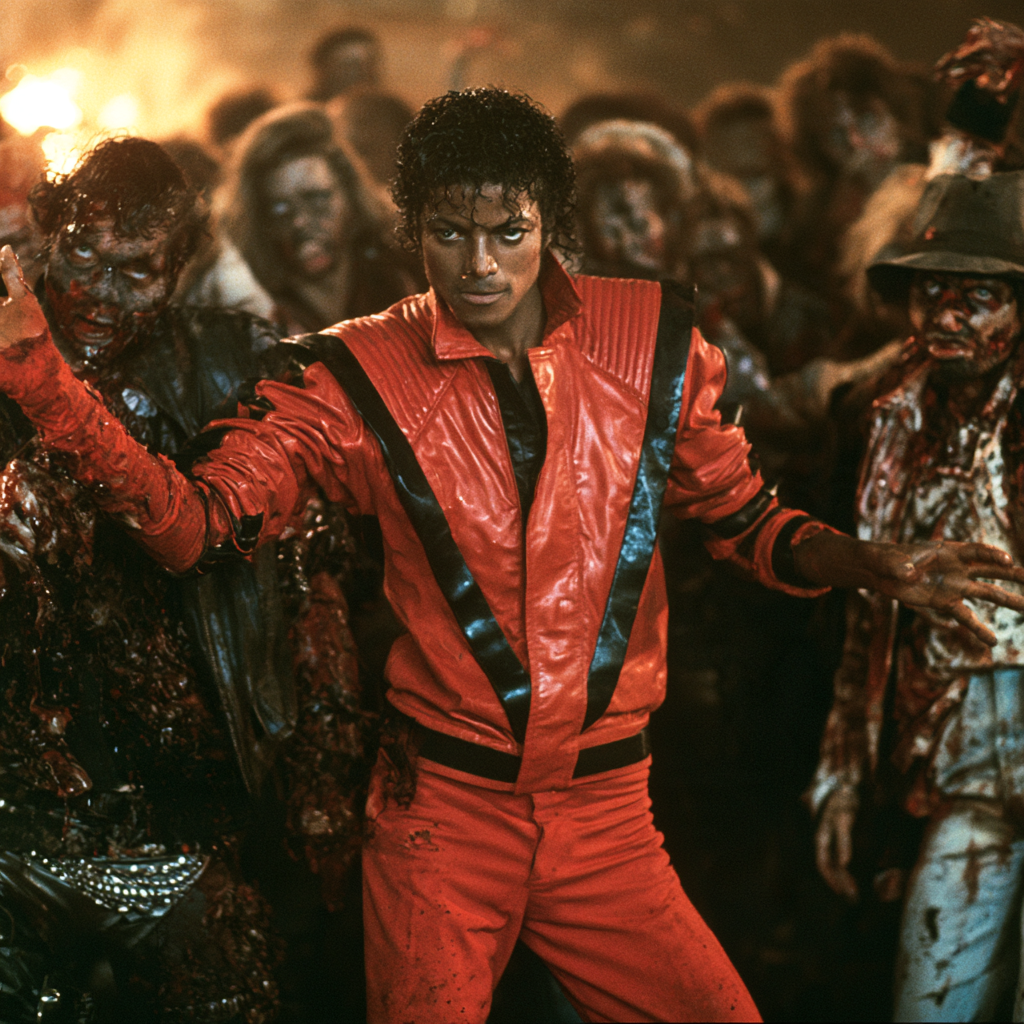
The recording has several advantages. Its opening atmosphere establishes the horror theme before Jackson starts singing. Its groove works for a dance floor. The spoken section by horror actor Vincent Price supplies a theatrical connection to classic scary movies. And the music video provides an instantly recognisable visual world of zombies, choreography and cinematic transformations.
That combination means “Thriller” suits several different listening occasions at once: parties, costume videos, dance performances, nostalgia playlists and casual seasonal streaming. Each October, it finds its way back into circulation.
You can read more about the story behind that unforgettable narration in Radar’s guide to the scary voice in Michael Jackson’s “Thriller”.
Did other Halloween songs climb the chart?
Yes. The same chart showed how much Halloween listening can influence the rankings.
Ray Parker Jr.’s “Ghostbusters” returned to the Hot 100, as did Bobby “Boris” Pickett’s “Monster Mash”. Rockwell’s “Somebody’s Watching Me” also climbed, while the appropriately titled “Dracula” by Tame Impala and JENNIE reached No. 3.
These recordings are not all from the same era, and they do not even share a single musical style. What connects them is their usefulness around Halloween. Once a song becomes attached to an annual occasion, it has a reason to be heard again every year.
For another story about a seemingly familiar Halloween vocal, see whether Michael Jackson sings on Rockwell’s “Somebody’s Watching Me”.
When did Thriller originally come out?
The album Thriller arrived in 1982. The title track became a single in the following period, with its major US chart run taking place in 1984.
The music was written by Rod Temperton and produced by Quincy Jones. Jackson’s performance helped turn it into a defining pop recording, but the short film was equally important to the song’s lasting identity. Directed by John Landis and released in 1983, it presented a song promotion as a miniature horror movie with elaborate choreography.
It is difficult to separate the record from those images now. Many listeners do not simply hear “Thriller”; they picture the jackets, the dancing and the transformed characters.
Does this mean old songs can compete with new releases?
Absolutely, at least when current listening activity is strong enough. Modern charts measure what people are listening to and buying during a particular period, rather than ranking songs by their original release dates.
That creates opportunities for older recordings to return through soundtracks, social-media clips, television appearances, anniversaries and recurring holidays. Halloween is especially useful because it creates a predictable moment when a relatively small group of songs becomes relevant to a very large audience.
The same principle operates with Christmas music every December. The difference is that “Thriller” is not simply a seasonal novelty. It also has a place in dance-pop history, music-video history and popular culture throughout the year.
Will Thriller reach No. 1 next Halloween?
Nobody can know that in advance. A chart peak depends on the strength of all competing songs, the amount of listening during the tracking week and how streams, radio and sales combine.
What November 2026 demonstrates is that the song’s story is not finished. Forty-plus years after its original chart run, “Thriller” can still achieve something it never managed on its first visit to the Hot 100.
The recording did not need to become a new song. Halloween gave listeners a new reason to play it, and the charts reflected that renewed attention.