Who Originally Sang “The First Cut Is the Deepest”? Before Rod Stewart
“The First Cut Is the Deepest” was first commercially released by P. P. Arnold in 1967.
But the song was written by Cat Stevens.
He recorded an early demo before Arnold released her version.
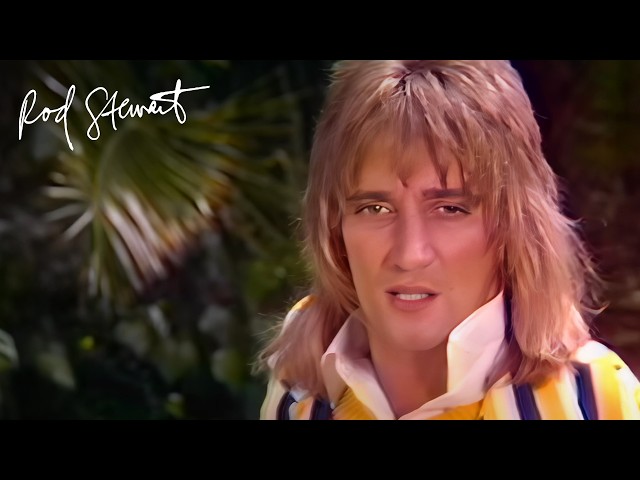
Later, Rod Stewart transformed it into a major hit.
Then Sheryl Crow introduced it to another generation in 2003.
That gives the composition an unusually long commercial history.
And it creates a common source of confusion.
The songwriter wasn’t necessarily the first artist to make the song famous.
Who is P. P. Arnold?
An American soul singer who developed an important career in Britain.
Arnold originally performed with the Ike & Tina Turner Revue.
She later moved towards a solo career.
Her work became closely associated with London’s musical environment during the late 1960s.
“The First Cut Is the Deepest” became one of her defining early recordings.
Her performance combines soulful vocals with a polished pop arrangement.
It’s quite different from some later interpretations.
Who wrote the song?
Cat Stevens.
He developed the composition during the mid-1960s while establishing himself as a songwriter.
Stevens created an early demo in 1965.
At the time, he was interested in placing compositions with other performers.
That meant a song didn’t necessarily need to become his own single.
He could write something for somebody else.
P. P. Arnold recognised the composition’s potential.
Her version became the first commercially released recording.
When was the original released?
April 1967.
Arnold’s version appeared on the Immediate Records label.
It became a UK Top 20 hit.
That established the composition’s commercial identity before Cat Stevens released his own studio version.
Stevens subsequently included the song on his second album, New Masters, released in December 1967.
The distinction between writing, recording and releasing matters.
Stevens wrote it.
Arnold made it famous first.
What does “The First Cut Is the Deepest” mean?
The emotional damage caused by a first serious heartbreak.
The narrator has been hurt before.
Now another person is offering the possibility of love.
But the earlier experience has made trust difficult.
The title uses a physical image to describe emotional pain.
The first romantic disappointment can feel particularly intense because the person has no earlier experience to prepare them.
Later relationships may be healthier.
But the memory of that first heartbreak can remain powerful.
Is the song about a real relationship?
The lyrics can certainly be interpreted through personal experience.
However, the composition’s meaning doesn’t depend on identifying one specific former partner.
The central situation is widely recognisable.
Somebody wants to love again.
But remains frightened of being hurt.
That emotional contradiction gives the song its longevity.
It works across different generations because the experience remains familiar.
Why does the P. P. Arnold version sound different?
Because it belongs to the musical environment of 1960s British soul-pop.
The arrangement includes prominent instrumental colour.
Arnold’s vocal is expressive and confident.
The rhythm has more movement than some later versions.
That creates an interesting contrast.
The lyrics describe vulnerability.
The music feels relatively energetic.
Later performers emphasised different emotional qualities.
When did Rod Stewart record it?
His famous version arrived in 1976.
It appeared on the album A Night on the Town.
The recording became a major commercial success.
It reached No. 1 in Britain.
Stewart’s rough-edged vocal gives the composition a distinctive personality.
He sounds emotionally bruised.
That makes the central message particularly convincing.
For many listeners in Britain, Stewart’s version became the definitive recording.
Did Rod Stewart write the song?
No.
Cat Stevens remains the songwriter.
Stewart recorded a cover.
That distinction is important because the recording became so closely associated with him.
Sometimes a later performer becomes better known for a song than its original artist or writer.
That doesn’t change the composition’s history.
It simply demonstrates how powerful interpretation can be.
Why did Sheryl Crow cover it?
Crow recorded the song for her 2003 compilation The Very Best of Sheryl Crow.
Her version uses a contemporary pop-rock arrangement.
The vocal is more restrained than Stewart’s.
It also incorporates the kind of guitar-based production associated with Crow’s earlier work.
The recording became an international success.
That created yet another commercial life for a composition more than thirty-five years old.
Which version is the most famous?
That depends on the listener’s generation and location.
P. P. Arnold’s version is historically important as the first release.
Cat Stevens is associated with the songwriting.
Rod Stewart made it a major 1970s hit.
Sheryl Crow introduced it to a large audience during the early 2000s.
All four associations are valid.
But they describe different parts of the song’s history.
Did Cat Stevens ever have a hit with it himself?
His own version became part of his recorded catalogue.
But it wasn’t the defining commercial hit associated with his career.
He became much more famous through later songs such as “Wild World”, “Father and Son” and “Morning Has Broken”.
Nevertheless, “The First Cut Is the Deepest” demonstrates his songwriting ability.
A composition doesn’t need to become the writer’s own biggest hit to have enormous influence.
What genre is the song?
It changes depending on the recording.
Arnold’s version belongs to soul-pop.
Cat Stevens’ interpretation has stronger folk and pop-rock influences.
Rod Stewart’s is rock and soft rock.
Sheryl Crow’s version is contemporary pop rock.
The central melody survives all those changes.
That flexibility is a major reason the composition remains popular.
Songs like “The First Cut Is the Deepest”
Try:
- Cat Stevens – Wild World
- P. P. Arnold – Angel of the Morning
- Rod Stewart – I Don’t Want to Talk About It
- Sheryl Crow – Strong Enough
- Bonnie Tyler – It’s a Heartache
- Fleetwood Mac – Landslide
- Dusty Springfield – I Just Don’t Know What to Do with Myself
- Carly Simon – You’re So Vain
- Carole King – It’s Too Late
- Roy Orbison – Crying
These recordings explore different approaches to heartbreak, emotional vulnerability and melodic songwriting.
Which version should you listen to first?
Start with P. P. Arnold’s 1967 recording.
Then Cat Stevens.
Move to Rod Stewart.
Finish with Sheryl Crow.
You’ll hear how the same melody changes through different arrangements.
The lyrics remain recognisable.
But each singer creates a different emotional personality.
Who originally sang “The First Cut Is the Deepest”?
P. P. Arnold released the first commercial version in 1967.
Cat Stevens wrote the composition and recorded an earlier demo.
Rod Stewart made it a major hit in 1976.
Sheryl Crow revived it in 2003.
The song has lasted because its central feeling remains universal.
People learn to love again.
But the first heartbreak often leaves a memory that doesn’t disappear completely.