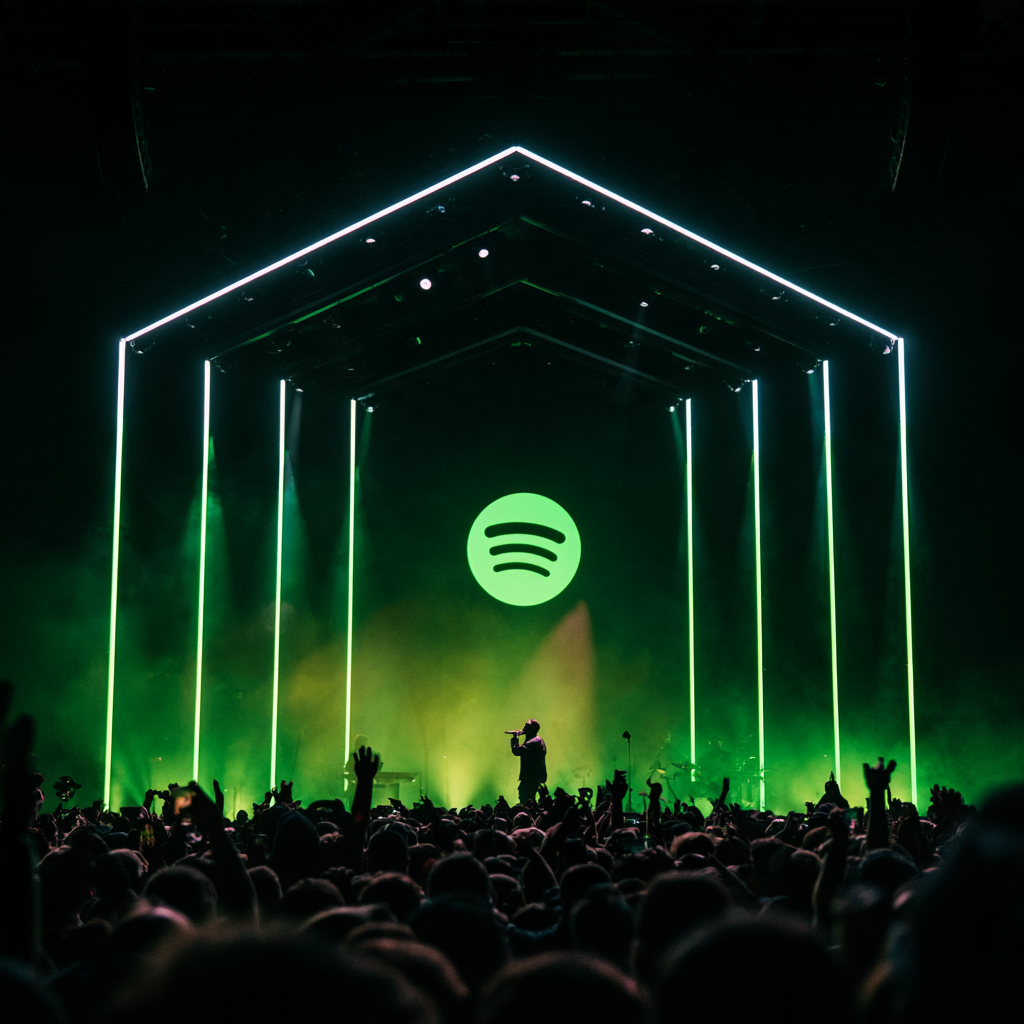
Spotify’s AI Remix Tool Could Launch in Early 2027 – Here’s What We Know
Spotify is reportedly preparing to launch its highly anticipated AI-powered music remix tool in early 2027, potentially giving millions of listeners the ability to create their own versions of popular songs.
According to a report from the Financial Times on 30 October 2026, the streaming platform is targeting the first quarter of 2027 for the launch, with a possible announcement around the Grammy Awards in February.
The feature could allow Spotify Premium subscribers to transform existing songs into completely different musical styles, create AI-generated covers and experiment with their favourite artists’ music.
However, there’s a catch. The tool is expected to cost extra, with Spotify reportedly considering a monthly subscription fee of between $4 and $5 on top of its existing Premium plans.
Neither the pricing nor the launch date has been officially confirmed.
What is Spotify’s AI remix tool?
Spotify’s upcoming AI remix tool is designed to let listeners create alternative versions of existing songs using generative artificial intelligence.
Rather than simply listening to a finished recording, subscribers could experiment with how their favourite music sounds.
For example, imagine taking an acoustic folk song and transforming it into an energetic dance track. Or reimagining an existing pop song with a completely different arrangement.
The technology could open up new ways for fans to engage with music without needing traditional music production skills.
Spotify’s tool will focus on licensed remixes and covers of existing recordings and compositions, rather than generating completely original songs from scratch.
That’s an important distinction from AI music generation services such as Suno, which allow users to generate new songs through text prompts.
Spotify is instead attempting to build a creative experience around the established music catalogue already available on its platform.
When will Spotify’s AI remix tool launch?
Spotify is reportedly targeting the first quarter of 2027, meaning the feature could become available between January and March.
The Financial Times suggests that the company may unveil the product around the 69th Grammy Awards, scheduled for 7 February 2027.
However, Spotify has not officially announced a launch date.
The company previously confirmed that it was developing the technology, announcing its first major licensing agreement with Universal Music Group in May 2026.
Additional licensing agreements have followed throughout the year.
Spotify will still need to finalise technical development, licensing arrangements and artist participation before launching the service.
Although an early 2027 release now appears to be the company’s target, the timetable could change.
How much will Spotify’s AI remix feature cost?
The new AI remix tool is expected to be a paid add-on for Spotify Premium subscribers.
According to the Financial Times, Spotify is considering charging an additional $4 to $5 per month.
That means the feature would not necessarily be included within a standard Spotify Premium subscription.
Instead, subscribers who want to create AI-generated remixes and covers may need to pay a separate monthly fee.
Spotify has previously explored additional subscription features aimed at its most engaged listeners, and the AI remix tool would fit into that wider strategy.
The reported pricing remains provisional, and Spotify has not confirmed how much the service will cost in the UK or other international markets.
It is also unclear whether any free trials or limited introductory features will be available.
Which artists will be available in Spotify’s AI remix tool?
One of the most important parts of Spotify’s proposed service is that artists must agree to participate.
Spotify has already announced licensing agreements with several major music companies, including:
- Universal Music Group
- Merlin, representing independent labels and distributors
- Kobalt, an independent music publisher
- Believe, including participating artists and labels using TuneCore
These agreements provide a framework for including music in Spotify’s AI-powered remixing service.
However, signing a licensing agreement with a record label does not automatically mean every artist represented by that company will participate.
Individual artists and relevant rights holders will still have a say in whether their music can be used.
Believe and TuneCore have already outlined a two-stage consent process, where artists must first opt into AI-related programmes before separately agreeing to participate in Spotify’s tool.
Meanwhile, Sony Music and Warner Music were reportedly still negotiating specific licensing agreements for the remix service as of October 2026.
This means the initial selection of songs could be more limited than Spotify’s full music catalogue.
Will artists earn money from AI-generated remixes?
Yes, that is a central part of Spotify’s proposed business model.
Unlike unofficial remixes that circulate online without permission, Spotify wants to build a licensed environment where artists, songwriters and rights holders receive compensation when fans create and listen to AI-generated versions of their music.
Under the proposed system, participating artists could earn additional royalties from fan-generated versions of their existing tracks.
The Financial Times also reports that Spotify is developing ways for AI-generated remixes to appear in playlists, with their plays potentially counting towards the original tracks on Spotify’s charts.
If implemented, that could give older recordings new opportunities to reach audiences.
For example, a listener might discover an AI-generated dance remix of a song originally released decades earlier, before exploring the original recording.
This could create another route for music discovery, particularly for catalogue artists whose recordings may no longer receive significant mainstream promotion.
However, the exact royalty rates, payment calculations and revenue-sharing arrangements have not yet been publicly disclosed.
It remains to be seen how much additional income the service will generate for musicians and songwriters.
Could Spotify’s AI remix tool change how we listen to music?
Perhaps the most interesting aspect of Spotify’s new feature is the shift from passive listening to interactive music experiences.
Traditionally, streaming platforms have focused on helping people discover and listen to recordings.
Spotify’s upcoming tool could introduce a different relationship between listeners and their favourite songs.
Instead of only consuming music, fans could begin shaping their own versions of it.
This is particularly relevant to the growing popularity of sped-up songs, slowed-down edits, remixes and alternative versions that circulate across platforms such as TikTok and YouTube.
These formats demonstrate that listeners are already interested in experiencing familiar music in different ways.
Spotify’s technology could make certain types of musical experimentation easier and bring the results directly into a licensed streaming environment.
However, whether listeners will be willing to pay an additional monthly subscription for those creative capabilities remains an important question.
What about copyright and AI-generated music?
Artificial intelligence has become one of the most controversial developments in the music industry.
Questions surrounding copyright, artist consent, vocal imitation and the use of copyrighted recordings have created considerable debate.
Spotify is attempting to address some of those concerns by obtaining licensing agreements before releasing its remix technology.
The company has repeatedly emphasised three principles behind its approach: consent, credit and compensation.
Participating artists should have the opportunity to decide whether their music can be used, receive appropriate recognition and benefit financially from the resulting creations.
This approach could help distinguish Spotify’s product from unlicensed AI remixing tools.
Nevertheless, important questions remain unanswered.
How much control will artists have over the way their songs are transformed? Will they be able to prevent particular types of remixes? How will AI-generated vocals be handled? And how much money will actually reach the original creators?
The answers could determine whether musicians view the feature as an exciting new opportunity or an unwanted use of their creative work.
Spotify’s bigger ambition for AI music
Spotify’s AI remix technology is part of a wider push into artificial intelligence and personalised listening.
The streaming service has already introduced AI-driven features for music discovery and playlist creation.
However, the remix tool represents something different.
Instead of simply helping listeners find music, it would allow them to interact creatively with recordings themselves.
It could also give Spotify another opportunity to increase subscription revenue.
The company already operates one of the world’s largest music streaming services, and offering additional paid features to existing subscribers provides another potential route for growth.
If the remix tool proves popular, it could establish a new category of subscription products built around interactive music.
But success will depend on several factors, including the quality of the AI-generated results, the number of participating artists and whether listeners consider the additional monthly fee worthwhile.
Frequently asked questions
Can you create AI remixes on Spotify now?
No. As of October 2026, Spotify’s AI-powered covers and remixes tool has not been publicly launched. The company is reportedly targeting an early 2027 release.
Will Spotify’s AI remix tool be free?
The feature is expected to be a paid add-on for Spotify Premium subscribers. Reports suggest an additional price of $4 to $5 per month, although Spotify has not confirmed the final cost.
Can you remix any song on Spotify?
Not necessarily. The tool will initially depend on licensing agreements and participation from artists and rights holders. Songs from artists who have not opted in may not be available.
Will artists get paid when fans create AI remixes?
Spotify says the service is being designed to compensate participating artists, songwriters and rights holders. However, the specific payment rates and royalty calculations have not yet been announced.
Will Spotify’s AI remix tool create completely new songs?
The upcoming feature is designed around remixes and covers of existing licensed music, rather than the creation of entirely original songs from text prompts.
When will Spotify announce its AI remix feature?
Reports suggest a possible announcement around the Grammy Awards in February 2027, but Spotify has not officially confirmed a date.
The future of music could become more interactive
Spotify’s proposed AI remix tool highlights an emerging shift in how streaming platforms view music.
For years, the streaming experience has been built around finding songs, building playlists and listening to finished recordings.
Artificial intelligence could introduce a more interactive approach, allowing listeners to experiment with familiar music and create personalised versions of their favourite tracks.
Whether this becomes a major new form of music consumption or remains a niche feature for dedicated fans is still unclear.
For now, Spotify’s reported early 2027 launch represents one of the most significant developments in bringing licensed generative AI directly into mainstream music streaming.
With potential pricing of $4 to $5 per month and agreements already signed with several major music rights holders, the next step will be seeing whether Spotify can turn the technology into a genuinely compelling experience for listeners.
And, just as importantly, whether it can deliver meaningful value to the artists whose music makes the whole experience possible.