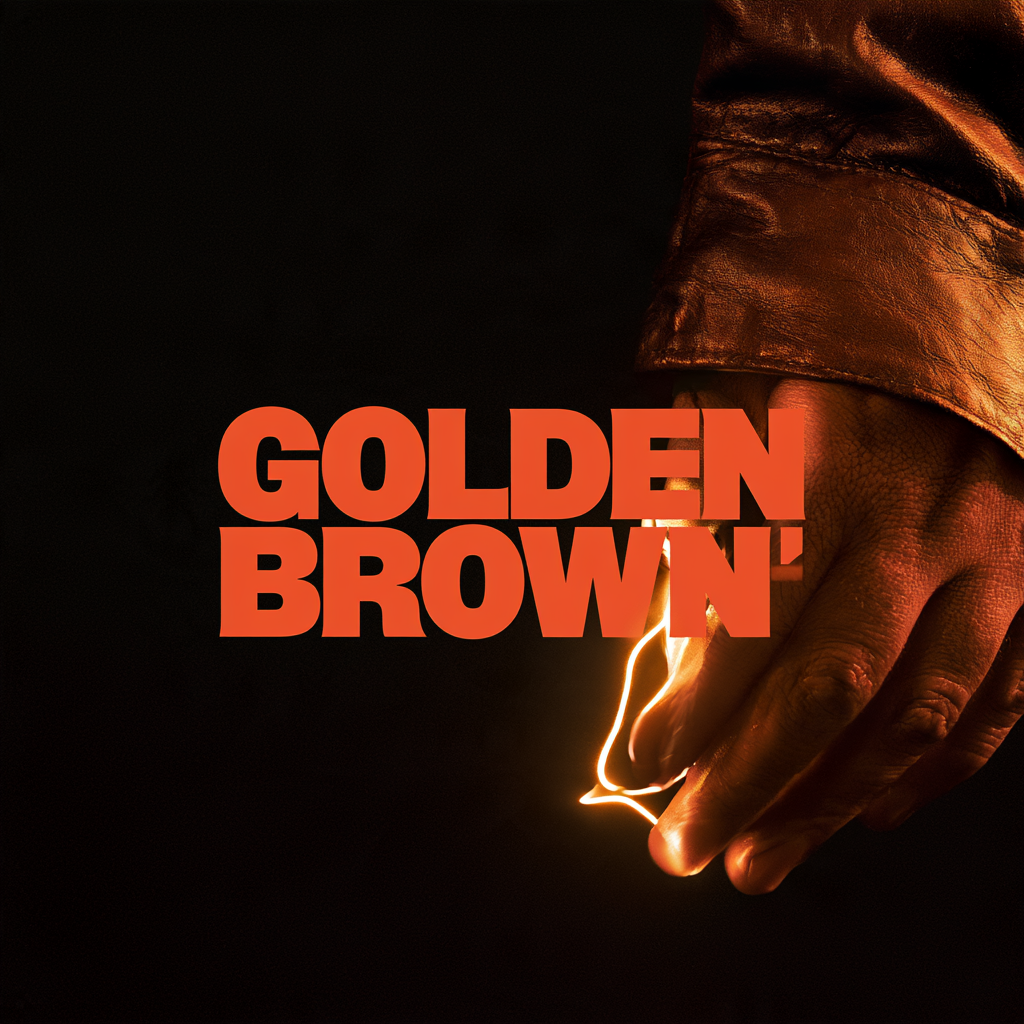
What Does “Golden Brown” by The Stranglers Mean? The Real Story
“Golden Brown” by The Stranglers is about two things.
Heroin.
And a woman.
The band’s former singer Hugh Cornwell has confirmed that the lyrics were deliberately written to work on both levels.
The song appeared on the group’s 1981 album La Folie and became a major hit in 1982.
But the recording is enjoying another extraordinary cultural life.
Younger listeners have discovered it through TikTok videos involving:
castles
medieval imagery
historical fashion
nostalgic edits
and atmospheric scenes.
That is a strange journey for a recording created by one of Britain’s most confrontational punk-era bands.
And the music itself is almost as unusual as its meaning.
What is “Golden Brown” actually about?
The attraction of something that may be dangerous.
Cornwell has explained that he was thinking about heroin and a woman with golden-brown skin.
Both inspired feelings of fascination and pleasure.
The lyrics were written so that listeners could interpret them in different ways.
That double meaning became central to the song.
On the surface, it can sound like a romantic description.
But the same imagery can also suggest the relationship between somebody and an addictive substance.
It’s important not to confuse explanation with endorsement.
The song reflects Cornwell’s experiences and feelings at the time.
It isn’t a recommendation to use drugs.
Who was the woman behind the song?
Cornwell has described her as a woman of Mediterranean origin.
He remembered her golden-brown complexion.
That physical image helped inspire the title.
But he has generally avoided turning the song into a detailed public biography of the relationship.
The recording works because it isn’t overly specific.
The listener can interpret the attraction as romantic.
Or addictive.
Or both.
That ambiguity gives the song much of its emotional power.
Why did The Stranglers write something so different?
The band were interested in moving beyond their original punk identity.
During the late 1970s, The Stranglers became known for energetic, confrontational music.
But they also contained musicians with much broader interests.
Keyboardist Dave Greenfield was particularly important.
His playing introduced elements associated with progressive rock and unusual instrumental arrangements.
“Golden Brown” demonstrates how far the band could move beyond conventional guitar-driven punk.
The recording is gentle.
Almost elegant.
Yet there’s something unsettling underneath.
Who wrote the music?
Dave Greenfield was central to the musical composition.
The arrangement developed through the band’s work, with contributions from drummer Jet Black and the other members.
Hugh Cornwell wrote the lyrics.
The combination created a recording unlike much of The Stranglers’ earlier material.
The harpsichord-like keyboard sound became its defining feature.
It’s one of the reasons the song now works so effectively in videos featuring historical or medieval imagery.
What instrument creates the famous sound?
The most recognisable part is the harpsichord-style keyboard.
A harpsichord is an older keyboard instrument commonly associated with European classical music.
Unlike a piano, which uses hammers striking strings, a traditional harpsichord plucks them.
That produces a bright, delicate sound.
The Stranglers use a related musical texture to create something that feels old-fashioned and mysterious.
It’s particularly unusual inside a pop-rock recording.
Why does the rhythm sound strange?
Because the song doesn’t follow a straightforward four-beat rock pattern.
Much of “Golden Brown” has a waltz-like feel.
But the arrangement introduces additional rhythmic complexity.
The keyboard phrases contain an unusual thirteen-beat structure.
That creates a subtle sense of imbalance.
You can move to the music.
But it never feels quite as predictable as a conventional pop song.
That is one of the cleverest parts of the recording.
It sounds simple.
Musically, it is anything but.
Why is “Golden Brown” trending on TikTok?
Because its sound fits a particular visual atmosphere.
During 2025, the recording developed substantial popularity through medieval-themed and castlecore videos.
Many creators used slowed-down versions.
That made the keyboard sound even more mysterious.
The vocal became deeper.
The rhythm felt more distant.
The recording began sounding almost like the soundtrack to an imaginary historical drama.
The trend helped introduce The Stranglers to listeners who were not alive during the band’s original success.
By early 2026, reports were documenting hundreds of millions of streams across the original and altered versions.
What is castlecore?
An internet aesthetic inspired by romanticised historical imagery.
Think:
castles
medieval clothing
old architecture
fantasy landscapes
and dramatic countryside.
The images aren’t necessarily historically accurate.
The attraction is atmosphere.
“Golden Brown” fits because the keyboard sounds older than the recording actually is.
The music suggests another time.
That makes it ideal for videos combining nostalgia and fantasy.
Was “Golden Brown” originally a major hit?
Yes.
It reached No. 2 on the UK Singles Chart in 1982.
That made it the band’s highest-charting British single.
The success surprised some people because the recording was so different from their previous material.
Even the record company initially questioned its commercial potential.
The band pushed for its release.
The song became one of their defining recordings.
And decades later, it’s arguably the first Stranglers song many younger listeners recognise.
Why didn’t the song reach No. 1?
There are several factors.
The Jam’s “Town Called Malice” was also enjoying major chart success.
Cornwell has additionally suggested that public discussion of the song’s connection with heroin affected radio support.
The exact commercial impact of that publicity is difficult to measure.
But the story demonstrates how controversial the subject was during the period.
A song that sounded delicate and romantic was connected with a much darker personal experience.
What genre is “Golden Brown”?
New wave.
Post-punk.
Art rock.
There are also baroque-pop influences.
The unusual instrumentation makes it difficult to place inside one narrow category.
That is part of its appeal.
The recording can sit beside alternative rock.
Or sophisticated 1980s pop.
Or atmospheric instrumental music.
It sounds different in each context.
Songs like “Golden Brown”
Try:
The Stranglers – Strange Little Girl
The Doors – Riders on the Storm
The Cure – A Forest
Echo & the Bunnymen – The Killing Moon
The Church – Under the Milky Way
New Order – Ceremony
Talk Talk – Such a Shame
The Moody Blues – Nights in White Satin.
These recordings share different elements of mystery, atmosphere and unusual songwriting.
Why has the song lasted?
Because it resists easy categorisation.
The lyrics have a double meaning.
The rhythm is unusual.
The keyboard sounds almost classical.
The production doesn’t resemble conventional early-1980s pop.
Those qualities make the recording distinctive.
It can develop entirely new associations without losing its original identity.
What does “Golden Brown” really mean?
Hugh Cornwell wrote it about the attraction of both heroin and a woman.
The Stranglers surrounded those ideas with an unusually elegant arrangement.
Four decades later, listeners have transformed the recording into a soundtrack for medieval fantasy and nostalgic videos.
That’s a remarkable second life for a song that was never intended to sound like anything else.