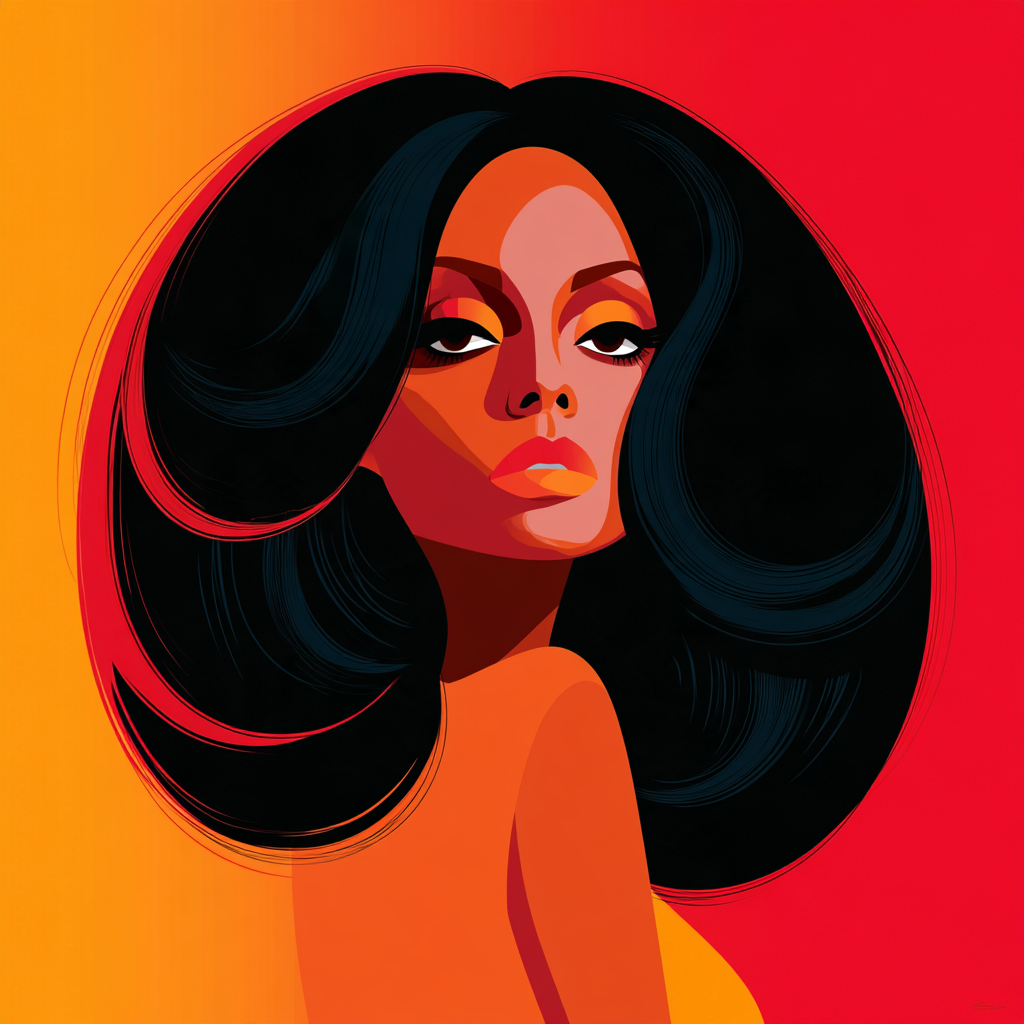
Why Is Diana Ross’s “Upside Down” Trending on TikTok? Song Meaning Explained
Diana Ross’s “Upside Down” is trending on TikTok because creators are using its instantly recognisable opening for a hand-flip transition.
The trend is simple.
A creator moves their hand across the camera.
The screen is briefly covered.
Then the hand moves away to reveal a completely different outfit, hairstyle, makeup look or setting.
The transition is timed to Ross’s 1980 disco classic.
It’s a perfect example of an older recording finding an entirely new audience through social media.
But the song itself has a much more interesting history than its latest viral moment might suggest.
“Upside Down” was written and produced by Nile Rodgers and Bernard Edwards, the musicians behind Chic.
It also tells a surprisingly complicated romantic story.
What is the “Upside Down” TikTok trend?
It’s a visual transformation trend.
Creators use a short section of Diana Ross’s recording to move between two different appearances.
The hand movement provides the transition.
Some videos feature:
makeup transformations
fashion changes
group outfits
before-and-after comparisons
and dramatic reveals.
The important element is the timing.
The movement follows the music closely enough that the transformation feels connected to the rhythm.
An October 15, 2026 trend report from Masterhooks documented five videos associated with the format that collectively attracted more than 79 million views.
That’s not an official measure of the trend’s total reach, but it demonstrates how much attention the sound has attracted.
Why does the song work so well for transitions?
Because the introduction is immediately recognisable.
The rhythm has an infectious, almost bouncing quality.
The title also describes a physical change in perspective.
That makes it particularly suitable for videos where the image suddenly changes.
The recording doesn’t need an enormous electronic drop.
The groove itself provides enough rhythmic energy.
This is one of the reasons classic disco continues working so well on social platforms.
The music was originally created to make people move.
A visual transition is simply another form of movement.
What does “Upside Down” actually mean?
Being emotionally confused by somebody you love.
The narrator is attracted to a man who doesn’t behave particularly well.
She recognises his flaws.
But she remains fascinated by him.
The relationship turns her emotional world upside down.
That’s the central metaphor.
It’s not simply a happy love song.
The narrator understands that the man isn’t necessarily faithful or dependable.
But attraction makes the situation difficult to escape.
That creates a contrast between the music and the lyrics.
The production sounds completely joyful.
The relationship is considerably more complicated.
Who wrote “Upside Down”?
Nile Rodgers and Bernard Edwards.
The pair were the creative forces behind Chic.
Their work helped establish one of the defining sounds of late-1970s disco.
Rodgers’ guitar playing was particularly distinctive.
Edwards’ basslines were equally important.
Together, they created recordings that combined sophisticated musicianship with enormous dancefloor appeal.
Their catalogue includes:
Chic – Le Freak
Chic – Good Times
Sister Sledge – We Are Family
Sister Sledge – Lost in Music.
“Upside Down” brought that musical approach into Diana Ross’s solo career.
Why did Diana Ross work with Chic?
Ross wanted to explore a new musical direction.
By 1980, disco had become an enormously important part of mainstream popular music.
Chic were among its most successful groups.
Ross had already established herself as one of the world’s biggest singers through The Supremes and her solo work.
But she was interested in recording something different.
Rodgers and Edwards approached the collaboration seriously.
Rather than simply presenting Ross with completed songs, they spent time discussing her personality and experiences.
Those conversations influenced the songwriting.
The result was the album Diana.
Was the recording process straightforward?
Not entirely.
Rodgers and Edwards had strong opinions about production.
Ross also knew how she wanted her voice to sound.
That created disagreements over the album’s final mixes.
Ross eventually worked with Motown engineer Russ Terrana on alternative versions.
The finished commercial album therefore differed from the original Chic-produced mixes.
The disagreement became part of the record’s history.
But the commercial result was extraordinary.
Diana became one of Ross’s most successful solo albums.
And “Upside Down” became one of her defining songs.
What genre is “Upside Down”?
Disco.
Funk.
Dance-pop.
Soul.
The recording sits between several closely connected musical traditions.
The rhythm is designed for dancing.
The bassline has strong funk influences.
Ross’s vocal belongs to the sophisticated pop and soul world she had already helped establish.
That combination explains why the song sounds equally natural beside Chic, Sister Sledge and more modern dance-pop artists.
How successful was “Upside Down” originally?
Very.
The single reached No. 1 on the Billboard Hot 100 in 1980.
It spent four weeks at the top.
The song also reached No. 1 on American soul and dance charts.
In Britain, it peaked at No. 2.
That success made it one of Ross’s biggest international solo hits.
The recording has remained a familiar part of disco playlists ever since.
But its cultural life has continued changing.
A song originally associated with dancefloors can now be discovered through a fifteen-second TikTok transformation.
Does the song contain a sample?
The original recording isn’t principally known for being built around a sample.
It’s a studio performance created by Rodgers, Edwards and the musicians involved in the Diana sessions.
However, the recording has subsequently been sampled and reinterpreted.
Its distinctive groove makes it particularly attractive to artists interested in older funk and disco.
That’s an important distinction.
Sampling doesn’t have to be part of the original song’s creation for the recording to develop a substantial later life through samples.
Songs like Diana Ross’s “Upside Down”
If you love its sophisticated disco sound, try:
Chic – Good Times
The obvious starting point.
Rodgers and Edwards are responsible for the same musical identity.
The bassline is one of the most influential in dance-music history.
Sister Sledge – He’s the Greatest Dancer
Another production associated with Rodgers and Edwards.
The recording combines exceptional musicianship with playful vocals.
Diana Ross – I’m Coming Out
Released during the same album era.
It’s another essential example of Ross working with Chic’s musical vocabulary.
Donna Summer – Bad Girls
A slightly more aggressive disco recording.
The rhythm is powerful and the production is full of personality.
Evelyn “Champagne” King – Love Come Down
An excellent bridge between classic disco and early-1980s electronic dance music.
The Pointer Sisters – Automatic
More electronic and mysterious, but connected through sophisticated rhythm and memorable vocals.
Jessie Ware – Free Yourself
A modern recommendation drawing from the same tradition of elegant, confident dance-pop.
Why are older disco songs becoming popular again?
Because they remain musically effective.
A great bassline doesn’t become less enjoyable because the recording is forty years old.
Social media also changes how people encounter music.
A listener might first hear Diana Ross through a makeup video.
Then discover Chic.
Then Sister Sledge.
Eventually they may explore an entire generation of dance music.
That’s one of the best things about catalogue revivals.
The original audience remembers the song.
A new audience discovers it for the first time.
Why is “Upside Down” trending in 2026?
Because its rhythm works perfectly with a visual transformation.
The TikTok hand-flip trend has given the song another moment in popular culture.
But the music’s longevity comes from something much more durable.
An extraordinary bassline.
A great vocal.
And production created by two of disco’s most influential musicians.
More than four decades after release, Diana Ross is still making people move.
Only now, some of them are doing it while changing outfits in front of their phones.