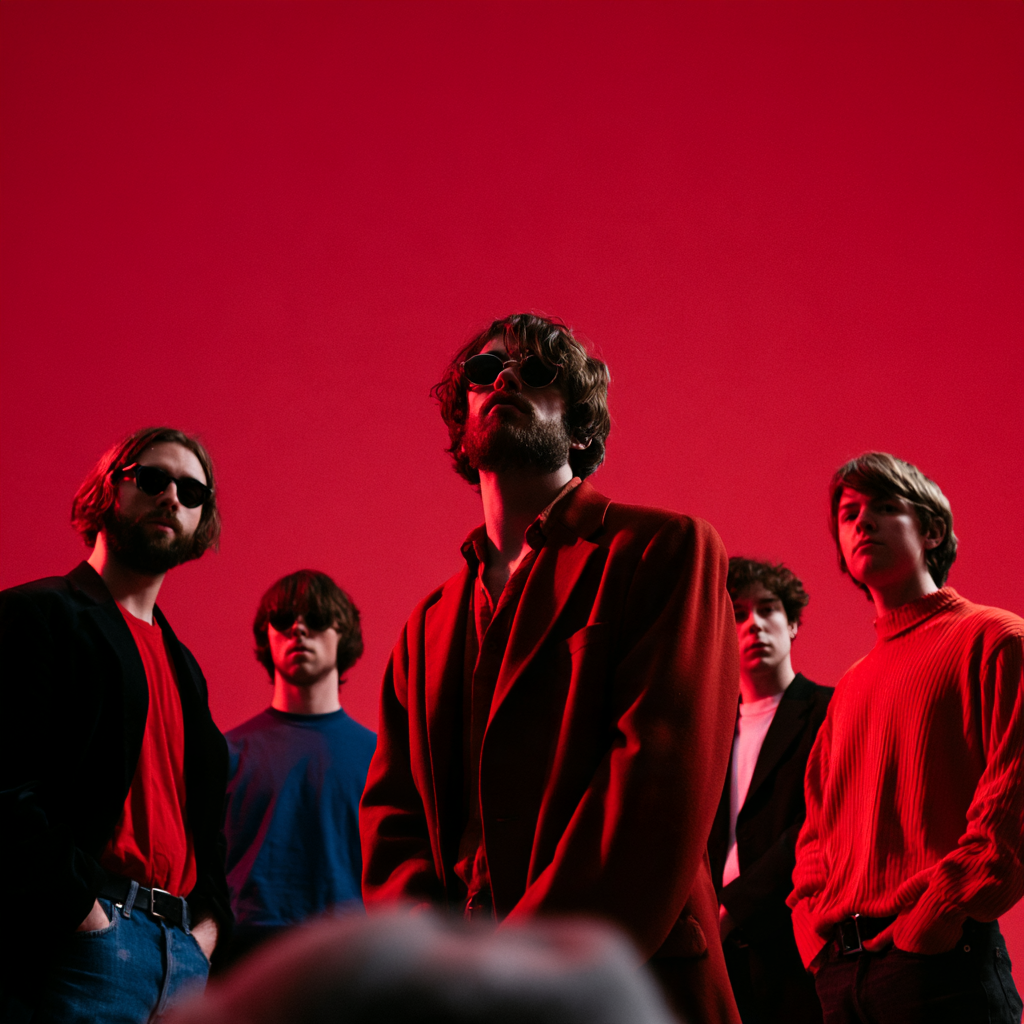
What Genre Are Fontaines D.C.?
Post-punk is the easiest answer.
It is no longer the complete answer.
Fontaines D.C. began as a Dublin guitar band rooted heavily in:
post-punk
punk
garage rock
and spoken-word intensity.
Then every album made the label less useful.
By Romance in 2024, the band were incorporating:
shoegaze
goth
industrial production
trip-hop
electronic music
and widescreen alternative rock.
Their fifth album, Dopamine Chamber, arrives October 16, 2026 and moves even further away from the guitar language of their earliest records into colder, stranger and more synthetic territory.
So:
What genre are Fontaines D.C.?
Alternative rock if you want one broad box.
Post-punk if you are talking about their origins.
Something increasingly difficult to classify if you have listened beyond the first album.
Why were Fontaines D.C. called post-punk?
Listen to Dogrel.
The ingredients are obvious.
Repetitive guitar.
Bass-driven arrangements.
Dry production.
Spoken or half-spoken vocals.
Dublin identity.
Punk energy without conventional punk speed.
That placed Fontaines D.C. naturally beside the late-2010s post-punk revival that also included artists such as:
IDLES
Shame
The Murder Capital
Dry Cleaning.
The label worked extremely well.
For a while.
Is “Boys in the Better Land” post-punk?
Very much so.
It is probably the easiest introduction to the early Fontaines sound.
Driving rhythm.
Raw guitar.
Grian Chatten sounding halfway between:
singing
talking
and delivering a speech outside a pub.
If you discovered the band through “Starburster” or “Favourite”, the first album can sound almost like a different group.
That evolution is the reason people increasingly search the genre question.
What changed on A Hero’s Death?
Space.
The second album slowed down.
The songs became darker and more repetitive.
Instead of relying constantly on momentum, the band started using:
drones
psychological tension
minimalism
and more hypnotic arrangements.
Post-punk still worked as a label.
But already, Fontaines were stretching it.
What genre is Skinty Fia?
Still alternative/post-punk at the core.
But considerably more gothic.
Skinty Fia moved into:
dark bass
Irish traditional references
electronic texture
gothic atmosphere
and much more spacious production.
Songs such as “Jackie Down the Line” still behave like guitar songs.
Others sound much less attached to rock orthodoxy.
Why did Romance change everything?
Because Fontaines D.C. stopped sounding like a band worried about belonging to one scene.
Romance was produced by James Ford and pushed them into much larger sonic territory.
“Starburster” uses a rhythmic, almost hip-hop-adjacent structure.
“Favourite” is bright and nostalgic.
The title track feels dark and cinematic.
The album moves between textures rather than reinforcing one established identity.
That helped Romance reach No. 2 in the UK, become platinum-certified and earn Grammy nominations.
Is Fontaines D.C. goth?
Sometimes.
Not in the sense that:
Fontaines D.C. = goth band.
But goth and gothic rock have clearly become part of their vocabulary.
You can hear connections with:
The Cure
Bauhaus
Depeche Mode
Joy Division
and darker 1980s alternative music.
The visual side of Romance also pushed much further toward gothic and exaggerated alternative fashion.
If somebody hears a track such as “Favourite” and calls it goth?
Not especially.
If they hear darker parts of Romance and understand why the connection exists?
Definitely.
Are Fontaines D.C. shoegaze?
Again:
not exactly.
But shoegaze texture has become increasingly important.
Shoegaze typically uses:
layers of guitar
effects
distortion
reverb
to create atmosphere rather than traditional riff-based rock.
Fontaines D.C. increasingly use guitars that way.
Radar’s existing shoegaze guide would be a natural internal link here.
What does “Tongue” tell us about the next album?
That the movement away from straightforward live-band rock is continuing.
On the newly released “Tongue”, bassist Conor Deegan’s part was manipulated through tape-speed changes, while Grian Chatten’s vocal was processed through a sampler until parts of it sounded deliberately inhuman.
Guitarist Conor Curley described the process as holding back the recognisable live-band elements until they were actually required.
That is not a band trying desperately to preserve its post-punk credentials.
What is Dopamine Chamber supposed to sound like?
The band describe the album almost as an experiment performed on the listener.
Chatten has said the record itself is the “dopamine chamber” and each track is intended to create a different altered mood.
The official album description says Fontaines D.C. are deliberately becoming:
colder
stranger
and more synthetic.
The album also features Rosalía on “Where Is Gone?” — the first guest appearance on a Fontaines D.C. album.
Again:
not particularly committed to genre purity.
Songs that explain Fontaines D.C.’s evolution
Listen chronologically:
Boys in the Better Land
A Hero’s Death
Jackie Down the Line
I Love You
Starburster
Favourite
Marianne
Tongue.
By the final track, “post-punk” begins feeling like a historical fact rather than a complete description.
Bands like Fontaines D.C.
For the early post-punk side:
The Murder Capital
IDLES
Shame
Protomartyr
Iceage.
For the darker modern side:
Depeche Mode
The Cure
DIIV
Nine Inch Nails
Massive Attack.
For the more melodic alternative-rock side:
The Strokes
Arctic Monkeys
The Smiths
Radiohead.
So what genre are Fontaines D.C.?
Start with:
post-punk.
Then add:
alternative rock
gothic rock
shoegaze
electronic music.
Then eventually give up.
That is probably a compliment.
The most interesting bands usually begin inside a genre.
Then spend the rest of their career making the label increasingly inconvenient.