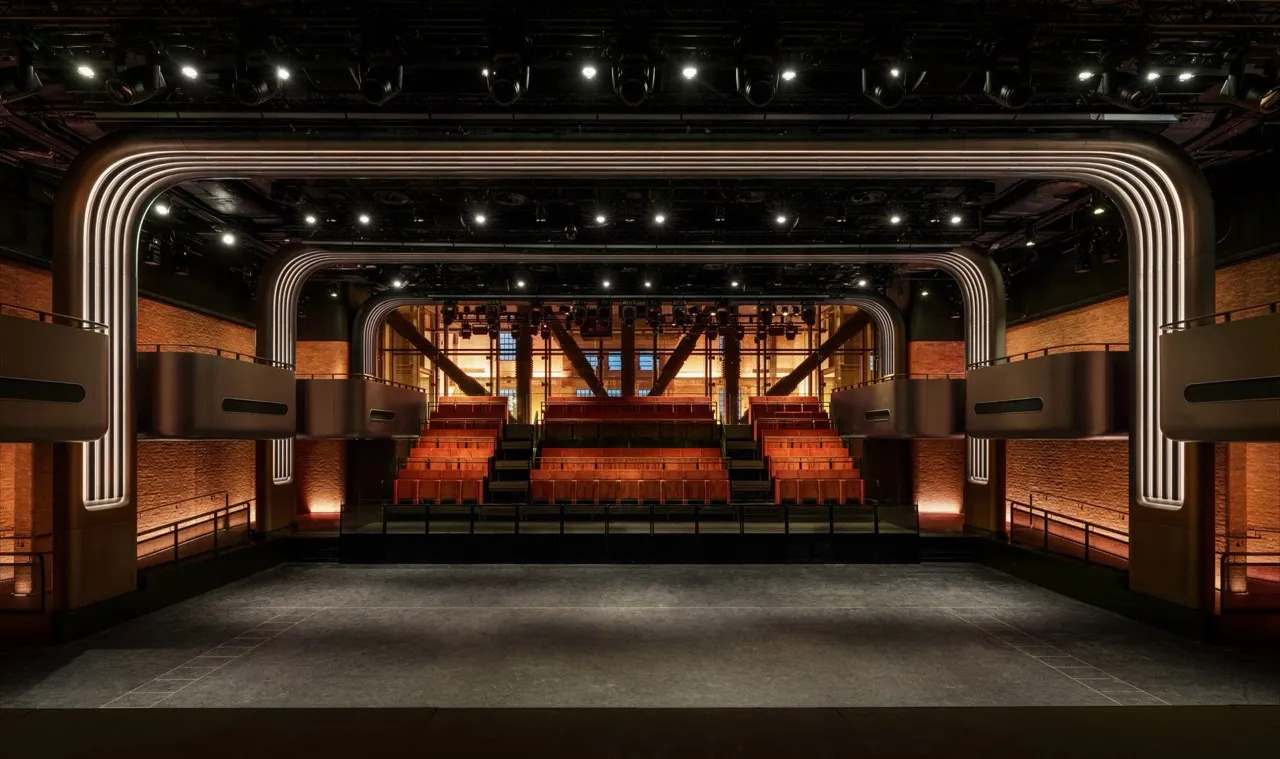
Apple Music Hall: Apple opens a new 600-capacity live music venue in London
Apple Music is moving beyond music streaming with the launch of its own permanent live music venue in London.
Called Apple Music Hall, the new 600-capacity venue has been built inside Battersea Power Station, the historic London landmark that is also home to Apple’s UK headquarters.
But this isn’t simply another concert venue.
Apple Music Hall has been designed as a combination of live venue, recording studio and broadcast facility, allowing artists to perform an intimate concert while simultaneously capturing professional audio, Spatial Audio and multi-camera video.
It could give us an interesting glimpse at where Apple sees the future of music heading.
What is Apple Music Hall?
Apple Music Hall is a new purpose-built live performance venue located inside London’s Battersea Power Station.
The venue has a capacity of around 600 people, making it significantly smaller than London’s major arenas but large enough to host established artists while maintaining the atmosphere of a much more intimate show.
Apple says the space has been designed specifically to bring artists and fans closer together while still providing production facilities normally associated with much larger concerts.
The venue features a 38-foot-wide stage that can be configured as a traditional front-facing stage or adapted for performances in the round.
There is seating and standing space, while the design of the room means fans should remain relatively close to the performers regardless of where they are positioned.
Apple Music Hall has 48 speakers for Spatial Audio
One of the most interesting parts of Apple Music Hall is its audio system.
The venue contains a 48-speaker spatial sound system positioned around the audience.
This means artists can perform concerts specifically mixed for Spatial Audio, giving people inside the venue a more immersive listening experience.
Apple has been heavily promoting Spatial Audio and Dolby Atmos across Apple Music in recent years, encouraging artists and labels to produce immersive versions of their recordings.
Apple Music Hall now gives the company somewhere to demonstrate that technology in a live environment as well.
Rather than Spatial Audio being something listeners experience only through headphones or speakers at home, Apple can now build performances around the format from the beginning.
Artists can record their entire performance
Apple Music Hall isn’t just designed for the audience inside the building.
Behind the stage are professional recording and mixing studios capable of capturing performances as multitrack recordings.
According to Apple, an artist could perform a single concert and leave the venue with a finished Spatial Audio recording, a broadcast-ready audio mix and multicamera video footage.
The venue can support more than 16 broadcast cameras, alongside additional footage captured using iPhones.
That potentially turns every concert at Apple Music Hall into much more than a traditional live show.
One performance could generate:
- a live concert for 600 fans
- an Apple Music livestream
- a Spatial Audio recording
- individual live tracks
- professionally mixed audio
- a full concert video
- clips for social media
- interviews and behind-the-scenes content
For artists, that’s a substantial amount of content coming from a single performance.
Apple Music Hall concerts could reach fans around the world
The 600-person capacity might initially make Apple Music Hall sound small.
But the physical audience is only one part of the venue’s potential reach.
Apple has previously used its music platform to broadcast major performances internationally, and reports surrounding Apple Music Hall indicate that selected shows will also be streamed through Apple Music.
That means an artist could potentially play to several hundred people in London while reaching millions of Apple Music subscribers internationally.
It is essentially a television studio, recording studio and concert venue operating in the same room.
Where is Apple Music Hall?
Apple Music Hall is located inside Battersea Power Station in London.
The building is one of London’s best-known landmarks and reopened following a huge redevelopment project that transformed the former power station into offices, shops, restaurants and entertainment spaces.
Apple moved its London operations into Battersea Power Station, making it one of the company’s largest European offices.
The location also has a famous connection with music.
Battersea Power Station appeared on the cover of Pink Floyd’s 1977 album Animals, making it one of the most recognisable buildings in British music imagery.
Apple’s new venue occupies part of the same complex and includes views across the surrounding development and River Thames.
Apple is returning to live music
Apple getting involved in live concerts isn’t actually new.
Long before Apple Music Hall, the company operated the iTunes Festival.
Launched in London in 2007, the event eventually became the Apple Music Festival and featured performances from some of the biggest artists in the world.
The 2016 edition included Elton John, Britney Spears, Calvin Harris, Alicia Keys, The 1975 and Chance the Rapper.
Those performances were also streamed to Apple Music users internationally.
The festival was discontinued after its tenth year.
Apple Music Hall appears to take some of that original concept and turn it into something permanent.
Instead of hiring venues for an annual festival, Apple now owns the infrastructure required to produce intimate concerts throughout the year.
Apple Music is becoming more than a streaming service
Apple Music Hall also says something interesting about Apple’s wider music strategy.
Spotify, Apple Music, Amazon Music and YouTube Music have traditionally competed primarily around music catalogues, pricing, playlists and recommendation algorithms.
But streaming services increasingly need other ways to differentiate themselves.
Apple has been expanding Apple Music into areas including:
- Spatial Audio
- Apple Music Radio
- artist interviews
- exclusive live performances
- music videos
- concert discovery
- the Super Bowl Halftime Show
- artist tools and analytics
Apple Music Hall brings several of these areas together.
Apple isn’t simply distributing a finished song anymore.
It can potentially work with an artist from the moment they walk onto a stage, capture the performance, mix the audio, produce the video and distribute the finished experience globally through Apple Music.
That gives Apple something very different from simply licensing the same 100-million-plus song catalogue that is available across competing streaming platforms.
Could Apple Music Hall lead to more Apple venues?
For now, Apple Music Hall is a single location in London.
But the model could potentially work elsewhere.
Apple already operates major offices and flagship stores in cities including New York, Los Angeles, Paris, Tokyo and Singapore.
If Apple Music Hall proves successful, it’s easy to imagine similar facilities appearing in other major music markets.
Apple hasn’t announced any plans to do this, however.
The London venue could remain a unique flagship location designed to produce special performances rather than becoming the start of a traditional venue network.
In some ways, that would make sense.
The real value to Apple isn’t necessarily selling 600 concert tickets.
It’s creating exclusive performances and music content that can be distributed to Apple Music subscribers around the world.
When does Apple Music Hall open?
Apple officially announced Apple Music Hall in September 2026.
Reports indicate the venue is expected to begin operating from September 28, although Apple has not yet revealed the first artists scheduled to perform there.
Fans can register for updates about upcoming performances and ticket availability.
Given Apple’s history with the iTunes Festival and Apple Music Festival, it will be interesting to see which artists Apple chooses for the venue’s first run of shows.
Apple Music Hall could make live performances part of streaming
Perhaps the most interesting thing about Apple Music Hall is that it removes some of the boundaries between recorded music and live music.
Traditionally, an artist releases an album through a streaming service and separately goes on tour.
Apple now has the infrastructure to combine those worlds.
An artist could release an album, perform an exclusive show at Apple Music Hall, livestream that performance internationally and then release recordings and video from the same concert through Apple Music.
The physical venue might only hold 600 people.
But if Apple uses it properly, the audience for the performances produced inside it could be significantly larger.
That may ultimately be the real purpose of Apple Music Hall.
It isn’t simply Apple’s new concert venue.
It’s Apple’s own music content production studio with a live audience.