What Does Aerosmith’s “Dream On” Really Mean?
“Dream On” is about time.
Ambition.
Ageing.
And refusing to abandon what you want before time runs out.
Which is extraordinary when you remember Steven Tyler began developing the song while still a teenager.
Long before Aerosmith became one of America’s biggest rock bands, Tyler had already started writing the song that would eventually define them.
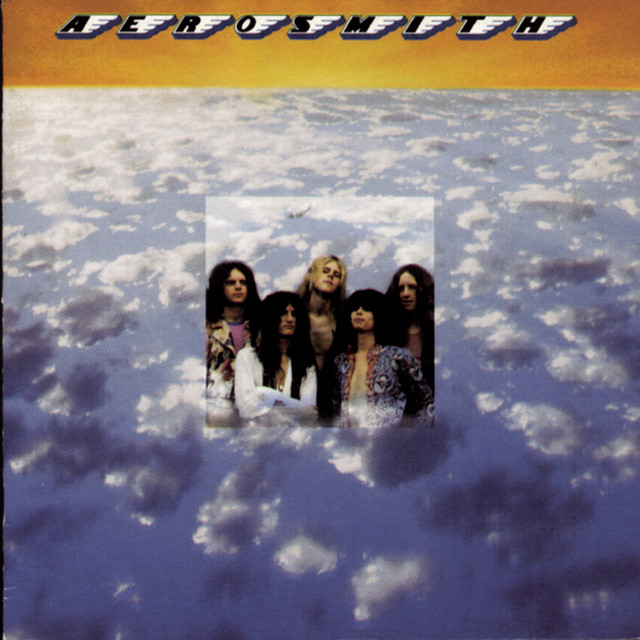
It appeared on Aerosmith’s debut album in 1973.
How old was Steven Tyler when he wrote “Dream On”?
The song developed over several years from ideas Tyler had when he was young.
He has described working on the piano and gradually constructing the composition before Aerosmith existed in its famous form.
That makes the perspective fascinating.
“Dream On” sounds like an older person looking backwards.
But much of it came from a young man imagining what looking backwards might feel like.
Why is there so much piano in an Aerosmith song?
Because Tyler is more than a frontman screaming into a microphone.
He grew up around music and played piano.
His father was a classical musician.
The piano foundation gives “Dream On” a completely different personality from later Aerosmith hits built around Joe Perry’s guitar riffs.
Without it, the song might simply be another hard-rock ballad.
With it, the track feels almost classical in places.
Was “Dream On” Aerosmith’s first hit?
Eventually.
Its original 1973 release achieved only moderate national success, although it performed strongly around Boston.
The song was re-released in 1975/76 after Aerosmith had gained momentum.
This time it became a major hit, reaching No. 6 on the Billboard Hot 100.
That’s an important reminder.
Sometimes the song isn’t wrong.
The timing is.
What is the song actually saying?
Your life moves quickly.
You accumulate experiences.
Your body changes.
People disappear.
Eventually you look backwards.
So while you still can:
dream.
Try.
Sing.
Live.
It isn’t sophisticated philosophy.
It doesn’t need to be.
The idea is universal.
Why does Steven Tyler sound different?
Many listeners hearing early Aerosmith for the first time are surprised by Tyler’s voice.
On parts of the band’s debut album, he used a lower, somewhat altered vocal approach because he wasn’t yet completely comfortable with his natural sound.
“Dream On” hints much more clearly at the singer he would become.
Then the final section arrives.
There he is.
Why has “Dream On” become bigger than its original era?
Because motivational songs age unusually well when the message is universal.
A song about a specific 1973 event belongs partly to 1973.
A song about time passing belongs to everybody.
Sports.
Movies.
Television.
Social video.
Trailers.
“Dream On” can be dropped underneath almost any sequence about struggle or achievement and immediately work.
What genre is “Dream On”?
Hard rock.
Blues rock.
Power ballad.
It is one of the foundational examples of the rock power ballad before the format became enormously commercial in the 1980s.
Quiet beginning.
Emotional build.
Huge climax.
Thousands of bands copied that architecture later.
Songs like “Dream On”
Try:
Led Zeppelin – Stairway to Heaven
Queen – The Show Must Go On
Guns N’ Roses – November Rain
Scorpions – Still Loving You
Journey – Faithfully
Boston – More Than a Feeling
Heart – Alone
Pink Floyd – Time
Foreigner – I Want to Know What Love Is
Bon Jovi – Wanted Dead or Alive
What does “Dream On” really mean?
Time wins eventually.
That’s the uncomfortable part.
You cannot stop ageing.
You cannot keep every person.
You cannot replay your life.
So the only useful response is to keep wanting something while you’re here.
A teenager started writing that idea.
More than 50 years later, millions of older listeners understand it considerably better than he possibly could have when he began.