Is Breaking Rust AI? Who Is Behind the Viral Country Singer?
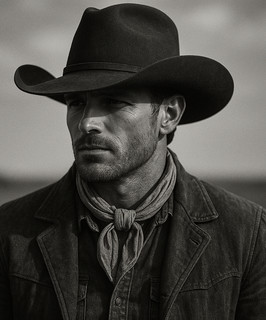
Breaking Rust looks exactly like the sort of musician country music fans have seen hundreds of times before.
Rugged cowboy.
Weathered face.
Gravelly voice.
Songs about resilience, whiskey, hardship and refusing to change for anybody.
But Breaking Rust has one significant difference from most country artists.
He isn’t a real person.
Breaking Rust is an AI-generated country music project — and it has become surprisingly successful.
Who is Breaking Rust?
Breaking Rust emerged during 2025 with a collection of dark country and Americana tracks.
Songs including “Walk My Walk”, “Livin’ on Borrowed Time”, “Whiskey Don’t Talk Back” and “Hate Me All You Want” rapidly attracted listeners.
As of September 2026, Breaking Rust has roughly one million monthly listeners on Spotify.
“Livin’ on Borrowed Time” has accumulated more than 27 million Spotify streams, while “Walk My Walk” has passed 25 million.
Those are not novelty numbers anymore.
Breaking Rust has built an audience comparable with many touring human musicians.
Is Breaking Rust AI?
Yes.
Unlike some mysterious streaming artists where AI involvement remains speculation, Breaking Rust has been widely identified as an AI-generated act.
ABC News described “Walk My Walk” as a song created through artificial intelligence and reported that Billboard acknowledged Breaking Rust as an AI act.
Axios similarly described the music as AI-created and highlighted Breaking Rust as an example of AI-generated music beginning to compete commercially with human musicians.
The cowboy seen representing Breaking Rust is therefore better understood as a virtual artist character rather than an actual singer.
Who created Breaking Rust?
The name most closely associated with Breaking Rust is Aubierre Rivaldo Taylor.
Breaking Rust’s songs have been credited to Taylor, although comparatively little public information has emerged about the person behind that name.
The Washington Post noted that the creators behind Breaking Rust remained mysterious and said attempts to contact the project had received no response.
So while Breaking Rust itself is clearly a virtual artist, the full story of the humans operating the project remains relatively opaque.
Did Breaking Rust really have a number one country song?
Yes — but there’s an important distinction.
“Walk My Walk” reached number one on Billboard’s Country Digital Song Sales chart in November 2025. Billboard’s own chart showed the song at number one ahead of releases from artists including Ella Langley, Jelly Roll and Shaboozey.
However, this was not the main Hot Country Songs chart.
Country Digital Song Sales measures paid digital downloads.
It doesn’t mean Breaking Rust had the most popular country song in America across streaming, radio and sales combined.
That distinction was sometimes lost when headlines described Breaking Rust as having the “number one country song”.
Nevertheless, the achievement was significant.
An AI-generated country artist had sold enough downloads to reach number one on an official Billboard genre chart.
Why did Breaking Rust become so popular?
Part of the answer may be that Breaking Rust doesn’t sound like an obvious technology demonstration.
The music fits directly into an established audience.
There are deep vocals.
Sparse guitars.
Outlaw-country themes.
Western imagery.
Songs about pain, independence and resilience.
Listeners don’t need to understand the technology behind the music to enjoy the result.
That is probably one of the most important lessons from Breaking Rust.
Successful AI artists may not succeed because people are interested in AI.
They may succeed because the listener doesn’t care.
If somebody hears “Livin’ on Borrowed Time” in a playlist and likes it, they might simply save the song.
They may never search for the artist’s background.
Breaking Rust represents a major change for music
For decades, building a successful artist required finding a performer.
You needed somebody who could sing.
They needed an image.
They needed to record music.
They needed photography.
They needed to be available for promotional activity.
Generative AI changes that model.
A creator can potentially develop the song, voice and visual artist simultaneously.
The artist effectively becomes intellectual property.
Breaking Rust demonstrates how far that concept has already progressed.
The project isn’t merely releasing AI songs.
It has a recognisable character, genre, visual style and catalogue.
That makes Breaking Rust much closer to a virtual music franchise.
Does it matter that Breaking Rust isn’t real?
That depends on the listener.
Some music fans believe knowing that a singer has personally lived the emotions being described is an important part of music.
Others simply care whether the song sounds good.
Breaking Rust provides an interesting test of that divide.
Millions of streams indicate that plenty of listeners are willing to engage with the music regardless of whether the cowboy singing it ever existed.
So, is Breaking Rust a real singer?
No.
Breaking Rust is a virtual AI-generated country artist rather than a conventional human performer.
A human creator or group of creators sits behind the project, with Aubierre Rivaldo Taylor appearing throughout its songwriting credits.
But the rugged cowboy presented to listeners as Breaking Rust is an artificial persona.
The most interesting part isn’t really that AI can generate a convincing country song anymore.
We already know it can.
The interesting part is that listeners are beginning to turn those songs into genuine hits.
And Breaking Rust probably won’t be the last virtual artist to do it.