Feel like going out, but only got your dark, intense face with you? Fear not! Massive Attack have announced a Spring tour, playing big venues in the States, Australia and Belgium (but not in the UK for some reason). The tour supports their new album Heligoland, their 5th studio album.Hopefully we can look forward to some gigs nearer to Bristol once they’ve come home after this lot:
03-12 Perth, Australia – Kings Park
03-15 Sydney, Australia – Opera House Forecourt
03-19 Canberra, Australia – Royal Theatre
03-20 Melbourne, Australia – Sidney Myer Music Bowl
03-23 Brisbane, Australia – Riverstage
03-25 Auckland, New Zealand – Vector Arena
05-07 Toronto, Ontario – Sound Academy
05-09 Toronto, Ontario – Sound Academy
05-11 New York, NY – Terminal 5
05-12 New York, NY – Terminal 5
05-18 Los Angeles, CA – Wiltern Theater
05-19 Los Angeles, CA – Wiltern Theater
05-25 San Francisco, CA – Warfield Theater
05-27 San Francisco, CA – Warfiled Theater
05-30 George, WA – Sasquatch Festival
09-03 Antwerp, Belgium – Sportpaleis
Not to be outdone by streaming competitors Spotify, who are rumoured to have gained a new funding partner (and consultant) in the form of Napster/Facebook founder Sean Parker, MOG have announced second round funding of $10,000,000 dollars, which they plan to use to take the platform into Europe, as well as funding Stateside expansion. As things stand, the two competitors are entrenching in their home territories, but the date of their confrontation on one side of the Atlantic must be drawing closer, even though no dates have been mentioned by either team. MOG’s monthly subscription is less than half the price of Spotify’s, but Spotify has major label backing, plus a vocal and passionate fanbase. Pandora are keeping their heads down, and quietly getting on with dominating the internet-radio and car dashboard scene, but the clash between these two will likely define the major player in on-demand streaming. The future of this type of music consumption is far from gilt-edged, however, as Spotify are still struggling to up their paid (£9.99 a month) subscription rates to supplement their ad-funded service, while MOG are operating at about a 17% conversion rate from their free trial to a $5 a month subscription. Whether either of these approaches will be successful enough to fund them in the long term remains to be seen, but given the high level of uptake, there is certainly a market for on-demand. Who gets to service it is currently being decided.
Luxembourg’s biggest media star, Spotify has admitted a new investor to the fold, at least according to TechCrunch. Sean Parker was one of the founders of both Napster and Facebook, and would be Spotify’s first and only US investor. If the rumour is true, then it would not only help Spotify’s cash situation (always helpful), but also give them the inside track on running a music service in the States, and might give an indication that the launch of Spotify in the US is approaching.
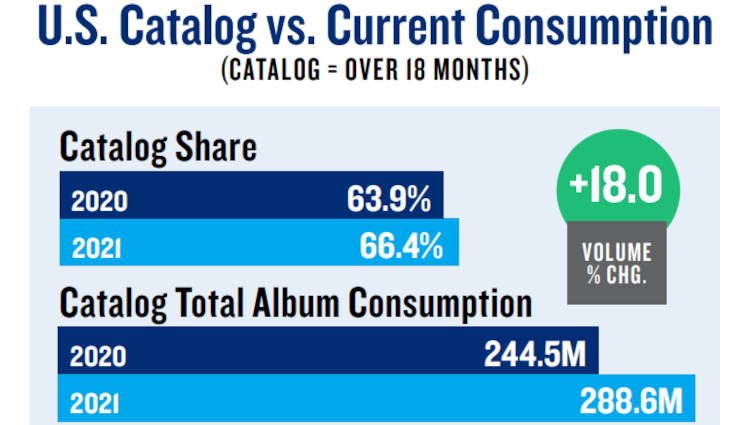
It has been reported that US sales of recorded music will drop to $5.52 billion in 2013. This downward trajectory will extend a pattern that began in 2000, when physical sales started to decline after rising dramatically during the heyday of the CD.
Harmonix has confirmed that its Beatles-themed music game will be released on 9 September this year, and will be called The Beatles: Rock Band. An official site has gone live today inviting gamers to sign up for alerts when pre-ordering begins.
It’s a big deal – the game will launch simultaneously in North America, Europe, Australia, New Zealand and other countries, and will be available on Xbox 360, PlayStation 3 and Wii.
The game will include support for guitar, bass, mic and drums, but will also offer “a limited number of new hardware offerings modeled after instruments used by John Lennon, Paul McCartney, George Harrison and Ringo Starr throughout their career”.
A lot of people get in touch with us to ask how many digital stores we distribute music to, and what proportion of the digital music market they represent. We also hear comments on the relatively small number of people we deal with in comparison to the huge lists of partners at some of our competitors, e.g. CDbaby,Emubands, IODA…(without mentioning the duplication in the last two).
The simple truth is that while a long list of digital music stores might look good, beyond the top 3 or 4 retailers it makes very little difference to overall sales how many your music’s in. It’s fairly common knowledge that iTunes is the biggest player in the market, but the scale of their dominance is pretty staggering. Neilsen (the ratings and market reporting firm) reports total US music sales of 1,513 million units in 2008, with 1070 million of those sales being digital downloads. That’s a billion digital music downloads across the entire US.
In 2008, across all territories, iTunes sold more than Two Billion tracks.
Apple iTunes Store Music Sales
Date
Tracks Sold (Millions)
01/08/2004
100
16/12/2004
200
02/03/2005
300
10/05/2005
400
18/07/2005
500
10/01/2006
850
23/02/2006
1,000
12/09/2006
1,500
10/01/2007
2,000
09/04/2007
2,500
31/07/2007
3,000
15/01/2008
4,000
19/06/2008
5,000
06/01/2009
6,000
Excuse the horrid old excel graph, I’m still running Office ‘03…
It’s difficult to get a believable estimate for the size of the global digital music market, but given that the USA is the biggest single economy by a long way (the whole of the EU only just beats it in the CIA factbook at $14.98 trillion to $14.58 trillion), you begin to get a picture of how much of a monopoly iTunes has. Their competitors are of a different order: Amazon weighed in at 27 million digital tracks sold in the first six months of 2008, and the CEO of eMusic (David Pakman) estimated that Amazon have got about 4%-5% of the US music market, which going from Neilsen’s estimates puts them at about 48,150,000 tracks annually. Pakman also claims an approx. 10%-15% market share for eMusic, with 7 million downloads sold monthly (7*12 = 84).
By browsing eMusic’s sales milestone press releases, you can plot a rough course for their sales:
eMusic Digital Music Sales
Date
Tracks Sold (Millions)
01/09/2004
0
01/12/2004
3
01/12/2006
100
25/09/2007
160
14/04/2008
200
20/11/2008
250
I’ll spare you another ugly graph. eMusic has sold 250 million tracks since it’s relaunch in 2004, and Amazon’s only been going for about a year now, 300 million tracks let’s say, which pales beside iTunes’ 6 billion total sales.
One can argue with the estimates, but the main thrust of my argument is hopefully becoming clear. A conservative 15% market share between Amazon and eMusic, along with iTunes’ >80% doesn’t leave more than 5% for any other players in the USA: with just those three selling your music for you online, you’ve got 95% of the market covered. It’s not that the remaining 5% isn’t worth catering to, but the law of diminishing returns kicks in, and customers in the last few percentiles get harder and harder to chase down, especially given the plethora of blossoming and failing little music shops that appear and dissappear. We concentrate our efforts on the vendors that matter.
P.S.
The controversial bulk of music discovery and consumption in the electronic wilderness, outside the paid-for enclosure, is happening on torrent sites like the embattled Pirate Bay, and the more respectable Limewire and Mininova, and promoting RouteNote artists on these channels is something we’re looking into. Ubiquitous innovator Trent Reznor or NIN positively encourages people to download his music from P2P networks, in order to drive sales of his ‘premium’ paid for content.
Amazon has just launched their Mp3 Music store in the UK. The store can be found at http://mp3.amazon.co.uk. The simple-to-use digital music store offering over 3 million DRM-free (Digital Rights Management) songs which will work on any MP3 player including the iPod™- with top-selling albums from just £3 and individual songs from 59p.
Amazon Mp3 UK has all four major labels signed up, SonyBMG, Universal Music, EMI Music and Warner Music – and leading independents such as Cooking Vinyl, Harmonia Mundi, Beggars Banquet, The Orchard, Concord and IODA.
If you have an iPhone or iPod touch you never need to worry about buying an expensive tuner every again. For £1.19 you can pick up eTuner from the iTunes App store.
eTuner is an interactive chromatic tuning application, which utilizes the quality audio and fine display capabilities of the iPhone or iPod touch to determine and display musical pitch information as you plan an instrument or sign a note.
eTuner works on a variety of instruments including wind, brass and string. Other instruments that produce a sustained tone will also work fine.